
What to Do in Karlovy Vary: 25 Amazing Things to See, Eat, and Experience
I’ll say this up front: Karlovy Vary is one of those destinations that is extremely easy to enjoy.
After all, a typical day looks like this: Wake up. Drink from a mineral spring with a porcelain cup. Wander to the next colonnade. Admire the elegant architecture.
Stop for cake. Drink from another spring. Ride up to a viewpoint. Enjoy a refreshing hike back down. Drink from a spring. Stroll along the waterfront. Treat yourself to a delicious Czech feast.
And repeat.
Oh, did I mention drinking from a spring?
Doesn’t that sound like the perfect vacation? 😉
That being said, don’t make the mistake of thinking Karlovy Vary is only reserved for spa lovers. Before visiting, I imagined it would mainly be about thermal baths and wellness treatments. The first time I visited, I never booked a single spa treatment and still had an amazing time!
Between the beautiful architecture, hilltop viewpoints, local museums, ornate churches, wonderfully cozy cafes, and historic landmarks, there’s plenty to keep you busy whether you’re here for a few hours or a few days.
To help you plan your visit, here are the very best things to do in Karlovy Vary.
Drink the Mineral Water!
As you can probably tell from the introduction, Karlovy Vary is famous for its thermal mineral water. In fact, it’s the whole reason the city exists!
So what better way to kick off this list of the best things to do in Karlovy Vary than by “trying” the city’s most iconic attraction?
For centuries, people have traveled here specifically to drink these mineral waters, which are primarily used to support digestive and metabolic health, as well as help with stomach conditions and other gastrointestinal ailments.
(Pssst: you don’t need a prescription or doctor’s note to try the waters — many people simply drink it as part of the Karlovy Vary experience!)
Officially, there are 15 hot springs in Karlovy Vary, but only 12 are accessible to the general public.
Here’s a quick list of springs in Karlovy Vary and their temperatures:
- Vřídlo (Geyser Spring) — 73°C | 163°F
- Karla IV (Charles IV Spring) — 62°C | 144°F
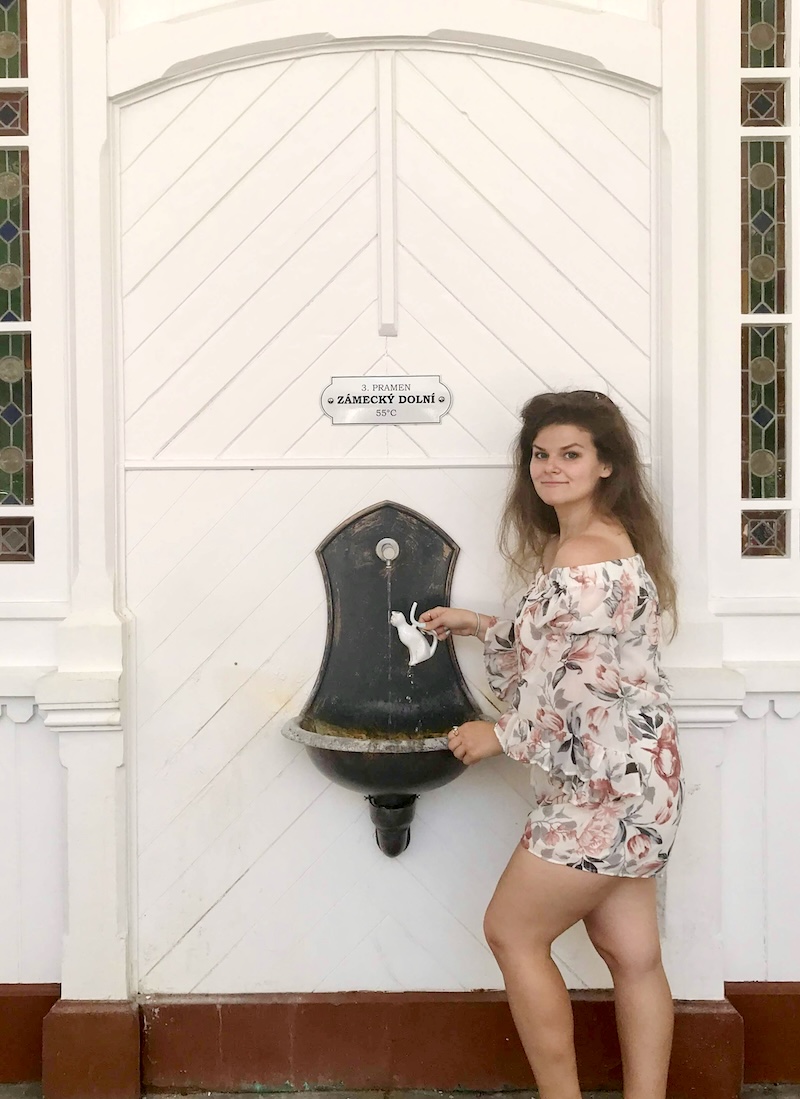
- Dolní Zámecký (Lower Castle Spring) — 53°C | 127°F
- Horni Zámecký (Upper Castle Spring) — closed to the public
- Tržní (Market Spring) — 64°C | 147°F
- Mlýnský (Mill Spring) — 58°C | 136°F
- Rusalka (Mermaid Spring) — 60°C | 140°F
- Knížete Václav I (Prince Wenceslas Spring) — 66°C | 151°F
- Libuše Spring — 63°C | 145°F
- Skalní (Rock Spring) — 47°C | 117°F
- Svoboda (Freedom Spring) — 63°C | 145°F
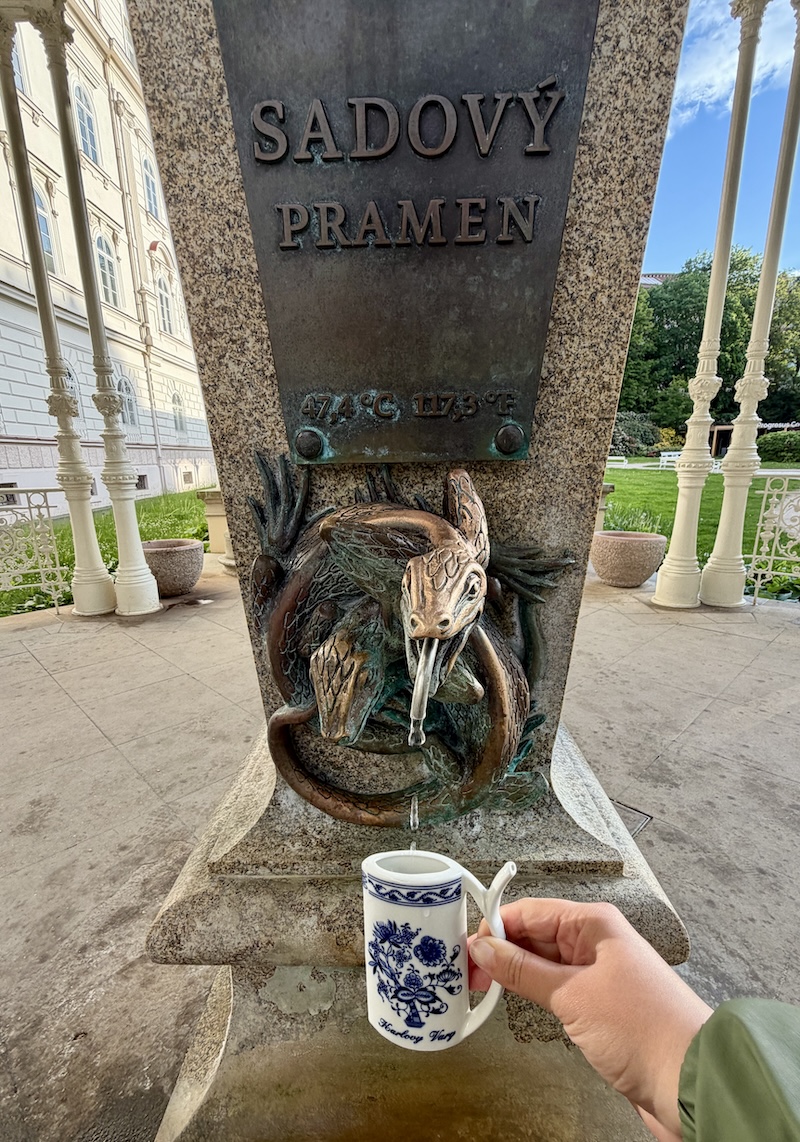
- Sadový (Park Spring) — 42°C | 108°F
- Dorotka (Dorothy Spring) — closed to the public (doesn’t emit water, but rather CO2!)
- Štěpánka (Stepanka Spring) — 14°C | 57°F
- Hadí (Snake Spring) — 29°C | 84°F
Now that you’re acquainted with Karlovy Vary’s famous spring waters, it’s time to try them for yourself! Here’s a quick guide to doing it like a pro. :)
Step 1: Buy a cute traditional spa cup
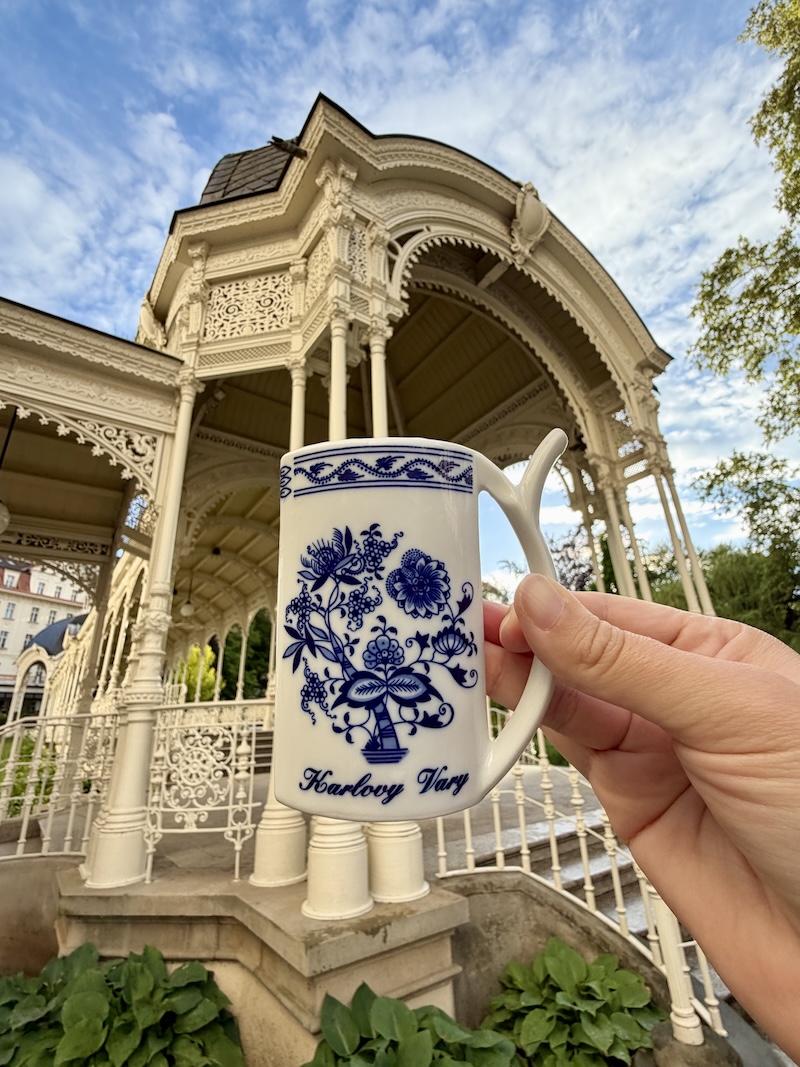
Before you head to the springs, pick up an iconic Karlovy Vary spa cup. You can find them in just about every souvenir shop around town, and they come in all kinds of colors and designs.
I recommend choosing one with a straw “built in” the handle. This makes sipping the water much easier and gives the hot water a chance to cool slightly before it reaches your mouth.
Step 2: Find a spring
As mentioned above, there are 12 public drinking springs scattered throughout Karlovy Vary.
If you’re not sure which one to try first, don’t overthink it. :) Most visitors simply stop at whichever spring they happen to come across first, while others make it a mission to sample several throughout the day.
Also, don’t worry about memorizing them, as each spring has a small metal plaque above it with its name and temperature. Or you can be like me and buy a spa cup with a list of each spring on the other side!
Step 3: Enjoy!
Well, as much as you can, anyways! To be honest, the water isn’t the most delicious thing in the world (it tasted like rusty pipes to me), but I drank it regardless because it’s ✨ healthy ✨.
If it’s your first time, don’t fill your cup to the brim. The mineral water can be quite strong, so starting with a small amount is a good idea (I usually filled mine about one-fifth full).
The hotter springs are also, well… hot! If the water is listed as 35°C (95°F) or above, let it cool for a minute before drinking. Then simply sip it slowly as you stroll through the colonnades, just like generations of spa visitors have done before you.
Whether you end up loving the taste or not, drinking the mineral water is one of those quintessential Karlovy Vary experiences that every visitor should try at least once.
💡 Did You Know? Karlovy Vary isn’t the only famous Czech spa town!
While Karlovy Vary is traditionally associated with digestive and metabolic conditions, nearby Mariánské Lázně is best known for kidney, urinary tract, respiratory, and musculoskeletal treatments. Františkovy Lázně, meanwhile, has long been associated with women’s health, cardiovascular conditions, and musculoskeletal disorders.
Each town’s waters has a different mineral composition, which is why they’re associated with different therapeutic uses.
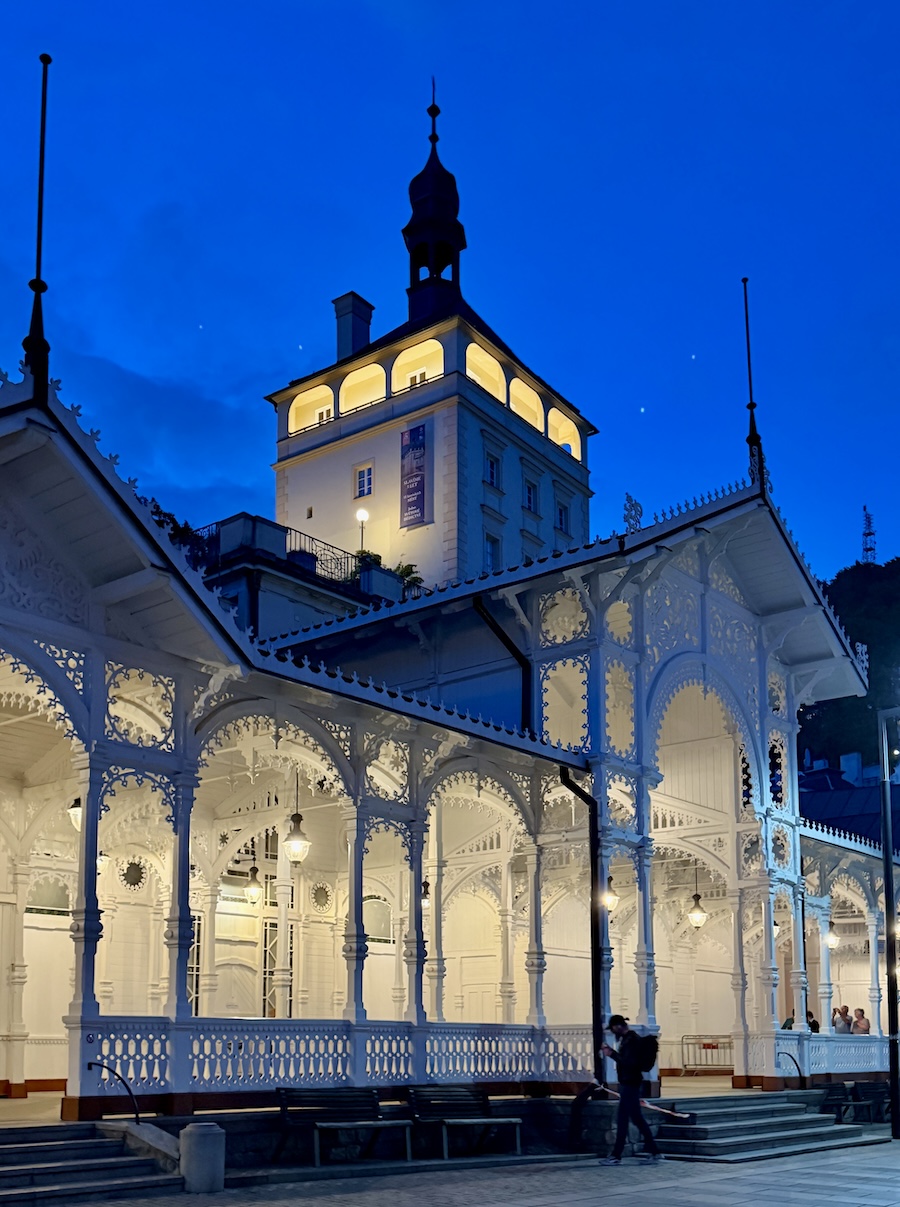
Admire Karlovy Vary’s Beautiful Colonnades
While you’re enjoying the spring water, don’t forget to look around — Karlovy Vary has some seriously gorgeous architecture!
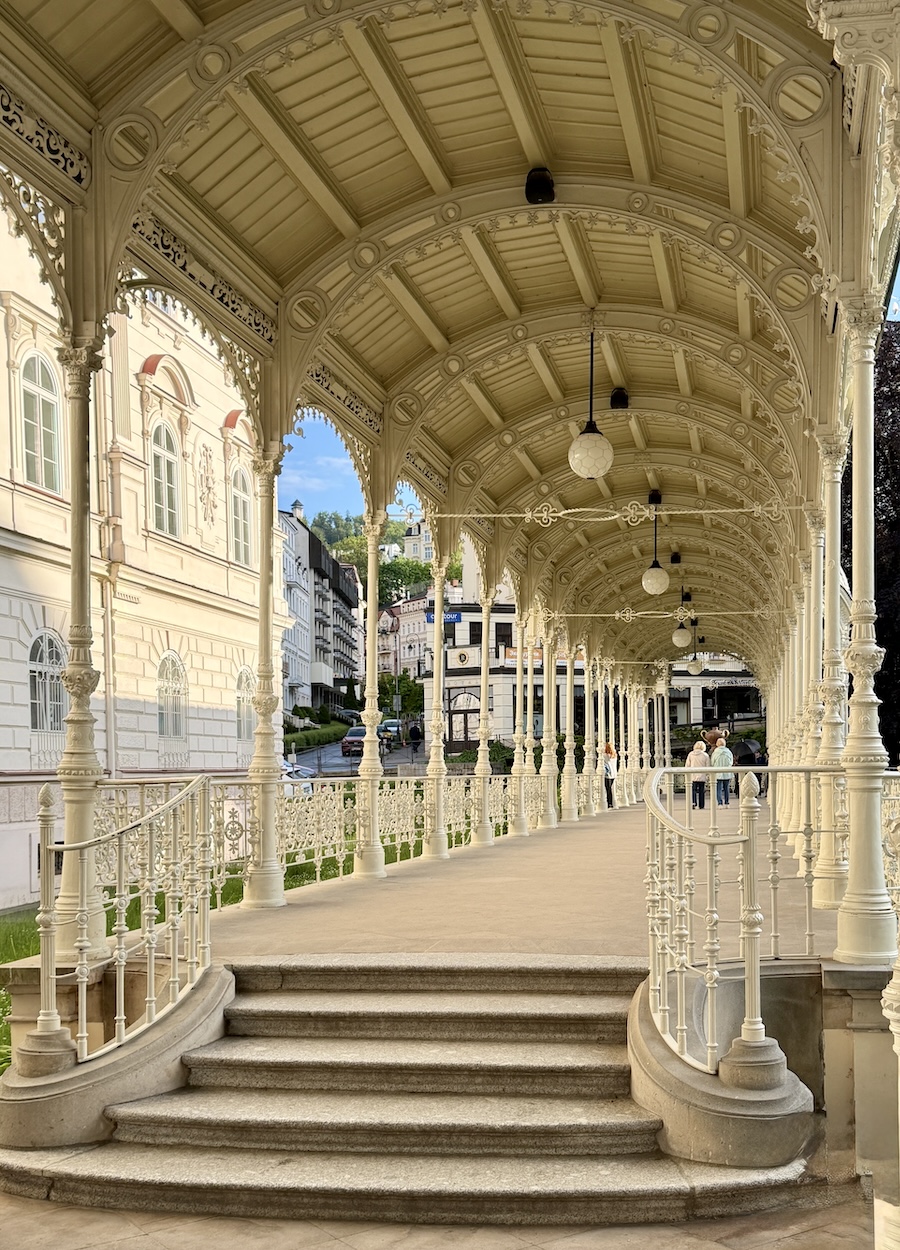
The city’s iconic colonnades were originally built to shelter visitors as they drank from the hot springs, protecting them from the rain, snow, and summer sun. Over time, they became just as famous as the mineral water itself, with each one showcasing a different architectural style and housing several of Karlovy Vary’s thermal springs.
There are five main colonnades in Karlovy Vary:
⛲ Market Colonnade: This is perhaps the most famous of the Karlovy Vary colonnades! Built entirely from white wood and decorated with intricate Swiss-style carvings, this colonnade almost looks like it’s made from dainty lace. Three springs are found inside this colonnade: Charles IV Spring, Lower Castle Spring, and Market Spring.
⛲ Mill Colonnade: No, you haven’t been teleported to Ancient Greece — you’re just standing in front of the Mill Colonnade! With its impressive row of 124 Corinthian columns stretching over 130 meters (430 feet), this is the largest colonnade in Karlovy Vary. It’s also home to five thermal springs, making it one of the best places to sample several mineral waters in a single stop.
⛲ Castle Colonnade: This colonnade gets its name from the Gothic castle that occupied this site during the 14th century. While the castle is long gone, visitors can still stop here to sample the Castle Springs water.
⛲ Park Colonnade: If you’re looking for a quieter spot to enjoy Karlovy Vary’s spa atmosphere, the Park Colonnade is hard to beat. Surrounded by gardens and lined with delicate cast-iron arches, this beautiful open-air colonnade is the perfect place to slow down and drink from the Snake Spring.
While we’re on the topic of colonnades, there’s one more that deserves its own section…
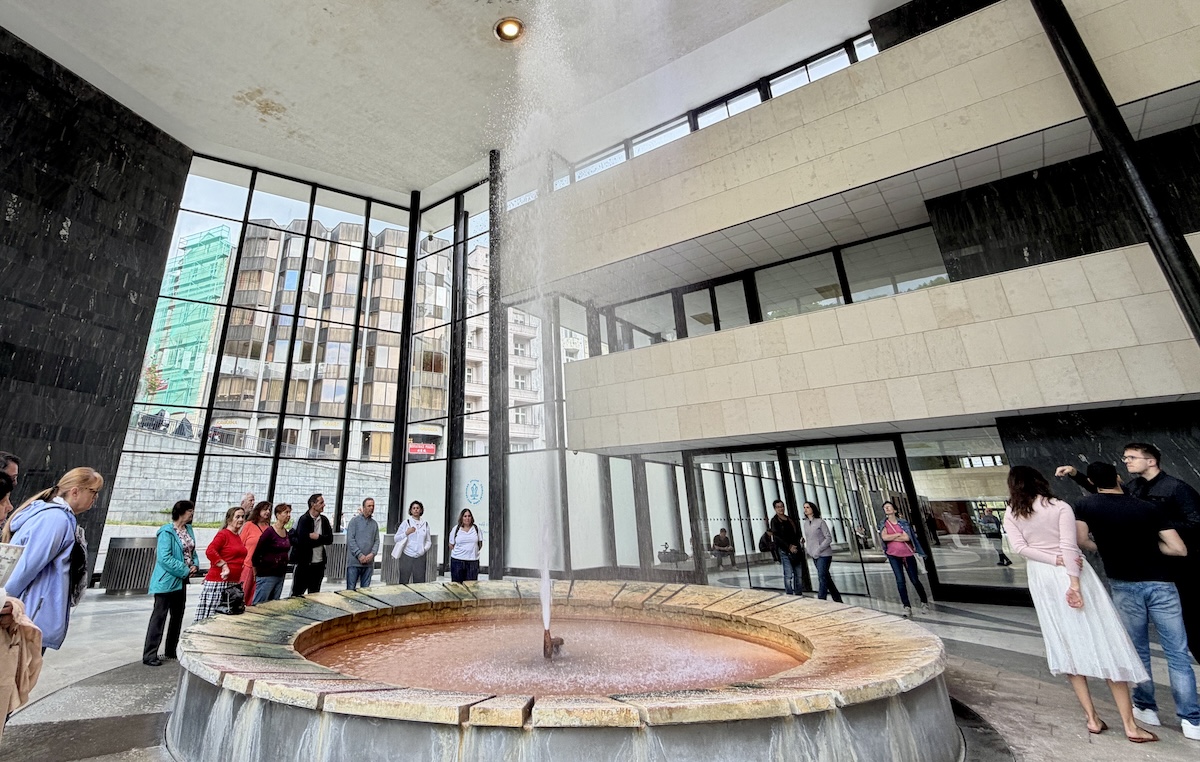
See Karlovy Vary’s 12-Meter-High Geyser
Now that you’ve seen some beautiful colonnades, let me show you the fifth colonnade — AKA something that’s completely different from the others. 😅
Located inside the Hot Spring Colonnade building, the Vřídlo (Hot Spring in Czech) shoots steaming mineral water up to 12 meters (39 feet) into the air. The water emerges from deep underground at an incredible 73°C (163°F), making it both the hottest and most powerful spring in Karlovy Vary.
Be sure to stop and go inside the colonnade — it’s one of the few places in the world where you can watch a natural thermal spring erupt right in the middle of a city!
Fun fact: The geyser was originally enclosed in a wooden gazebo but eventually replaced by the current concrete building (I wonder why 😁) .
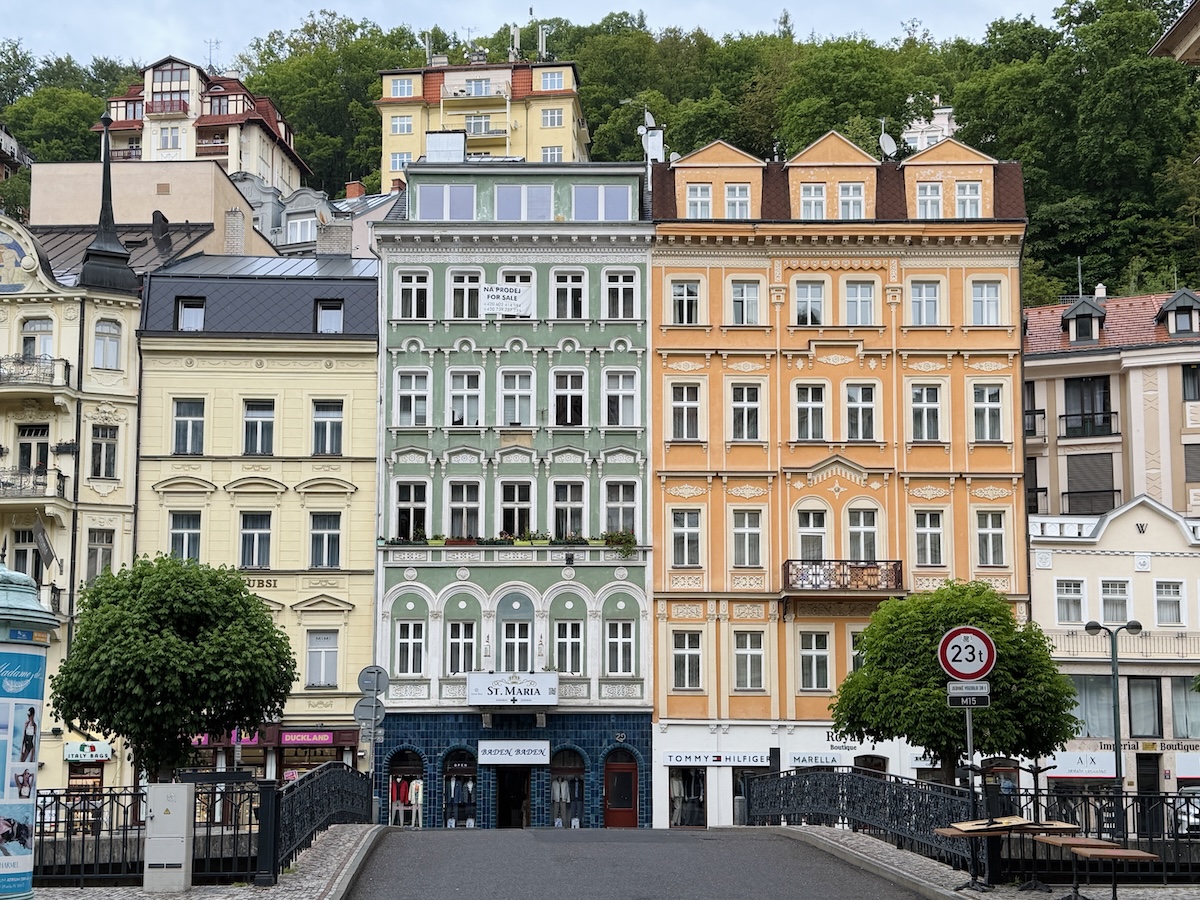
Stroll along the Teplá River…
One of the best things to do in Karlovy Vary is… absolutely nothing.
Well, almost nothing. 😄
The city is made for slow travel, and nowhere is that more obvious than along the banks of the Teplá River. Lined with elegant spa buildings, grandiose hotels, and flower-filled bridges, it’s the perfect place to meander, wander, and stroll without any particular destination in mind.
Take your time, pop into a few shops, listen to the street musicians, and stop for a drink from one of the thermal springs along the way. Chances are you’ll stumble across another beautiful building or scenic viewpoint just around the corner!
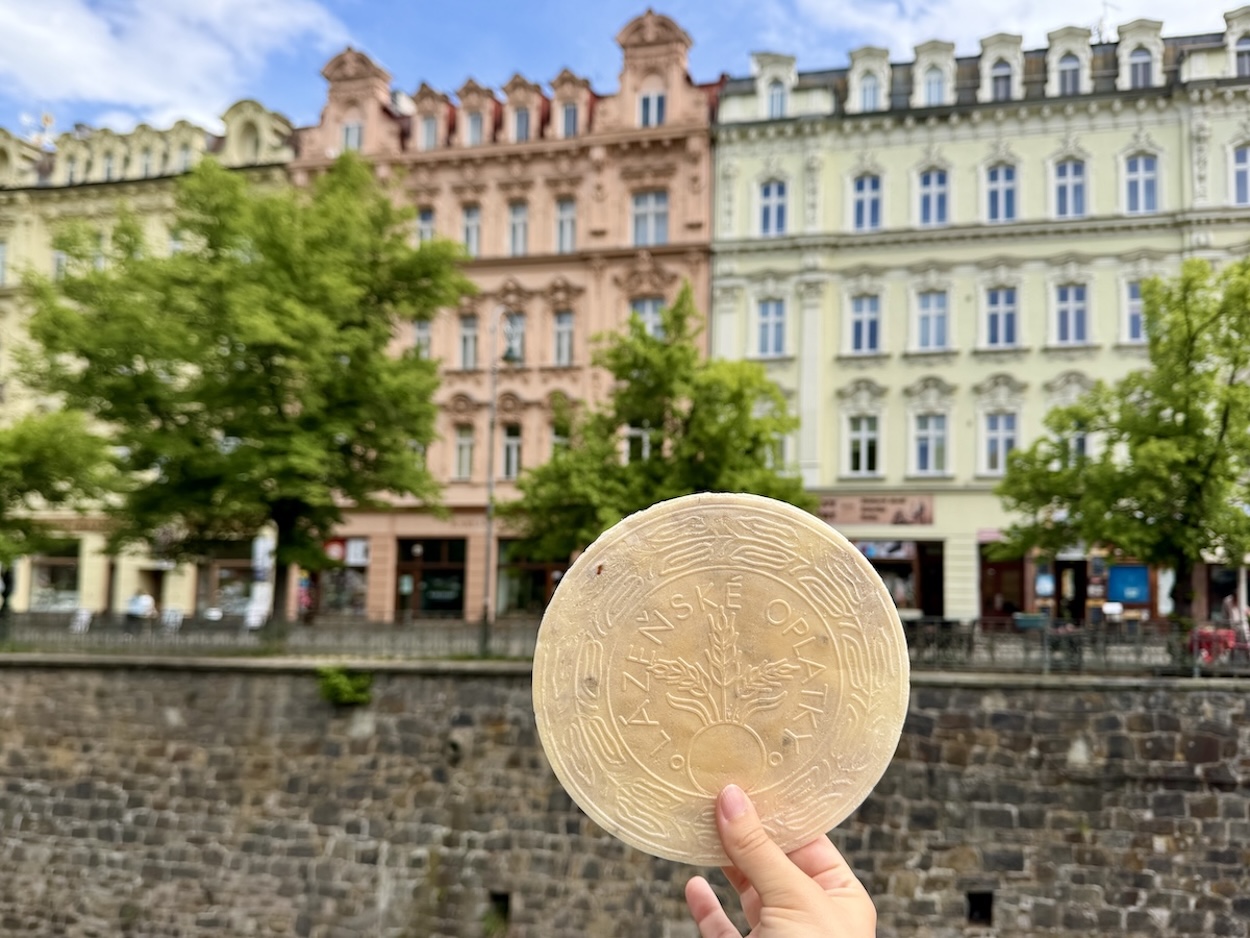
… With a Wafer in Hand
No visit to Karlovy Vary is complete without trying one of its most beloved local specialties, a Karlovarské oplatky.
Better known as Karlovy Vary spa wafers, these light snacks have been a local specialty for over 150 years.
Karlovy Vary wafers have quite the interesting history, too: some sources say they were created as a way to stimulate spa guests’ appetites as they wandered between the city’s thermal springs and colonnades. Others say they were nibbled on between heavy meals or used as a sweet little “treat” to mask the lingering taste of the mineral-rich water.
Nowadays, these thin and crispy wafers come in more than a dozen flavors, including classics like hazelnut, vanilla, chocolate, cinnamon, and almond.
We picked up a warm hazelnut wafer from a little kiosk by the river (in the photo above), and it was the perfect snack to enjoy between meals.
If you end up loving them as much as we did, you’ll also find beautifully packaged gift boxes in souvenir shops throughout Karlovy Vary — they’re perfect for bringing a taste of the city to friends and family back home!
Fun fact: Karlovy Vary wafers are such a part of the city’s culture that the European Union granted them Protected Geographical Indication (PGI) status in 2011. In other words, only wafers made in the Karlovy Vary region using the traditional method can legally be called “Karlovarské Oplatky.”
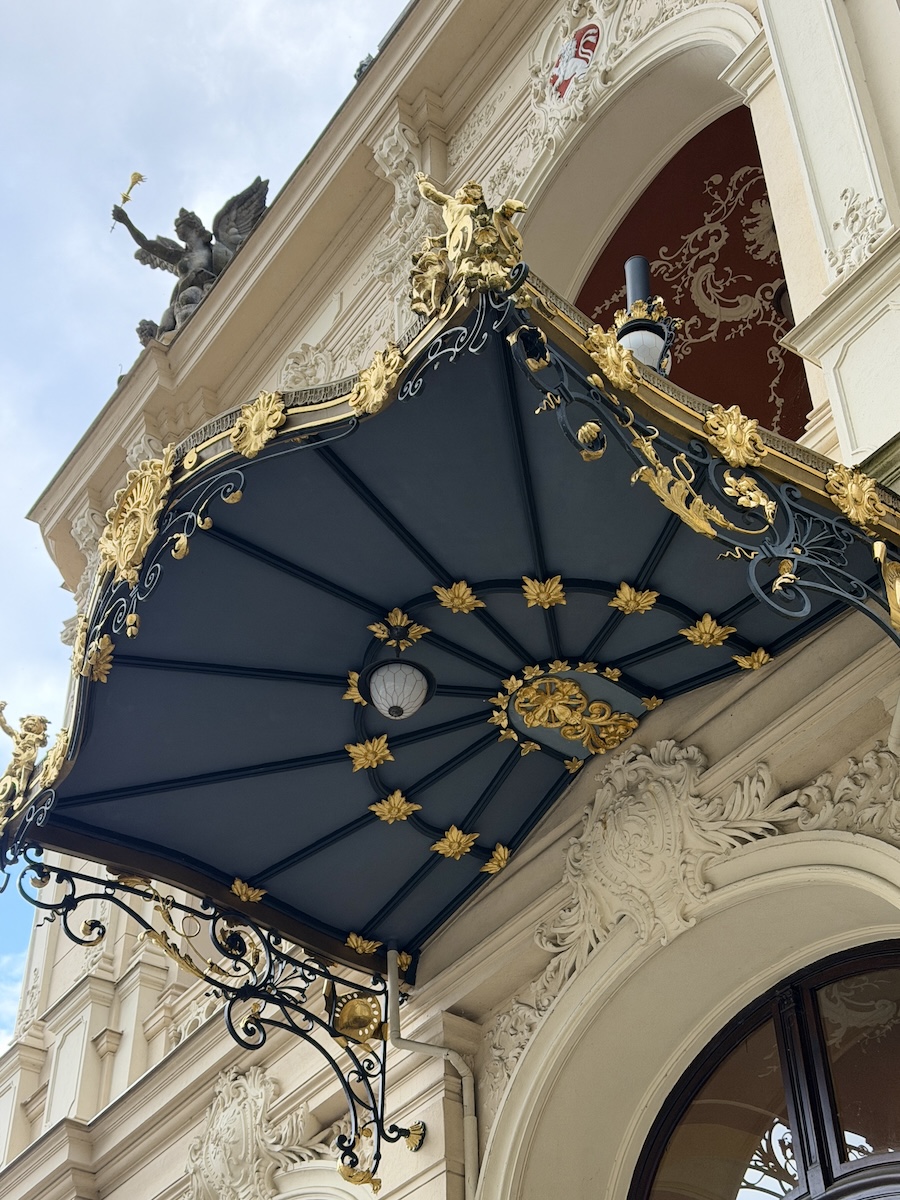
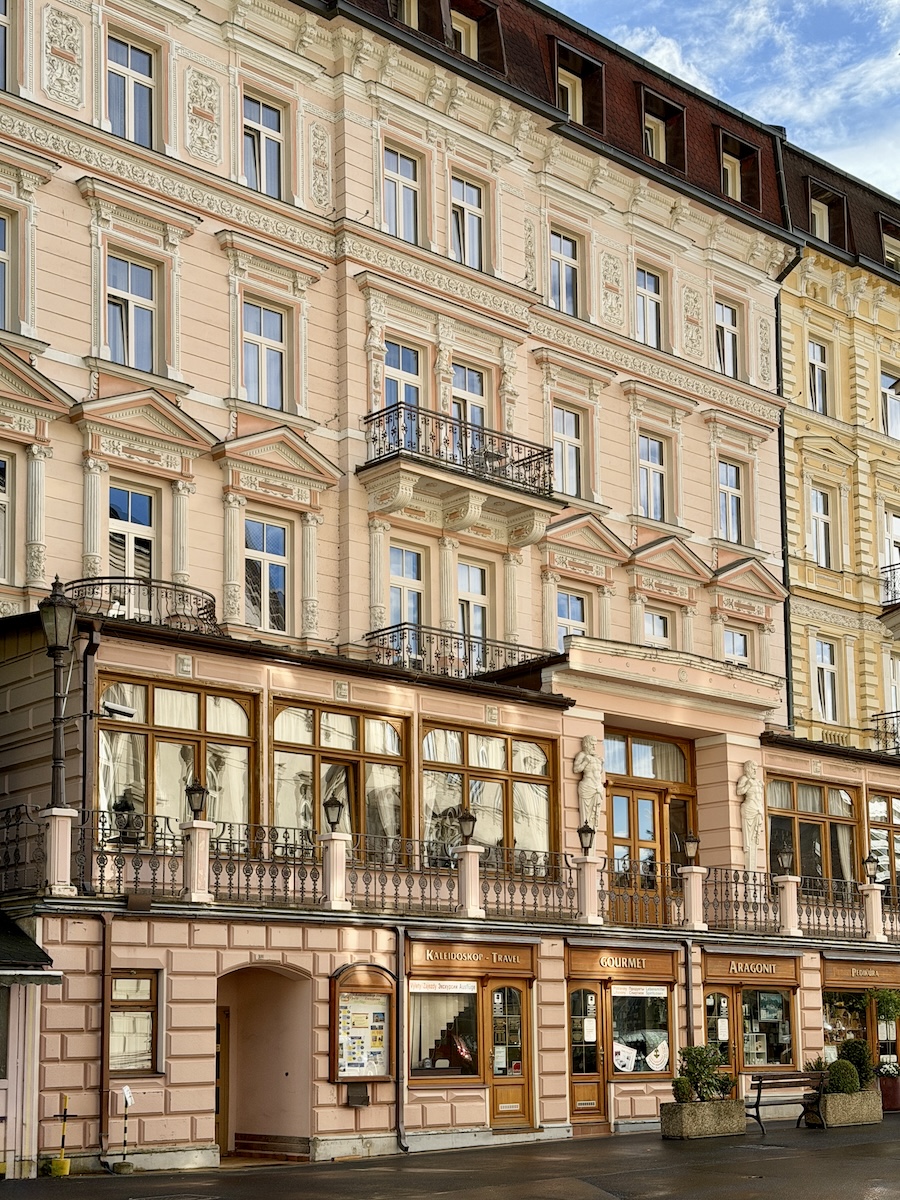
Admire Karlovy Vary’s Beautiful Architecture
If you’re anything like me, you’ll probably spend half of your trip to Karlovy Vary looking up instead of straight ahead. 😉
After all, Karlovy Vary is overflowing with beautiful pastel-colored buildings, ornate balconies, decorative facades, and elegant hotels that almost look like they were plucked straight out of some European fairytale.
Swiss architect Le Corbusier famously compared Karlovy Vary to “a convention of cakes,” and once you see the rows of colorful, elaborately decorated buildings, it’s easy to understand what he meant!
Karlovy Vary’s present-day appearance was largely shaped by a major building boom in the late 19th century. By that time, Karlovy Vary had become one of Europe’s most fashionable spa destinations and attracted aristocrats, artists, and other visitors from across the continent.
Over the next few decades, the flourishing spa town gained new hotels, colonnades, bathhouses, and cultural landmarks. The result is the beautiful mix of Historicism, Neo-Renaissance, Neo-Baroque, and Art Nouveau architecture you see today.
Ok, thanks for the history lesson, Luda, you might say, but where are the most beautiful buildings in Karlovy Vary?
Ah, dear reader, I’m glad you asked. The answer is simple: they’re everywhere!
Ok ok, let me be a little more specific. 😉
If you’re arriving in Karlovy Vary by bus or train, start with T.G. Masaryka Street. It’s a short walk from the main station and is lined with handsome historic buildings, decorative façades, shops, and cafes. In fact, it reminded me a little of my hometown in Ukraine, Chernivtsi or the unique architecture in Subotica.
From there, turn onto Zahradní Street, which runs beside Dvořák Gardens. This is one of the prettiest stretches in the city, with row after row of pastel-colored houses and façades covered in decorative details.
Finally, I’ve saved the best for last: the historic spa district along the Teplá River. The buildings here are larger, grander, and far more theatrical. It feels as if each hotel and spa resort is trying to outdo its neighbor! Some are covered in turrets, columns, statues, and intricate stucco work, while others stand out with unusual shapes, bold colors, or dramatic lines.
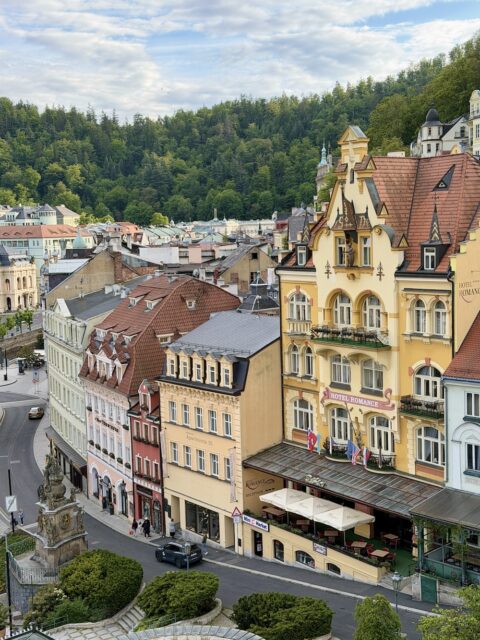
See the Side of Karlovy Vary Most Visitors Miss
Karlovy Vary is beautiful at first glance, but its history, architecture, and spa traditions are what make the city truly interesting.
This guided walking tour takes you through the historic center while sharing stories about Karlovy Vary’s famous visitors, elegant buildings, and centuries-old spa culture.
You’ll stop to taste all 12 traditional drinking springs and learn what makes each one unique. :)
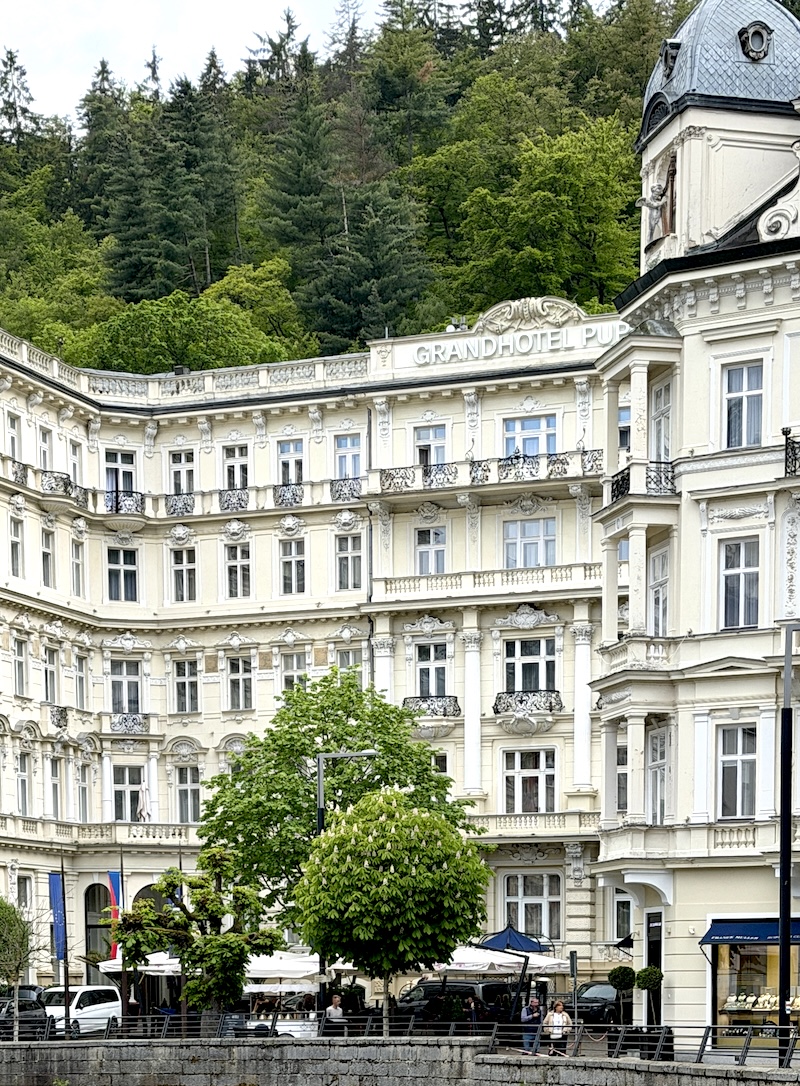
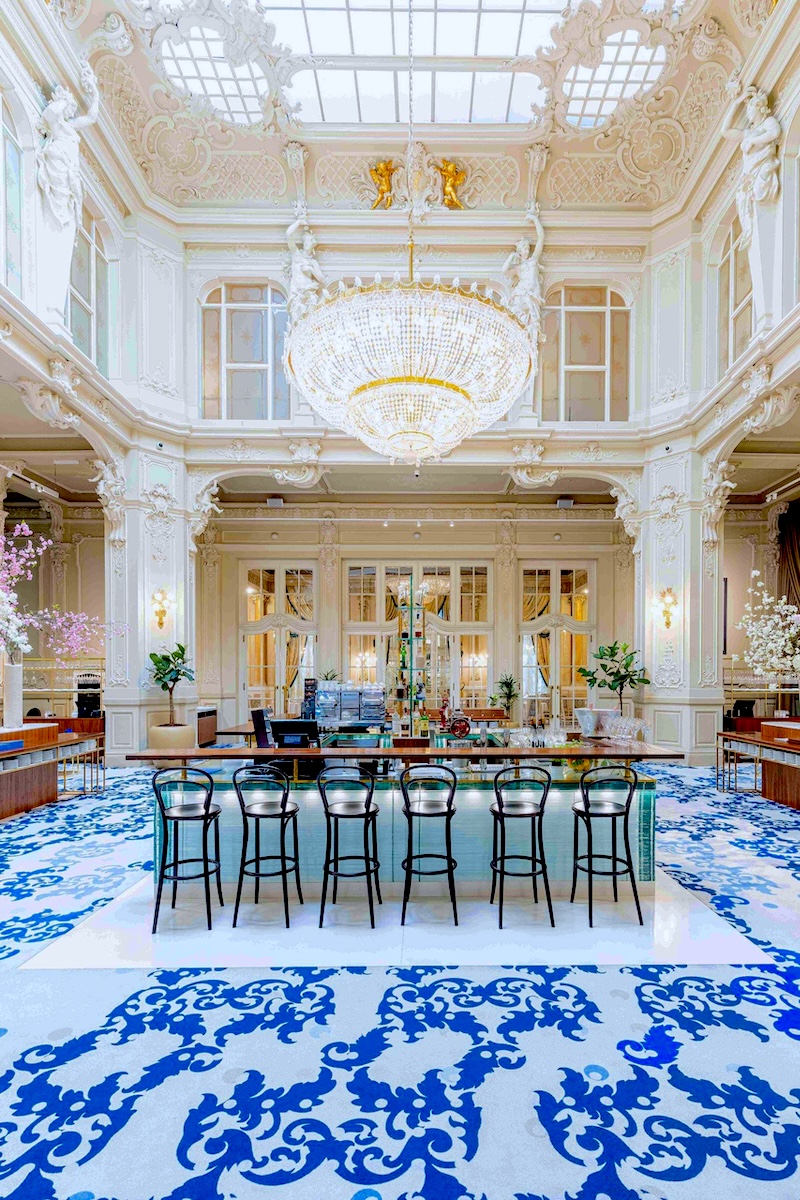
Visit the Legendary Grandhotel Pupp
New York City and The Plaza Hotel, Singapore and Marina Bay Sands, Rio de Janeiro and Copacabana Palace… Some hotels become such an iconic part of a city’s identity that they’re attractions in their own right, and Karlovy Vary is no exception!
Opened in 1701, Grandhotel Pupp has been welcoming guests for more than three centuries. Over the years, everyone from royalty and politicians to artists and Hollywood stars have walked through its doors, including historic figures like Beethoven, Bach, Napoleon (yes, that one), Empress Maria Theresa, and Kafka, to modern-day celebrities like Antonio Banderas, Renée Zellweger, and Johnny Depp.
Even if you’re not staying overnight, don’t worry — you can still step inside! Admire the elegant lobby, enjoy a drink or afternoon tea at one of the hotel’s cafes, or treat yourself to dinner at the restaurant. Spa treatments are also open to the public.
For a particularly delicious excuse to visit, stop by Café Pupp and order the hotel’s signature Pupp Cake. It features a coconut-and-almond sponge layered with apricot and chocolate flavors, plus a touch of Becherovka (of course 😉).
Despite its legendary status, staying at Grandhotel Pupp can be surprisingly affordable (particularly if you’re visiting during the shoulder or off-season). If you want to experience Karlovy Vary’s most famous hotel for yourself, you can check prices and availability at Grandhotel Pupp here →
See Where Royalty Came to Bathe at the Imperial Spa…
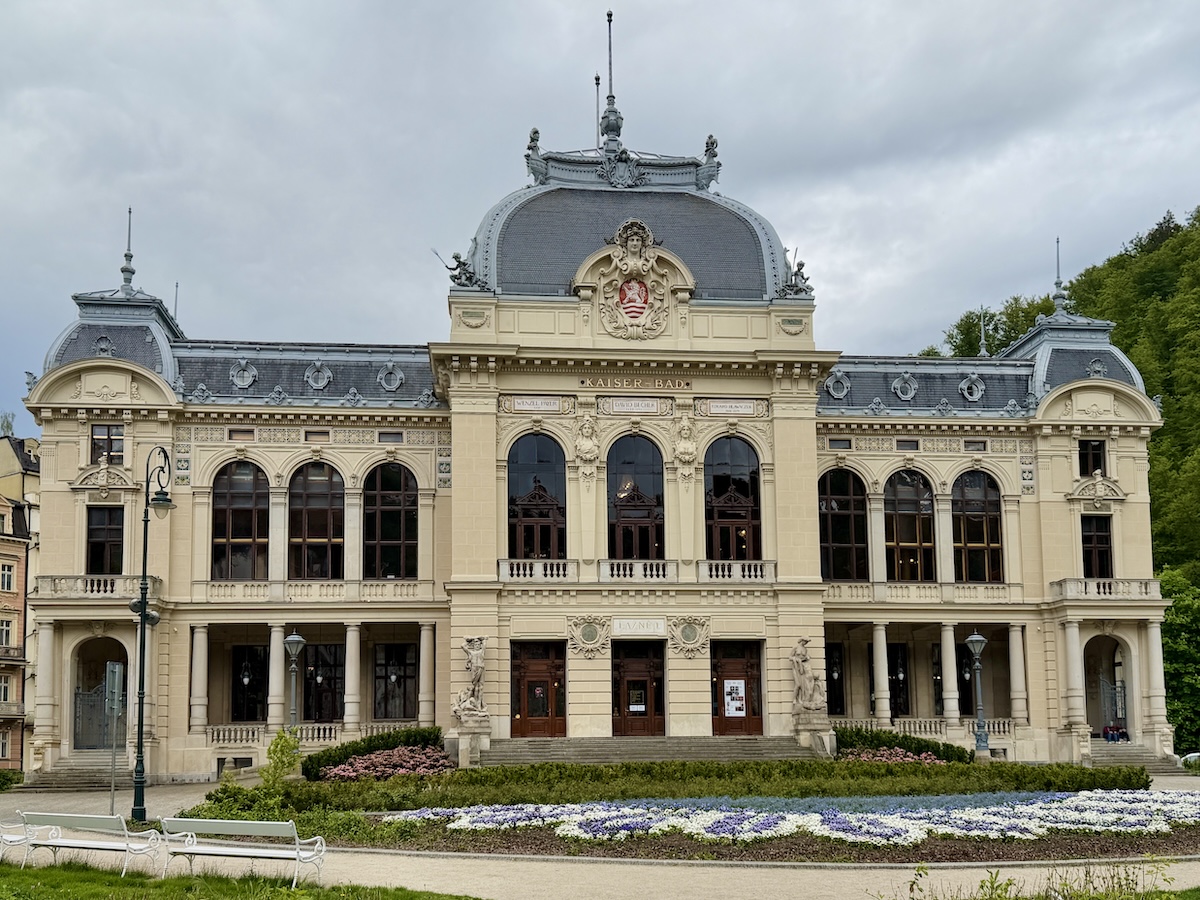
While you’re near Grandhotel Pupp, there’s another magnificent building right next door that deserves a visit: the Imperial Spa (also known by its historic German name, Kaiserbad Spa).
As you can probably tell from the name, the spa was originally opened in 1895 for European aristocracy, politicians, and wealthy visitors who began to take an interest in the spa town.
The Imperial Spa was considered especially remarkable because it boasted the latest treatments of that time, including mineral water baths, hot and cold pools, steam rooms, peat treatments, as well as the usual massages and electrotherapy. Instead of using a communal bathing hall, visitors were treated in private spa cabins equipped for different types of procedures.
That’s not all — the spa even had its own state-of-the-art fitness center! Zander Hall contained dozens of exercise machines designed according to the methods of Swedish physician Gustav Zander. Powered by electricity, the unusual contraptions helped patients stretch, strengthen their muscles, and imitate the movements of physical exercise.
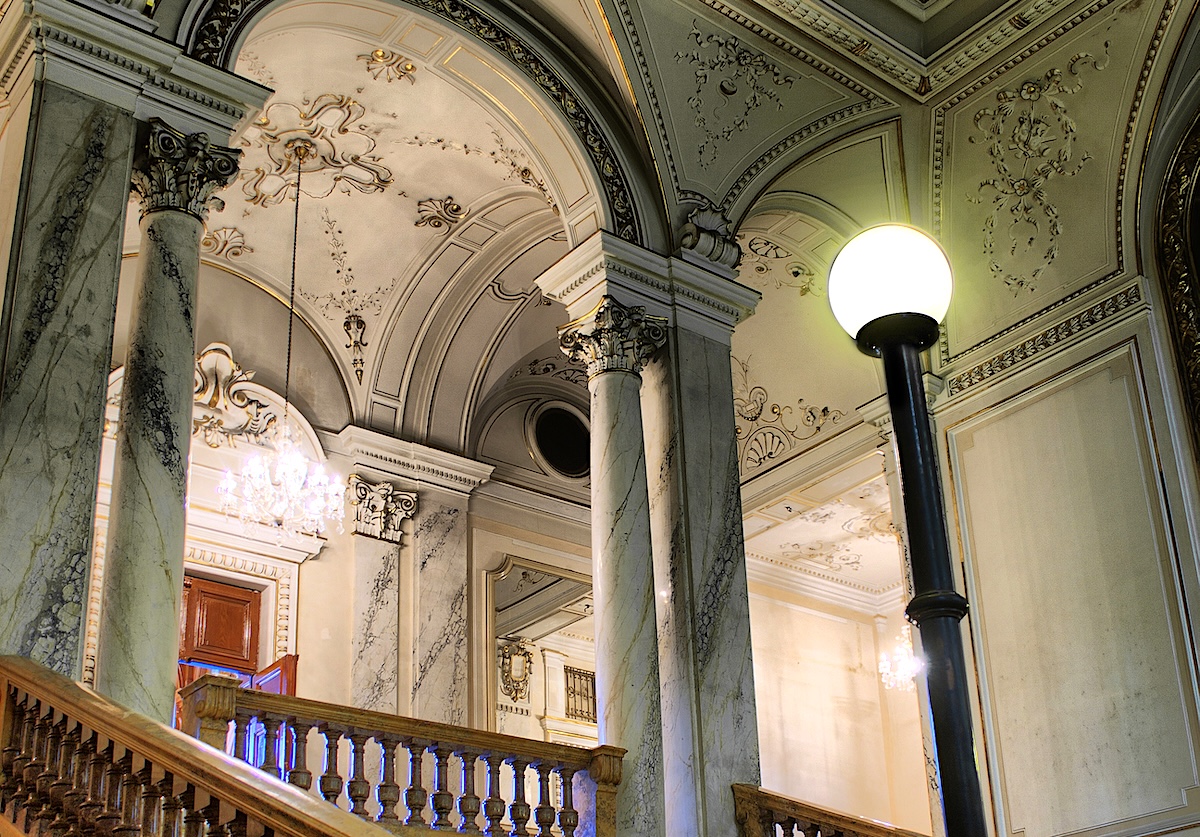
You know what else helped spa guests relax? The absolutely gorgeous interiors! Well, at least that’s what I think. 😉
From the marble columns to the geometric parquet floors, carved woodwork, stained glass, and beautifully painted walls, the building feels more like a grand European palace than a medical spa. Parts of it actually reminded me of Peleș Castle in Romania!
Speaking of the painted walls… There are two giant murals on the wall that features the spa’s most famous guests, including my favorite royal, Empress Sisi. 🫶 Other important guests who bathed here include Atatürk (the first president of modern-day Turkey), Persian shah Mozaffar ad-Din Qajar, and Czech president Tomáš Garrigue Masaryk.
Emperor Franz Joseph I also toured the building in 1904, although, rather ironically, he never actually used the imperial bath that was originally designed for him.
The Imperial Spa continued welcoming guests for decades, but by the late 20th century, its glory days were over and the building fell into disrepair. Even in its faded state, however, it was still glamorous enough for Hollywood: the spa appeared in the 2006 James Bond film Casino Royale.
The spa was officially transferred to the city of Karlovy Vary in 2008, which gradually restored it to its former glory.
Today, you can join a guided tour to wander through its former treatment rooms and admire the grand interiors. The spa also hosts concerts and cultural events throughout the year.
… And Enjoy a Spa Day Yourself!
Being one of Europe’s most famous spa towns, it’s only natural that Karlovy Vary is filled to the brim with luxurious spas, wellness centers, thermal treatments, and massage salons.
Even if you’re only visiting for a day, treating yourself to a massage or a few hours in a spa is one of the best ways to have the full Karlovy Vary spa experience.
As a bonus, many of Karlovy Vary’s biggest hotels have their own wellness centers. For example, we stayed at Hotel Jean de Carro, which offered massages, various sauna rooms, an indoor pool, and wellness treatments. It was the perfect way to unwind after a long day of sightseeing!
Fun fact: Karlovy Vary is part of UNESCO’s Great Spa Towns of Europe, a collection of 11 historic spa towns across seven European countries that helped shape the continent’s spa culture. In other words, you’re visiting one of Europe’s most iconic spa destinations!
Ride the Diana Funicular
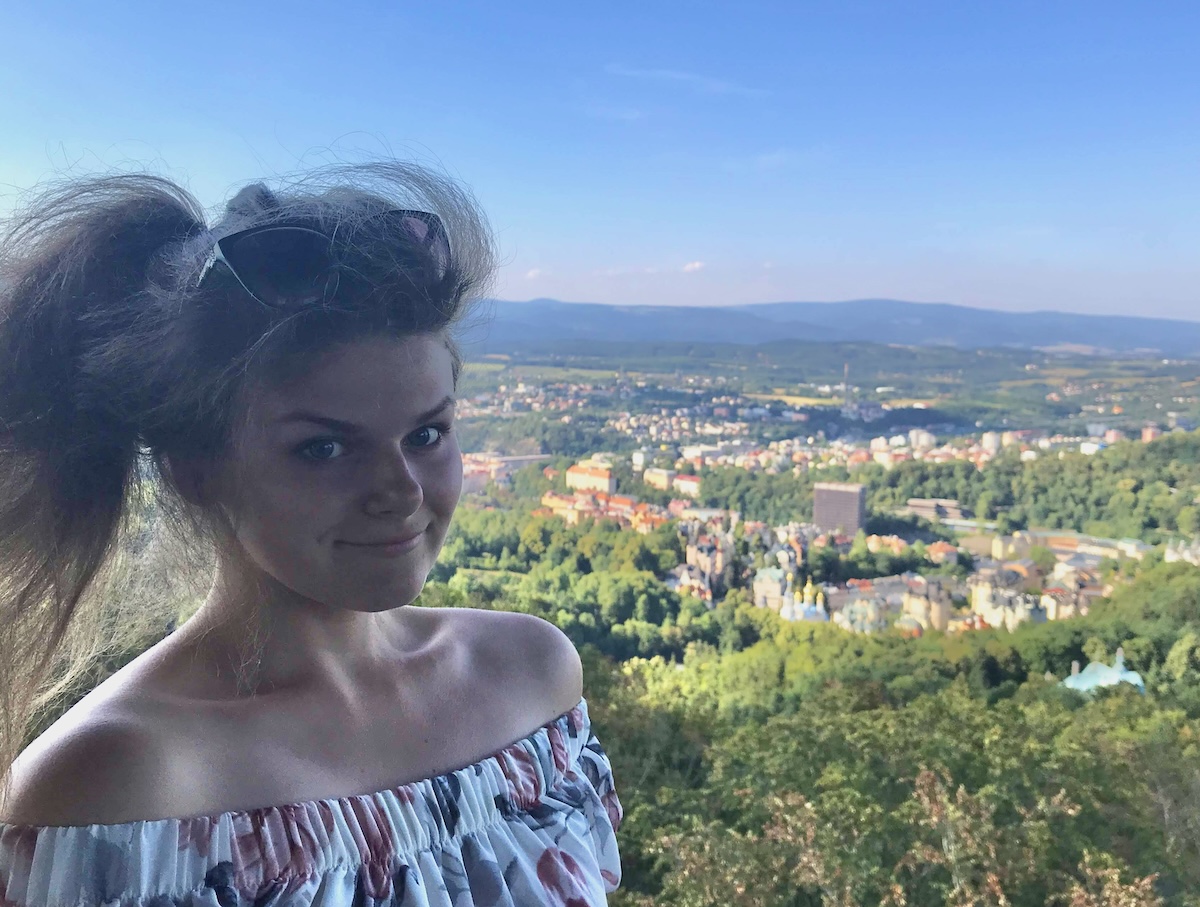
After exploring Karlovy Vary at street level, it’s time to hop on the Diana Funicular to see the city from a completely different angle.
The Diana Funicular has two main stations: the lower station is behind Grandhotel Pupp, while the upper station (Friendship Height) is where you’ll find the Diana Observation Tower and sweeping views over Karlovy Vary. The funicular typically departs every 15 minutes, so you don’t need to plan your visit too carefully.
Once you reach the top, you can enjoy the views from Diana Observation Tower, stop for a meal at the restaurant, visit the Butterfly House (a fun activity with kids!), or continue along one of the walking trails through Karlovy Vary’s famed “spa forests.”
Travel tip: You can buy one-way tickets or round-trip tickets on the funicular. If the weather is nice, consider buying a one-way ticket and hiking back down to the city through the forest (~30 minutes).
Enjoy the View From Castle Tower
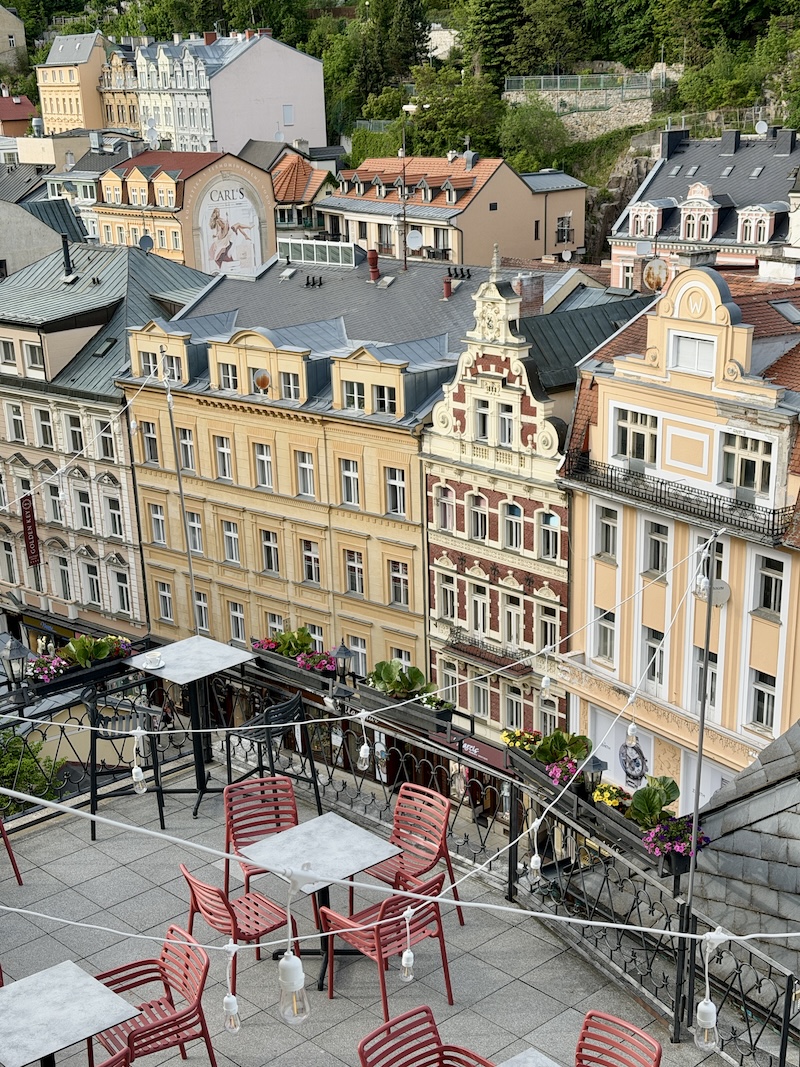
Of course, the Diana Observation Tower isn’t the only place with amazing panoramas. Back in the historic center, Castle Tower offers one of the best views of Karlovy Vary.
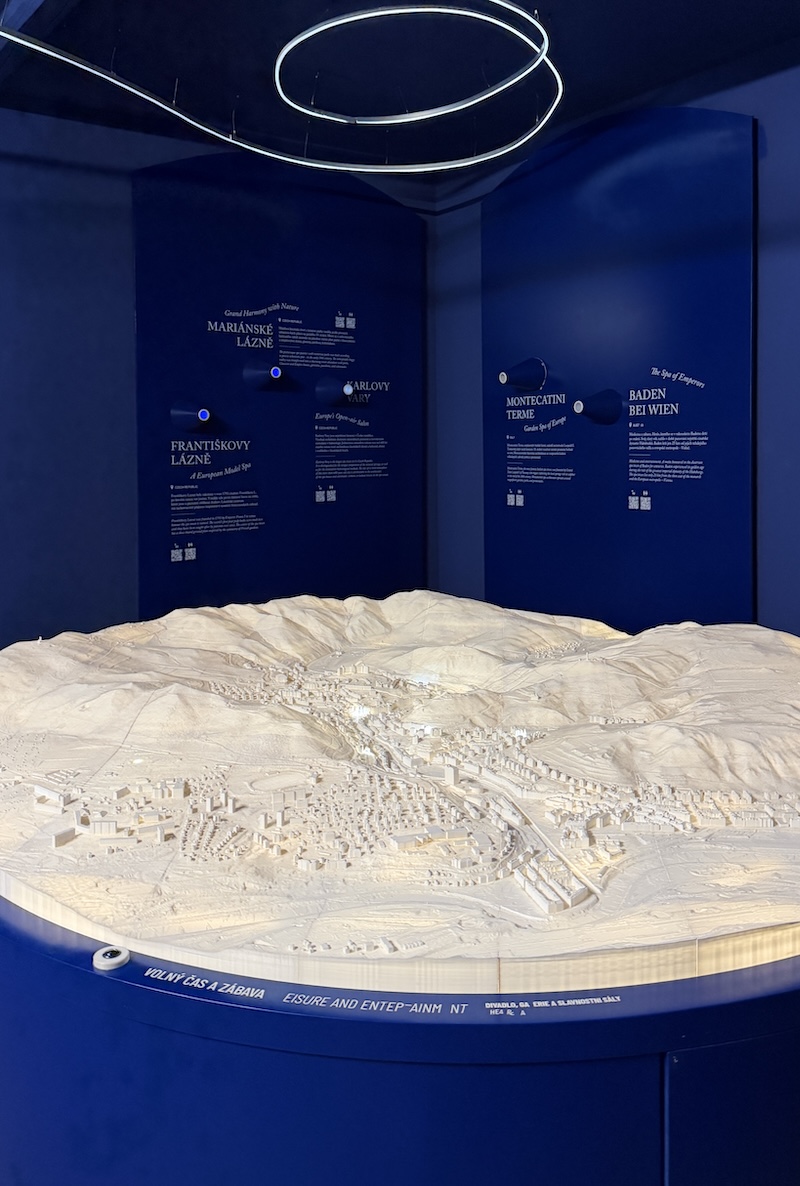
The tower has a cafe on one level and a small museum on the upper floor. To be completely honest, I didn’t think the museum was worth the admission fee. There was an exhibition focused on the Great Spa Towns of Europe… which sounds interesting in theory, but much of the same information was displayed for free on poster boards around the city. 😅
The coffee was great though! The barista made an excellent latte, so no complaints there. :)
Go Hiking in Karlovy Vary
Once you’ve explored the colonnades and spa district, head into the hills for a completely different view of the city.
There are marked trails leading to viewpoints, gazebos, and monuments around the city, with options ranging from gentle walks to steeper routes toward lookouts like Deer Jump, Three Crosses, and Goethe’s Lookout.
Even a short hike is worth it for the views and the chance to see a quieter (and greener) side of Karlovy Vary!
Stroll Through Dvorak Park
If you’re visiting the Park Colonnade (Sadová Kolonada), be sure to take a little detour and visit the park nearby.
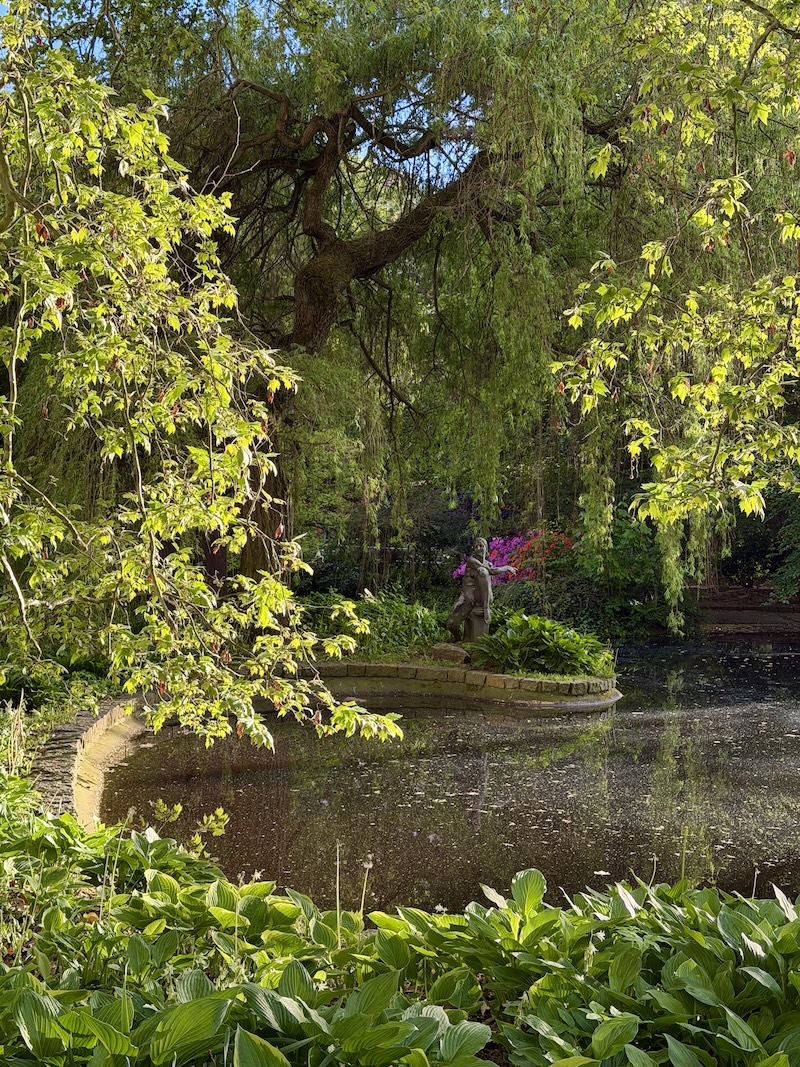
While it’s not a major attraction, Dvořák Park is a small but beautifully landscaped garden with winding paths, flower beds, statues, and a peaceful pond shaded by drooping willow trees. It almost feels as if a Monet painting was brought to life and dropped in the middle of Karlovy Vary!
Learn About the City’s History at the Karlovy Vary Museum
Although Karlovy Vary is better known for its spa culture than its cultural offerings, there are still plenty of museums in Karlovy Vary — case in point, the Karlovy Vary Regional Museum. :)
The exhibits cover how the city was founded by Charles IV, the development of spa treatments, the surrounding wildlife, and even the history of the Karlovy Vary International Film Festival. I really liked the interactive displays and touchscreens, which made the visit more immersive.
The museum is a nice place to spend one or two hours, depending on how closely you read the exhibits. It’s also a perfect rainy-day activity (or a nice break when you’ve had enough mineral water for one afternoon 😉).
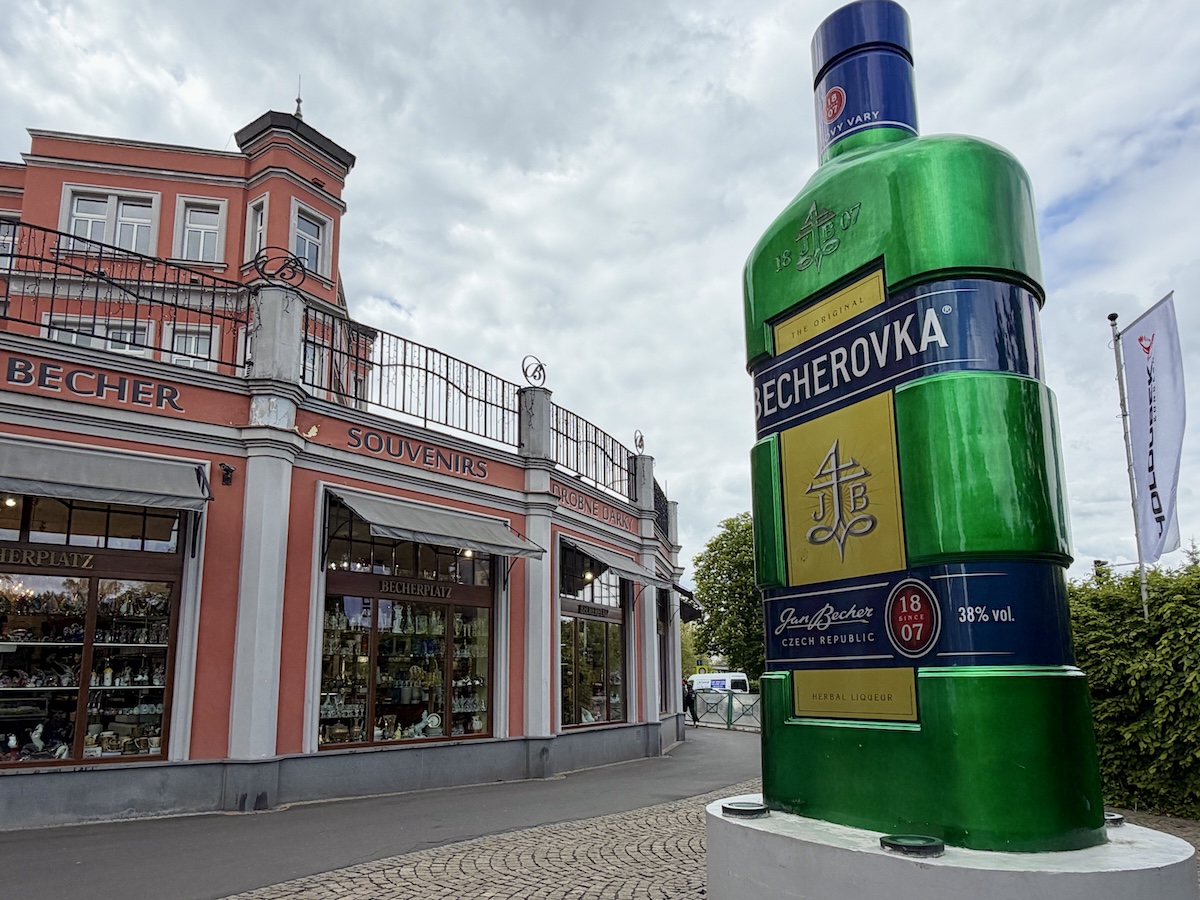
Try Karlovy Vary’s Famous Herbal Liqueur at the Becherovka Museum
There’s a local joke that Becherovka is Karlovy Vary’s “13th spring” — unlike the mineral variety, however, this particular “spring” contains 38% alcohol. 😌
Czechia’s most famous herbal liqueur has been produced in Karlovy Vary since 1807 from a closely-guarded recipe of 20 herbs and spices.
At the Home of Becherovka visitor center (also known as the Jan Becher Museum), you can learn more about the Becher family, see historic bottles and equipment, and discover how the drink developed from a local medicinal tonic into one of Czechia’s best-known liqueurs.
Visits are only available as guided tours and include a liqueur tasting for adults.
I recommend booking tickets in advance here, especially if you plan on taking the English language guided tour!
Visit the Beautiful Churches of Karlovy Vary
Karlovy Vary may be best known for its colonnades and spa hotels, but the city also has several beautiful churches worth checking out.
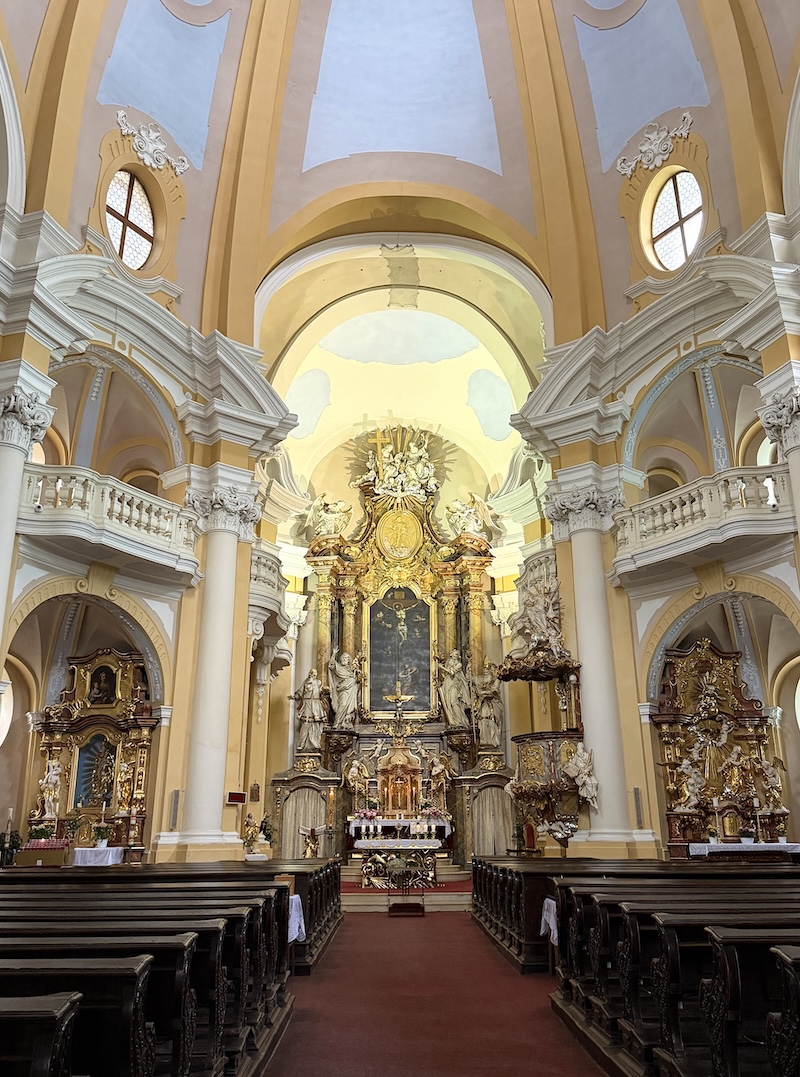
Most people start at the Church of St. Mary Magdalene, the grand Baroque church overlooking the Hot Spring Colonnade. Built in the 1730s, it has an ornate interior with a richly decorated altar.
That’s not all, though — it also has an underground crypt that contains remains from the former cemetery that once surrounded the earlier medieval church! Guided visits to the underground area are sometimes available, so check with the employees if you’d like to know more.
The church also hosts concerts throughout the year. When we were there, we happened to catch a local tenor performing Ave Maria, and the acoustics made it sound even more beautiful.
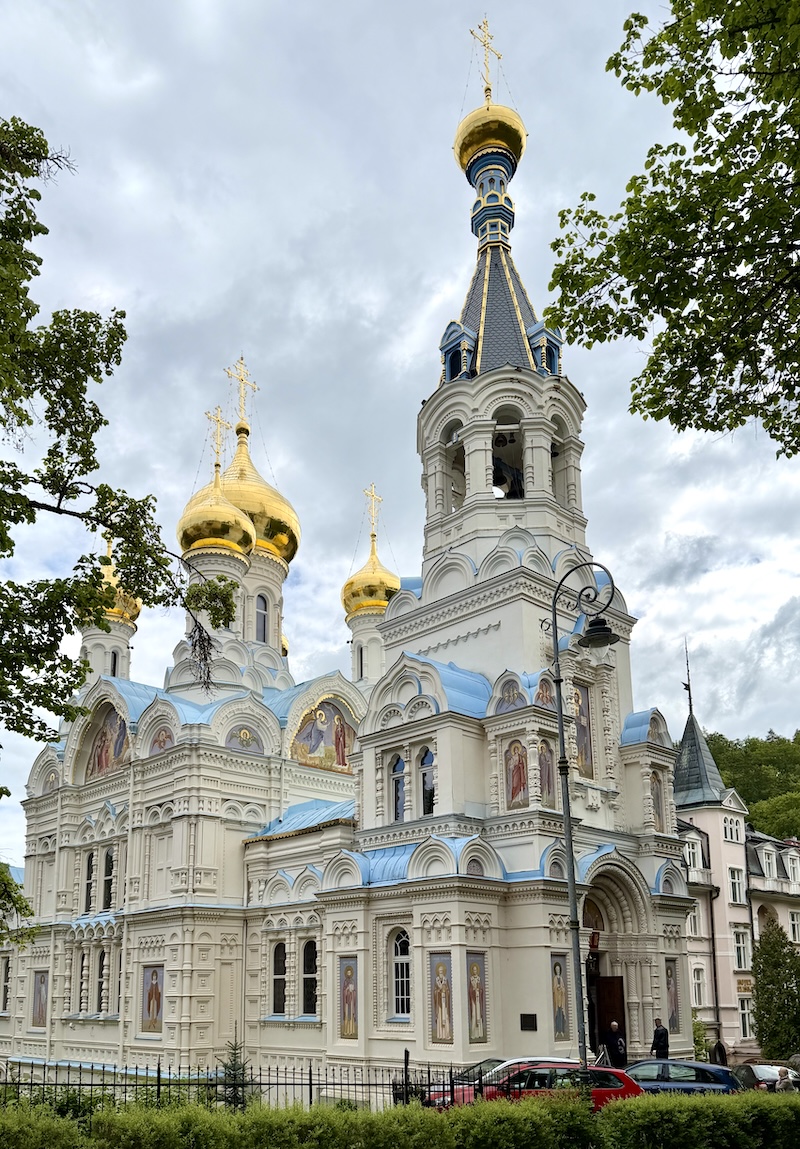
On the other side of town, the Orthodox Church of Saints Peter and Paul is impossible to miss thanks to its blue-and-gold onion domes and richly decorated interior. It opened in 1898 and was built in the Westend district, which was developing at the time as an exclusive neighborhood for wealthy spa guests.
Travel tip: I recommend pairing your visit to the Peter and Paul Church with a stroll around the Westend district (where the church is located). This is one of the oldest areas in Karlovy Vary and is full of beautiful villas that were built for wealthy visitors back in the day!
Commemorate Your Trip at the I LOVE VARY° Sign
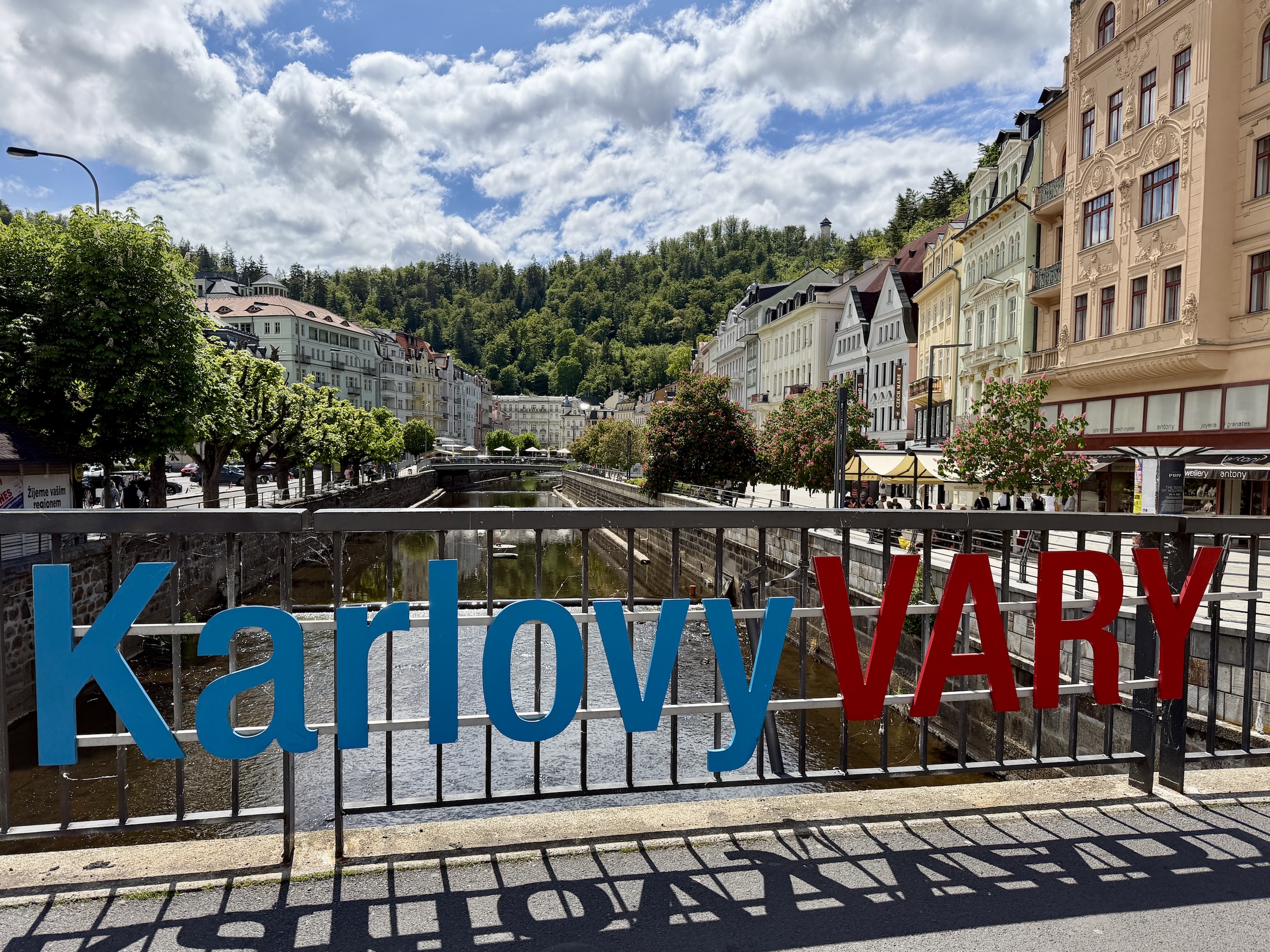
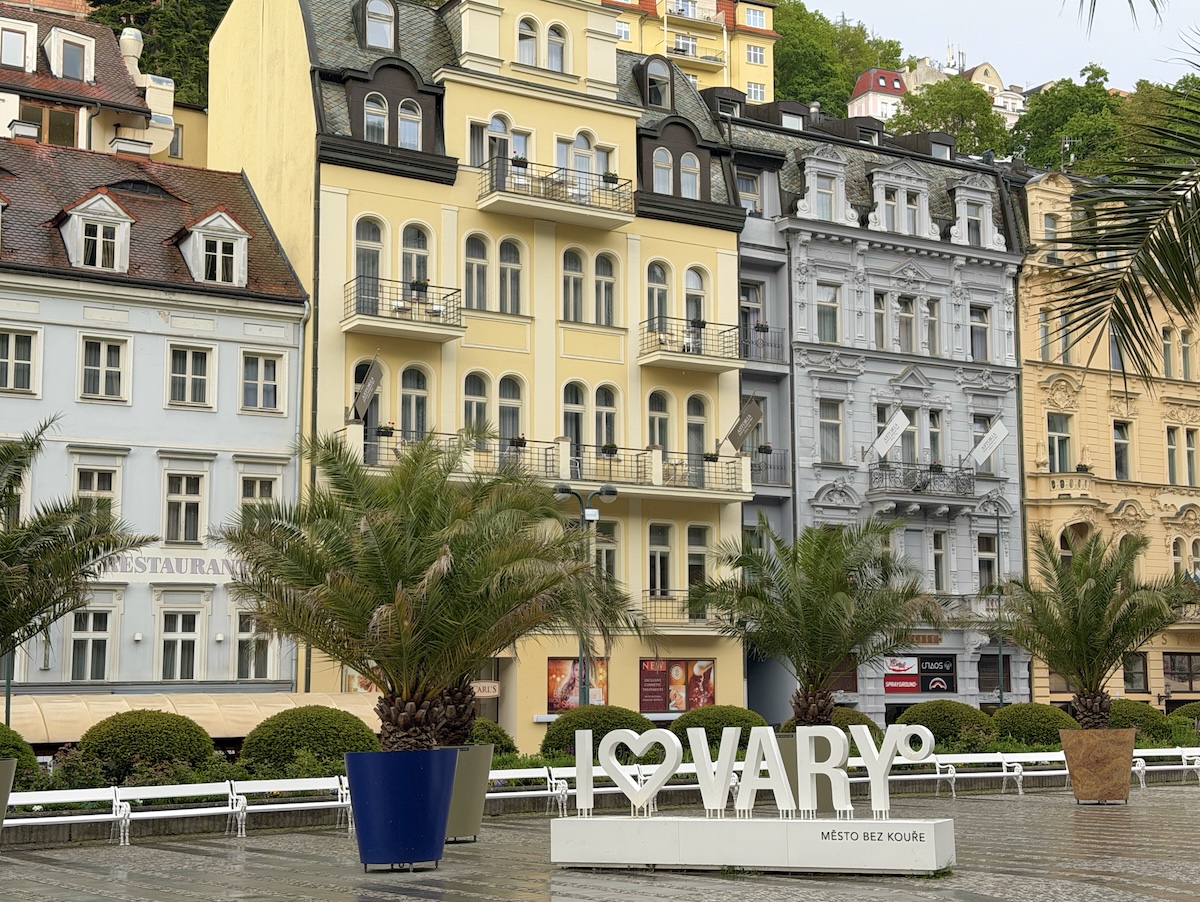
Last but certainly not least, don’t forget to snap a photo with the colorful I LOVE VARY° sign before leaving Karlovy Vary!
The oversized letters make a cute souvenir photo, and the sign’s location near the river gives you a beautiful backdrop of Karlovy Vary as well. :)
Since it’s a bit hard to find, I’ve added the 📍location here.
Day Trips from Karlovy Vary
Looking for the best day trips from Karlovy Vary? Western Czechia is packed with beautiful castles, UNESCO-listed spa towns, monasteries, and natural attractions that are easy to visit in a day! Here are my recommendations:
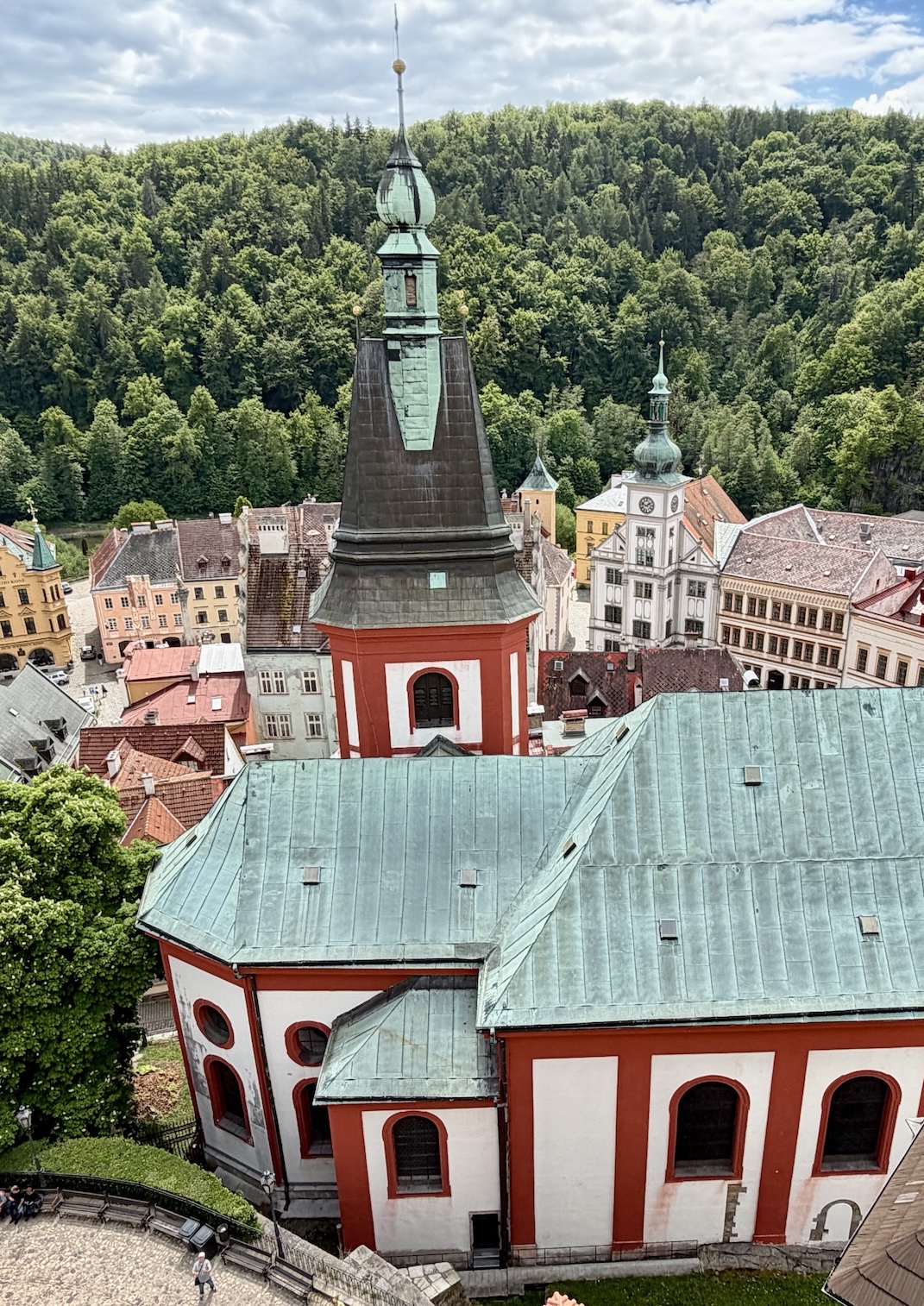
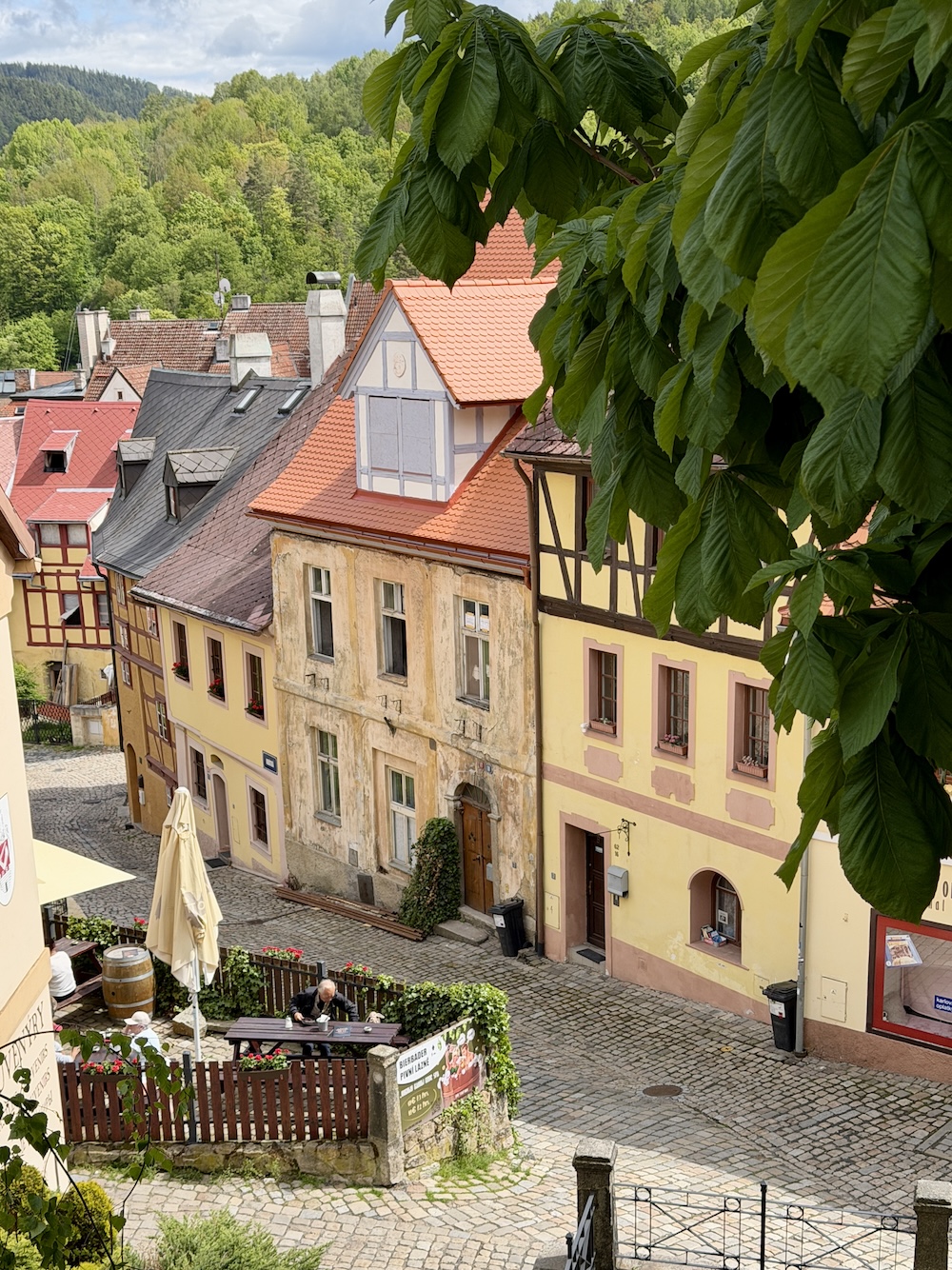
Loket: My top pick for a day trip from Karlovy Vary. This cute medieval town is built around a dramatic hilltop castle and surrounded by the Ohře River. It’s compact, photogenic, and easy to explore in half a day. Be sure to read my complete Loket travel guide for all the details! →
Bečov Castle and Chateau: This beautiful complex combines a Gothic castle, Renaissance palace, and Baroque chateau. Its star attraction is the 13th-century Reliquary of St. Maurus, one of Czechia’s most valuable historic treasures.
Karlovy Vary, Mariánské Lázně, and Františkovy Lázně form the famous Czech Spa Triangle. Each town has its own character and specializes in slightly different treatments, making them especially interesting to visit together! Here’s a quick overview of the other two:
Mariánské Lázně: The greenest and most spacious of the three spa towns, Mariánské Lázně is known for its landscaped parks, spring pavilions, and famous Singing Fountain. It’s a great choice if you love classic spa-town architecture but want a peaceful atmosphere.
Františkovy Lázně: The smallest and quietest of the three major West Bohemian spa towns. Its yellow-and-white Neoclassical buildings, flat parkland, and relaxed atmosphere make it a lovely option if you prefer somewhere peaceful and easy to explore on foot.
Teplá Abbey: A good choice for history, architecture, and impressive interiors. The peaceful monastery complex is especially known for its grand library, church, and centuries of religious history. It also pairs naturally with Mariánské Lázně, since the two are close by (~20 mins by car).
SOOS Nature Reserve: For one of the most unusual day trips in the region, visit this wild landscape of peat bogs, mineral springs, and bubbling mofettes that look like miniature volcanoes — all connected by boardwalk. That’s not all: peat was once harvested from SOOS to be used in treatments at nearby spa towns!