
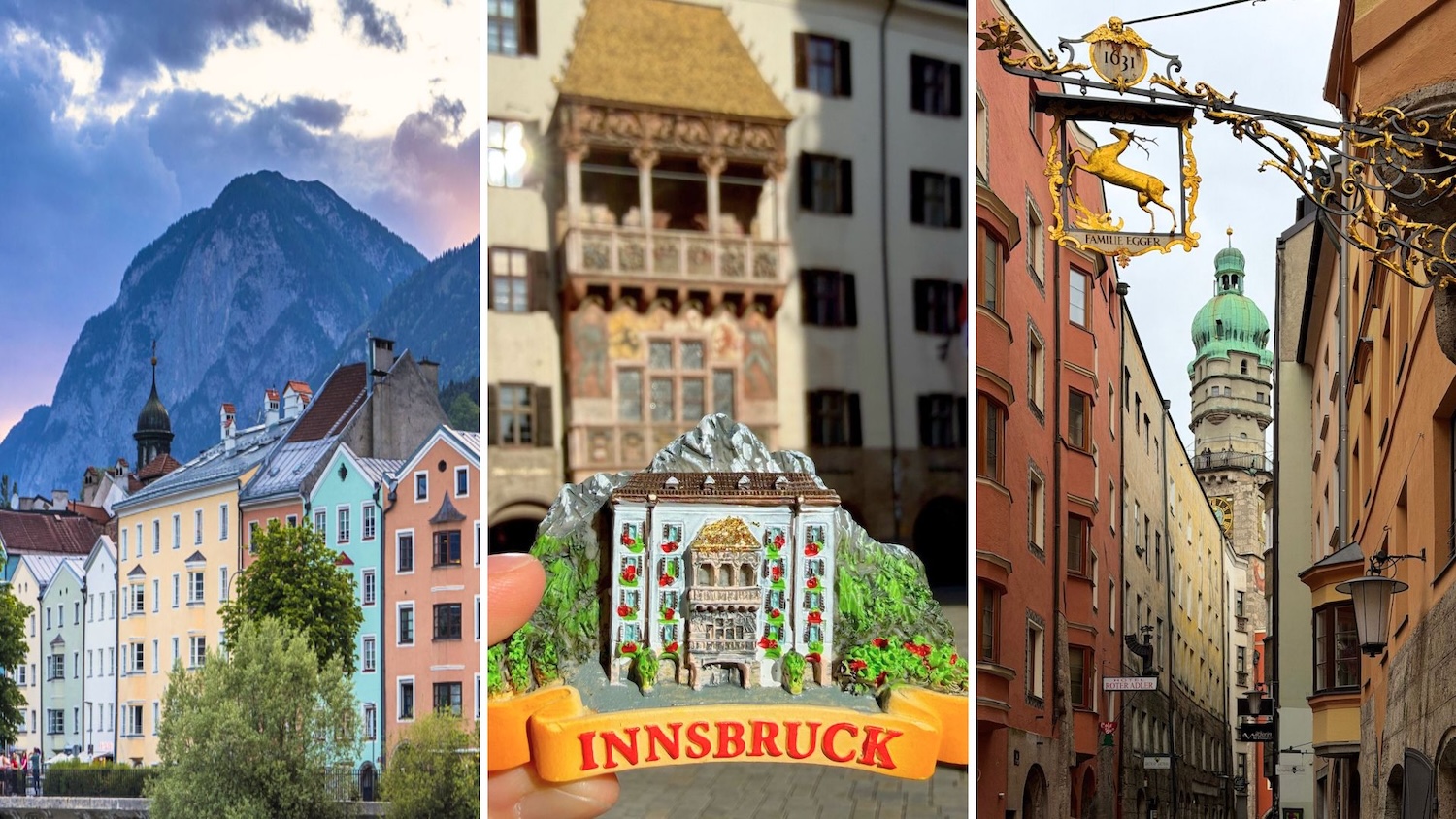
The Best 1- or 2-Day Innsbruck Itinerary for First-Time Visitors
At first glance, planning your Innsbruck itinerary might look easy — after all, it’s small, manageable, and compact.
But once you start looking closer, you realize there’s a lot more going on.
Between the colorful Old Town, imperial landmarks, mountain cable cars, museums, castles, and easy day trips, filling one or two days in Innsbruck suddenly becomes less obvious than expected.
No worries, that’s exactly where this Innsbruck travel guide itinerary will help. :)
Below, I’ll show you:
🏰 How to spend 1 day in Innsbruck if you’re short on time
🏰 How to spend 2 days in Innsbruck if you want a more complete experience
Each day includes the best things to do, realistic timing for each stop, and a clear Innsbruck sightseeing itinerary you can follow step by step. The second day builds on the first, so you can easily tack it onto your trip and extend your itinerary.
I’ve visited Innsbruck three times over the past few years (twice in winter, once in spring), and in my experience, 2 days in Innsbruck is the sweet spot. You’ll see the main highlights without rushing, and still have time to enjoy the mountain atmosphere.
That said, even 1 day in Innsbruck is enough to see the historical center and get a good introduction to the city, its history, and its attractions!
Without further ado, grab your passport and let’s check it out!
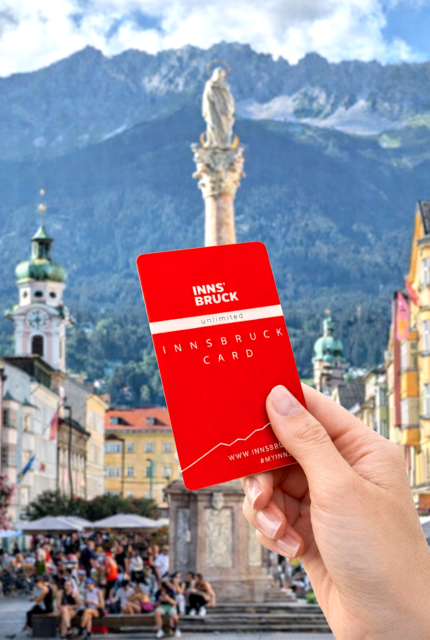
Should You Get the Innsbruck City Card?
If you’re planning to see several attractions, the Innsbruck City Card is definitely worth considering. Here’s why:
✔ Free entry to major attractions, including Hofburg Palace, Ambras Castle, and several museums
✔ Free use of public transport within the city
✔ Free round-trip ride on the Nordkette cable car (this alone is expensive if bought separately)
✔ Discounts on additional activities and tours
If you’re spending 2 days in Innsbruck and plan to visit at least 2–3 paid attractions, the card often pays for itself quickly (especially if you include Nordkette!)

DAY 1: Innsbruck City Center
Only have one day in Innsbruck? No worries!
This route covers the most important things to do in Innsbruck in 1 day, focusing on the walkable Old Town and its imperial landmarks. You’ll see the Golden Roof, historic churches, colorful riverfront houses, and even a visit to the grandiose Hofburg palace — all without needing public transport.
Here’s a quick overview of my Innsbruck sightseeing itinerary for day 1:
| Morning | Afternoon | Dinner |
|---|---|---|
| Triumphal Arch Breakfast Maria Theresien Straße Town Hall Plaza / St. Anna Column Colorful Houses / Marktplatz Golden Roof Helblinghaus | City Tower (optional viewpoint) Lunch Tyrolean Folk Art Museum Hofburg Palace Dom St. Jakob | Innsbruck Court Gardens (Hofgarten) Dinner |
From your hotel or accommodation, make your way to the Triumphal Arch ( 📍 location), which will be the starting point for today’s itinerary. We’ll start at the “furthest” point and make our way towards the city so there’s less back-and-forth and you don’t waste any time. ;)
Triumphal Arch (Triumphpforte)
Let’s start at the Triumphal Arch — or more specifically, from the south side looking north.
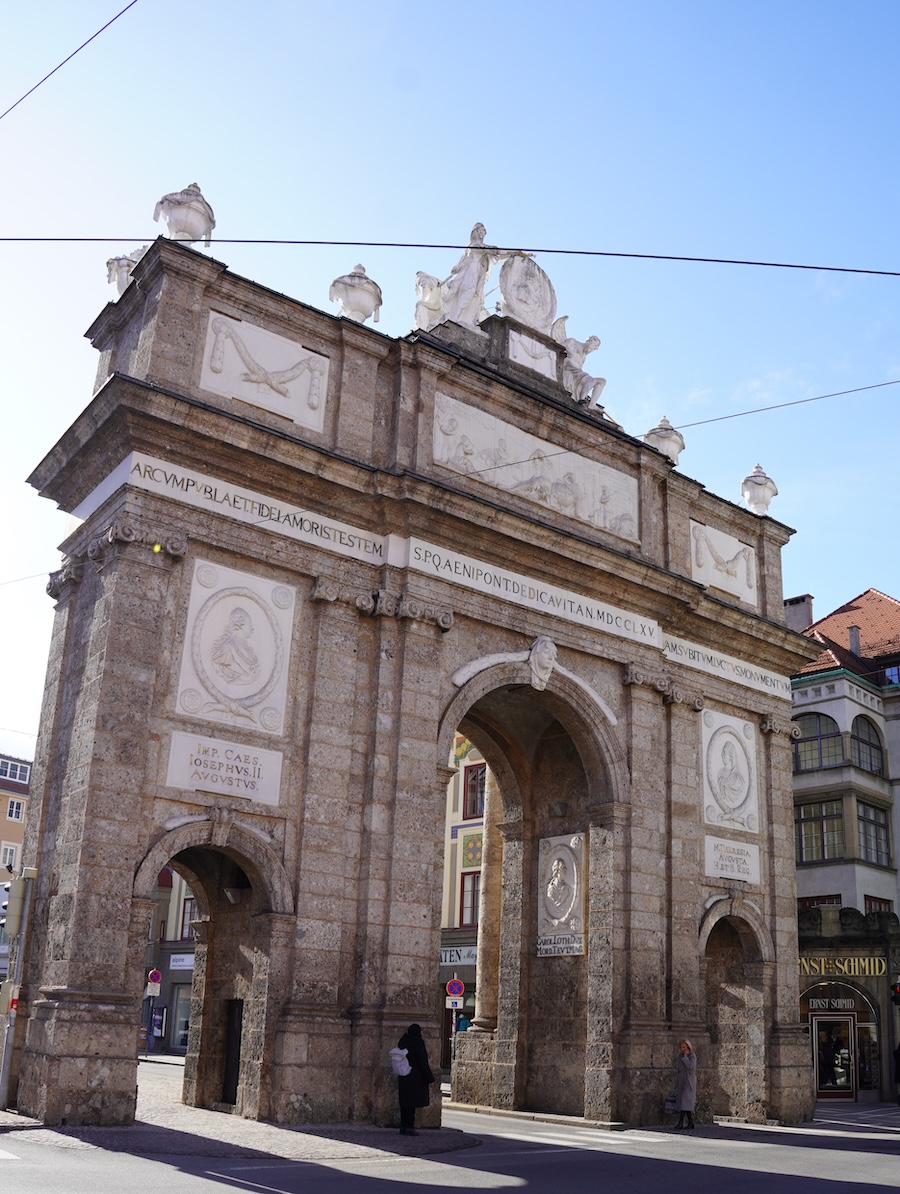
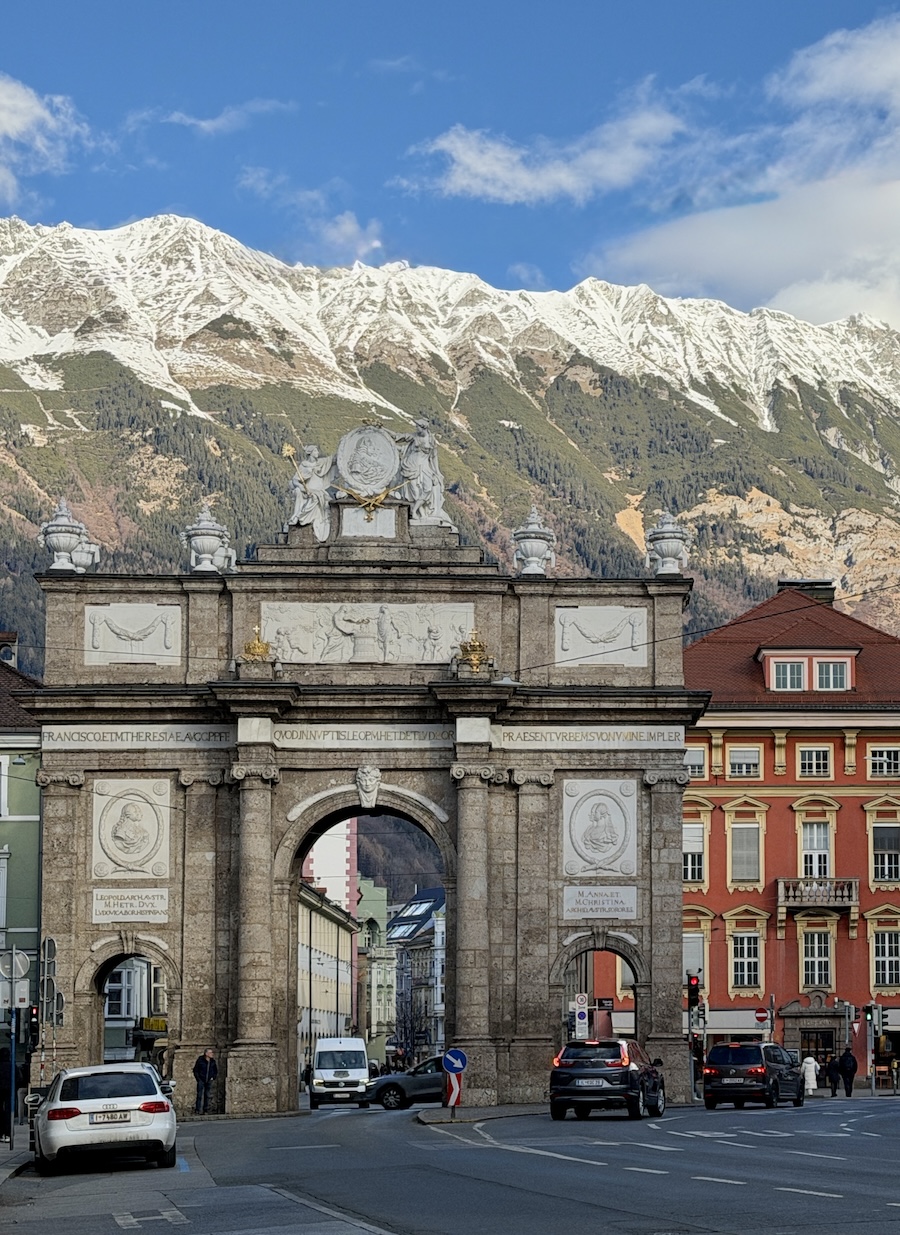
This is one of the most popular symbols of Innsbruck and was commissioned by Empress Maria Theresa in 1765 to commemorate the wedding between her son, Archduke Leopold, and his soon-to-be-wife Maria Ludovica.
Fun fact: This side faced toward Italy, the direction the bride came from (she was born in Naples). :)
While you’re looking at the arch, be sure to take a photo. On a clear day, the arch makes an excellent “frame” for the Nordkette mountains behind the skyline of the city center! This is a classic postcard view of Innsbruck.
However, the wedding had an unfortunate end. On the 13th day of wedding celebrations, the emperor died suddenly of a heart attack, and Empress Maria Theresa had the north-facing side redesigned as a tribute to her late husband. If you walk towards the city center and look at the other side, you’ll see the “sad” side that commemorates the emperor’s death.
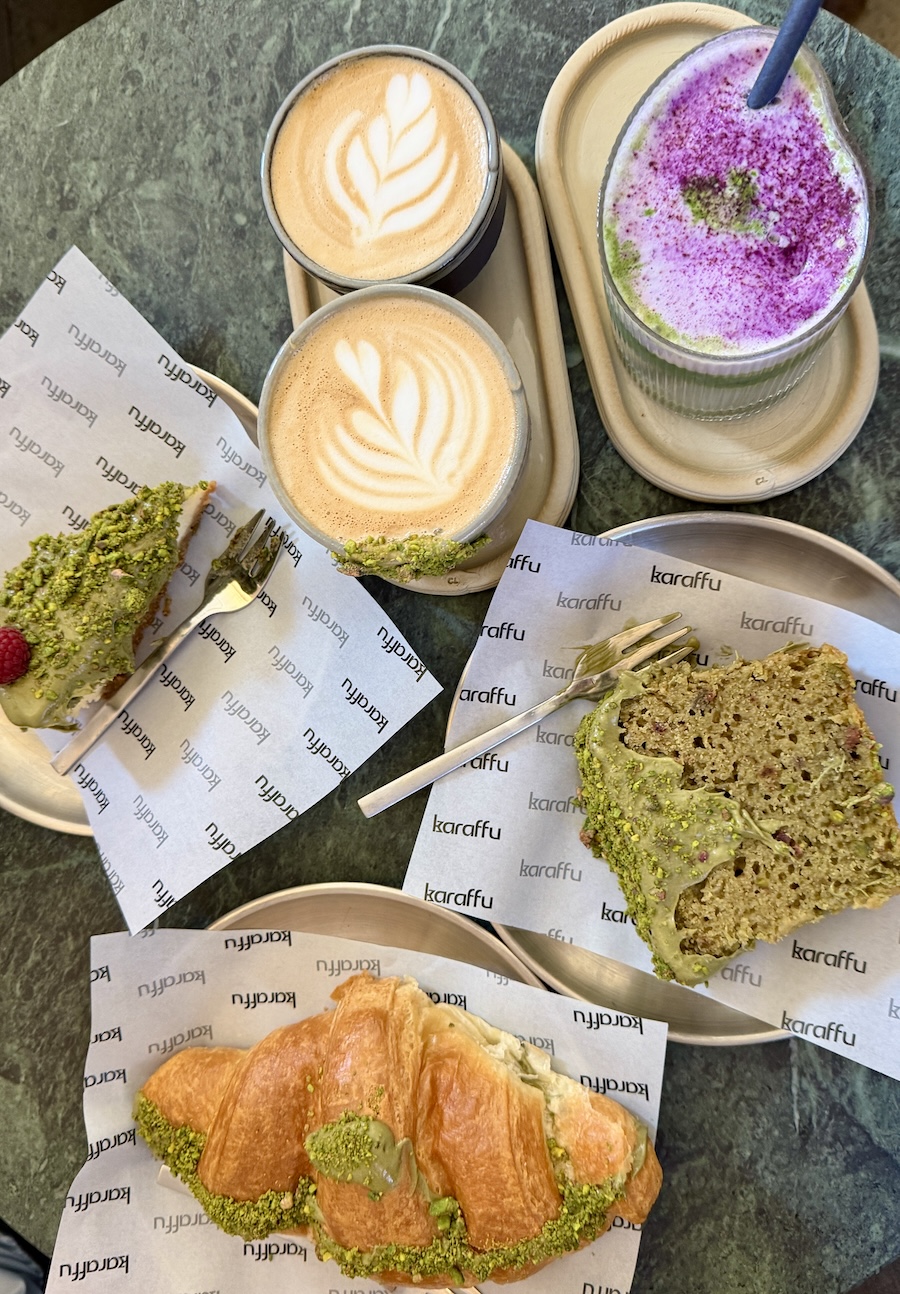
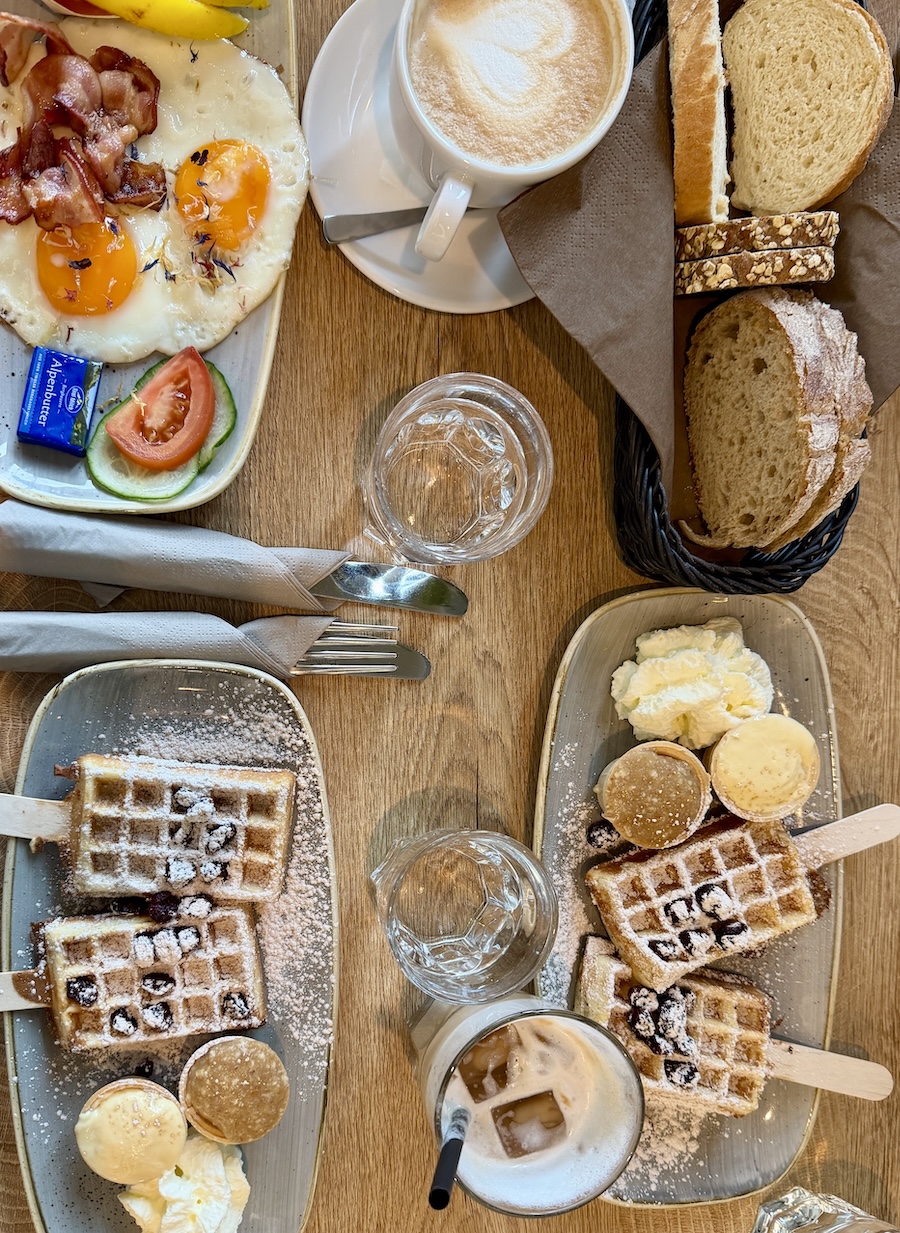
Breakfast Time!
If you didn’t eat breakfast, this is the perfect time to do so. There are plenty of fantastic breakfast spots around Maria-Theresien-Strasse. Here are my favorites that I’ve eaten at and recommend:
karaffu | coffee culture — A small cafe specializing in sweet pastries. Be sure to come early, as spaces are limited!
Der Bäcker Ruetz Maximilianstraße — Perfect if you’re a morning person, since this cafe starts working at 6am :) Der Bäcker Ruetz is a local chain of bakeries with lots of options, from savory breakfasts (like omelettes) to croissants, coffee, and more.
Breakfast Club — A nice spot with many breakfast options (hence the name!)
Maria Theresa Street (Maria Theresien Straße)
From the Triumphal Arch (or from your breakfast cafe 😉), make your way towards Innsbruck city center.
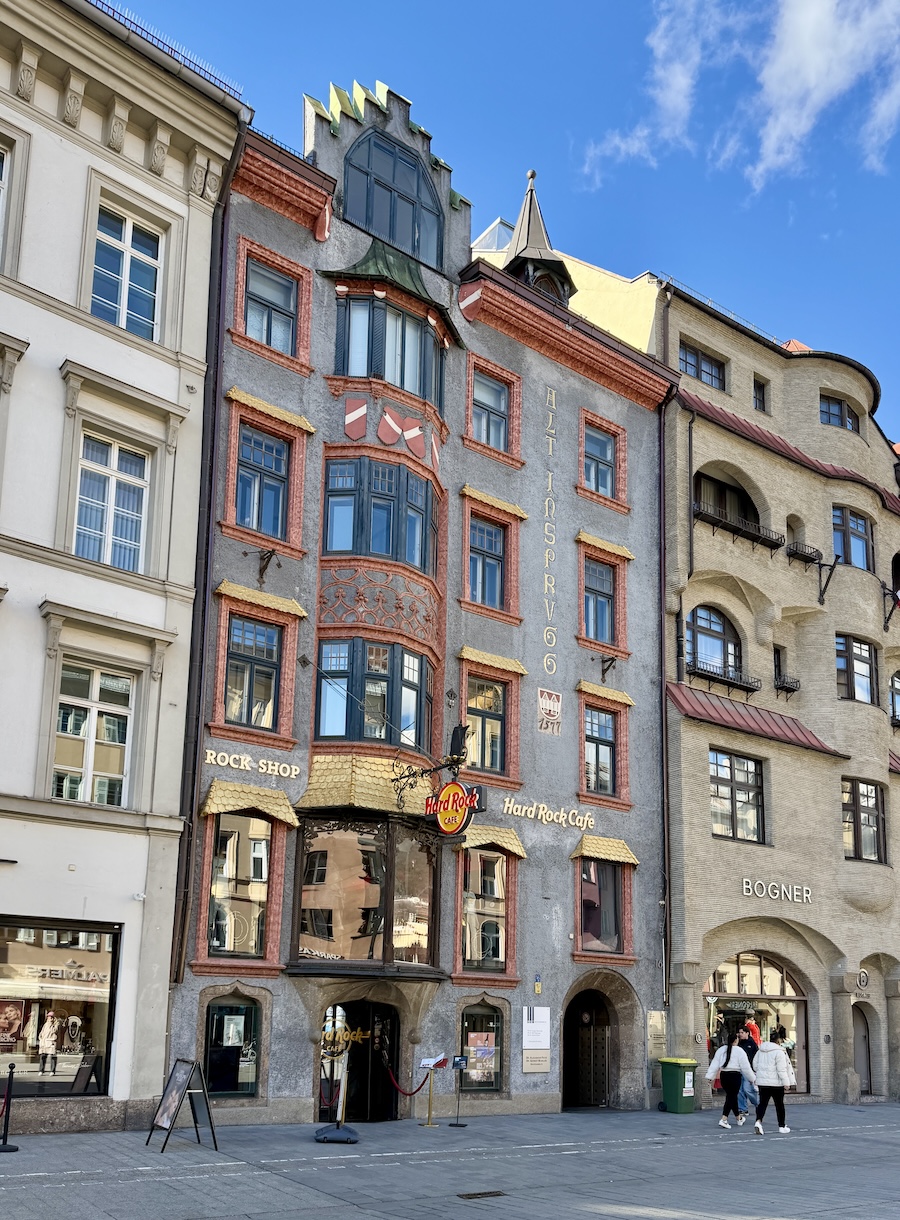
Be sure to take your time walking along Maria Theresa Street, as there are so many interesting and beautiful buildings found along this street!
This street developed mainly during the Baroque era (around the 1700s), when Innsbruck was expanding beyond its medieval core. Wealthy merchants and aristocratic families built large houses here, which is why many buildings look more refined and decorative than the medieval architecture you’ll see closer to the Golden Roof.
One of my favorite buildings is the Winklerhaus ( 📍 location), which is the most well-known Art Nouveau building in Innsbruck. The shades of green, the shining mosaics, and the little details are just so cool!
Once you’ve found your favorite building (or two!), let’s keep walking until we reach St. Anne’s Column.
Town Hall Plaza
This section of Maria Theresien Straße feels more like a plaza than a regular street. It doesn’t really have an official name, but since it sits right next to the Town Hall, let’s just call it Town Hall Plaza for simplicity. 😉
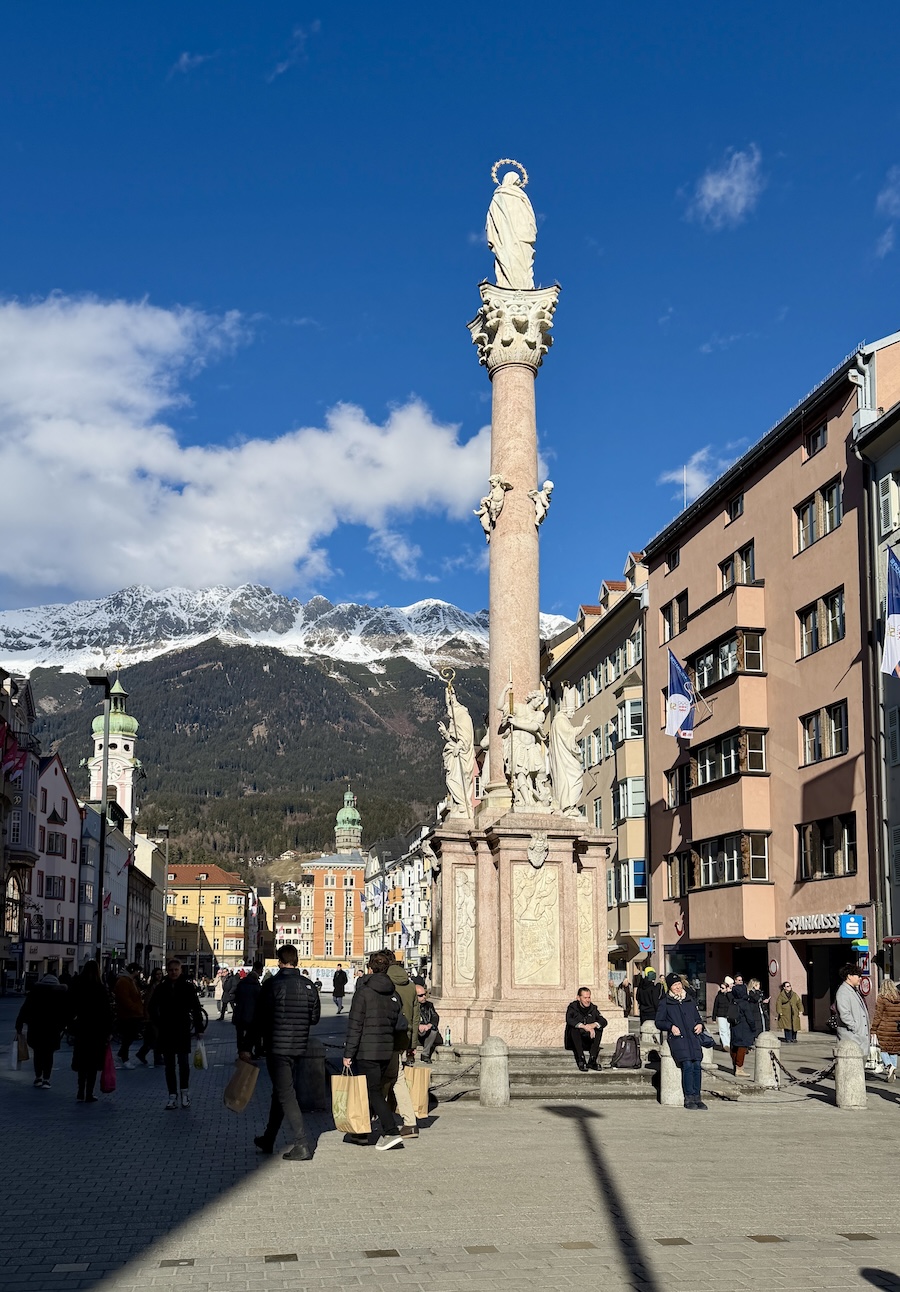
This “plaza” is wide, open, and pedestrian-only, which makes it a nice spot to slow down, look around, and enjoy the atmosphere. The colorful Baroque buildings that you’ve seen on Maria Theresien Straße continue here, and the “plaza” is filled with cafes and shops.
At the center is St. Anna’s Column (Annasäule), one of Innsbruck’s most recognizable landmarks. The column was unveiled in 1706 to commemorate the withdrawal of Bavarian troops from Tyrol, and is named after St. Anne, whose statue can be seen along with St. Cassian, St. George, and St. Vigilius.
From here, turn left and continue walking towards the Inn River. Just a few minutes away you’ll arrive at the famous colorful houses that appear in almost every Innsbruck photo!

Colorful Innsbruck Houses
You’ve reached one of the most iconic views in Innsbruck — the row of colorful houses lining the riverbank! With the Nordkette mountains rising dramatically behind them, this is easily one of the city’s most photographed spots.
In my opinion, the Marktplatz (📍 location), is one of the best places to take photos. There’s plenty of space (no need to wait in line to take a photo!) and you get that classic postcard-style angle where the buildings, the river, and the mountains line up perfectly.
If you’re starting to get hungry, you can also make an optional stop at Markthalle Innsbruck, the nearby indoor market. We’ll talk more about lunch options in the section below, so feel free to save this for later if you prefer.
Once you’re ready, follow the road back toward the center and walk along Herzog Friedrich Straße. This historic street will lead you straight to Innsbruck’s most famous landmark: the Golden Roof!
Golden Roof (Goldenes Dachl)
Outside free | Museum inside open 10AM—5PM every day except Mondays
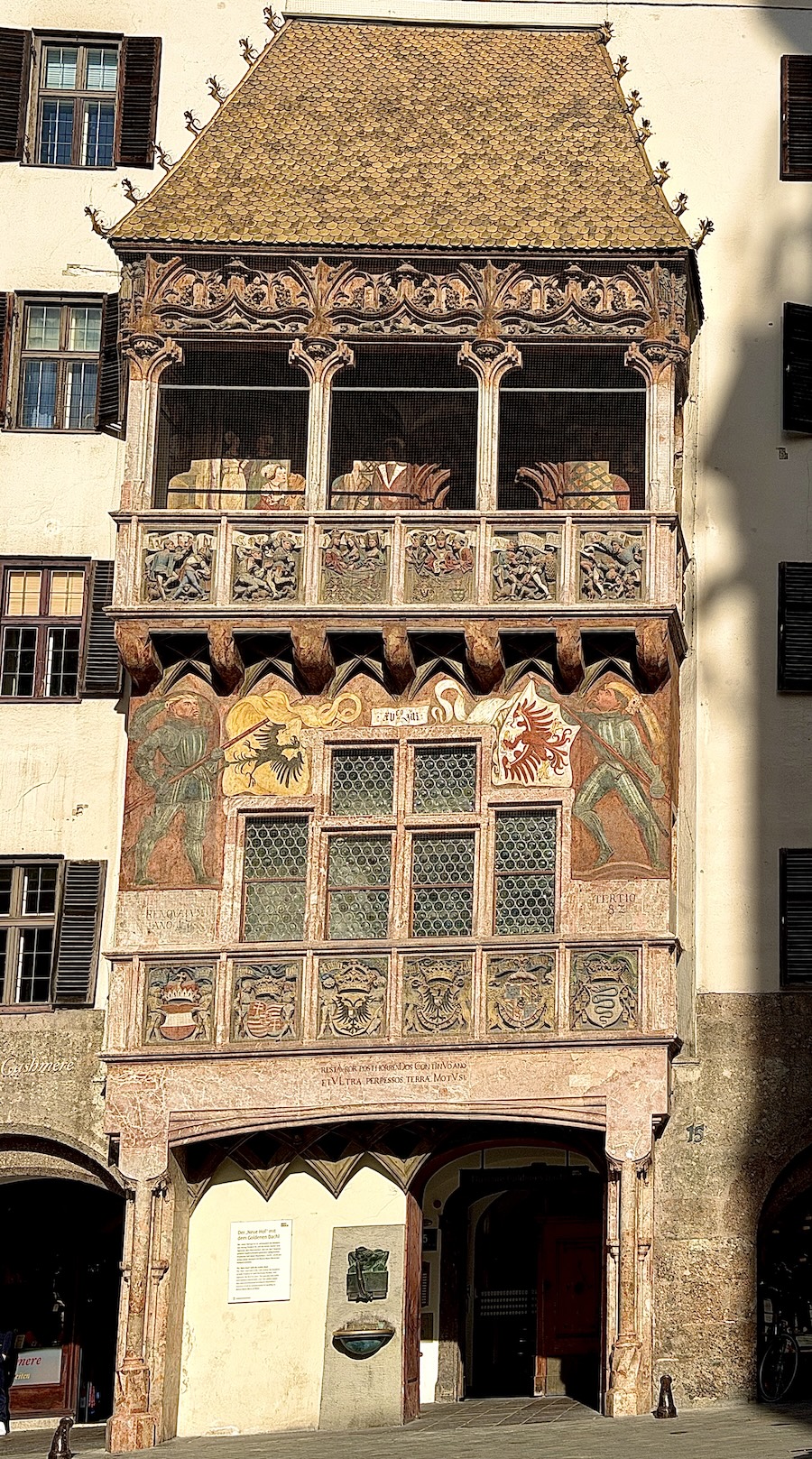
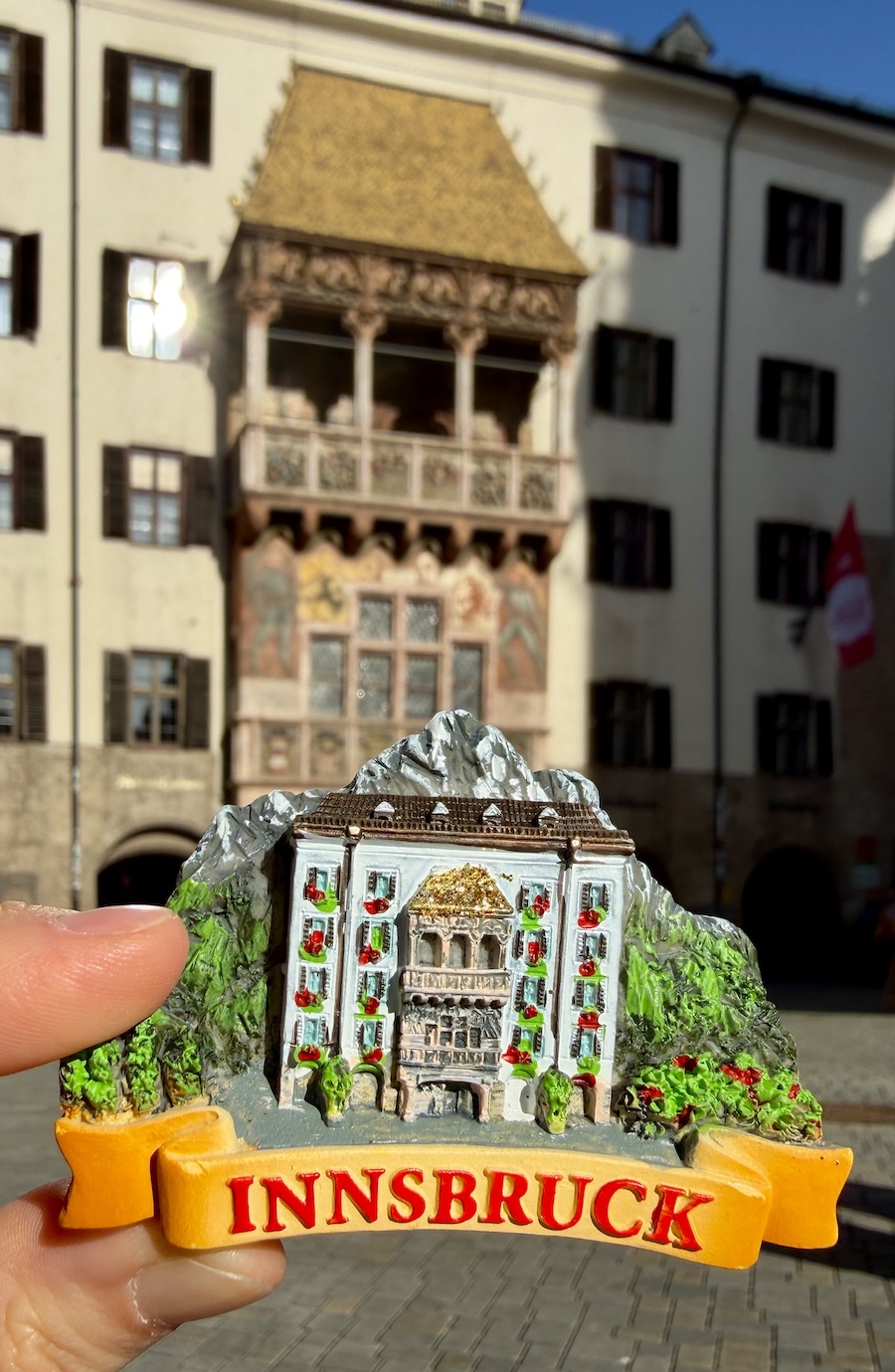
We’ve made it to Innsbruck’s most famous landmark! The Golden Roof (📍 location) is right in the heart of the Old Town and is one of those places you’ve probably seen in photos long before arriving in Innsbruck.
The building itself dates back to the early 1500s, but what makes it so special is the balcony covered with around 2,657 fire-gilded copper tiles that shimmer when the sun hits them (yes, someone counted them all 😉).
The roof was commissioned by Emperor Maximilian I to mark his wedding to Bianca Maria Sforza and includes 8 coats of arms (representing Maximilian’s territories), as well as carved figures. The emperor and his wife used the balcony to watch festivals, tournaments, and events happening in the square below.
If you’re curious about Maximilian I and Innsbruck’s imperial history, there’s also a small museum inside (the Golden Roof Museum) which explains the building’s history and the emperor’s life in more detail. That said, if you’re short on time, it’s totally fine to admire it from the outside and keep moving, as the view from the square is the real highlight anyway!
Helbling House (Helblinghaus)
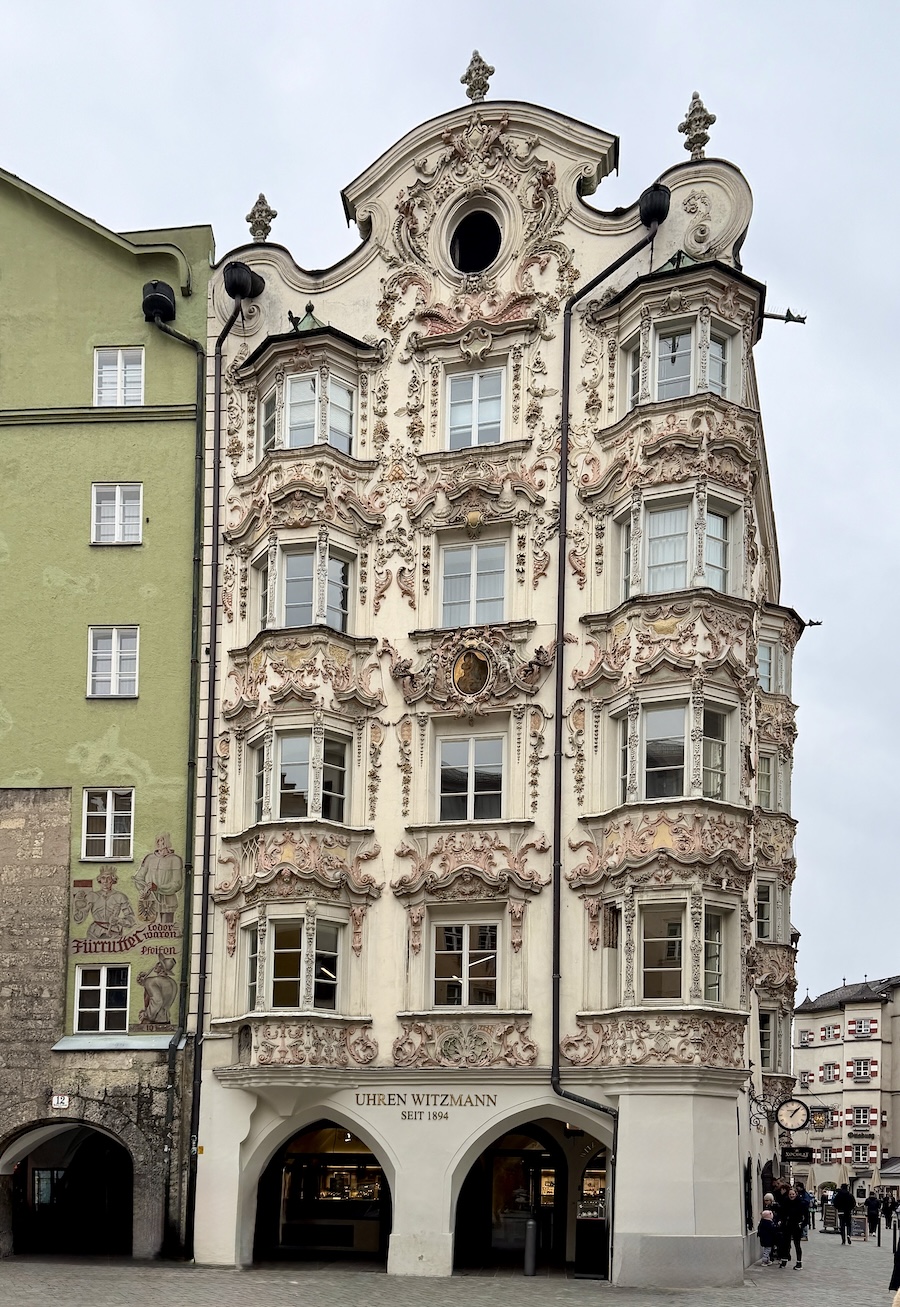
If you noticed a beautiful ivory-colored building with impressive stucco details while making your way towards the Golden Roof, then you’ve stumbled upon our next stop!
The Helblinghaus (📍 location) was originally built around the 15th century but remodeled around 1723 by a local stucco plasterer, which certainly explains all the elaborate decorations, flowing curves, and almost cake-like façade! The longer you look, the more details you’ll notice. :)
City Tower (Stadtturm)
Time needed: About 30 minutes | Open 10AM—5PM every day
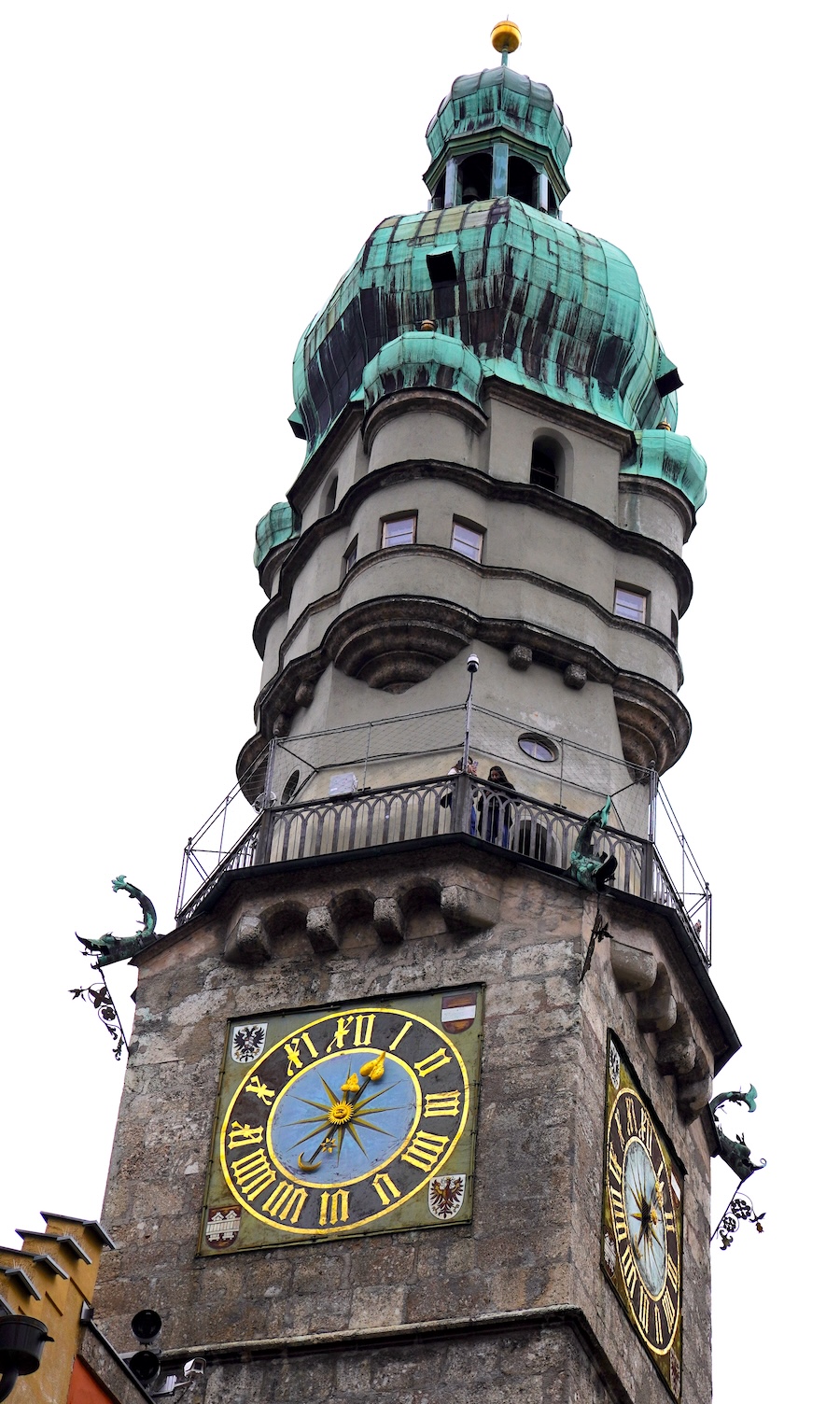
Ready for a bird’s-eye view of everything you’ve just walked through? The City Tower (📍 location) is only a short walk away!
Built in the mid-1400s, this historic tower once served as the city’s main watchtower, where guards kept an eye on the streets below and looked out for fires or other trouble. Nowadays, it still serves one of its original purposes: as one of the best viewpoints in Innsbruck’s Old Town!
This is an optional stop (feel free to skip it!) but worth it if you’d like a different perspective of the Old Town. The entry ticket is 4.50 EUR per person.
To reach the viewing platform, you’ll climb around 148 narrow spiral steps (yes, your legs will feel it a little 😅), but the reward is worth it. From the top, you get a fantastic panoramic view over Innsbruck’s rooftops, the colorful houses and streets, and the mountains in the background.
Lunchtime!
After climbing the City Tower, this is the perfect time to pause and grab some lunch before continuing with the rest of the itinerary. You’ll definitely need the energy for the next few stops!
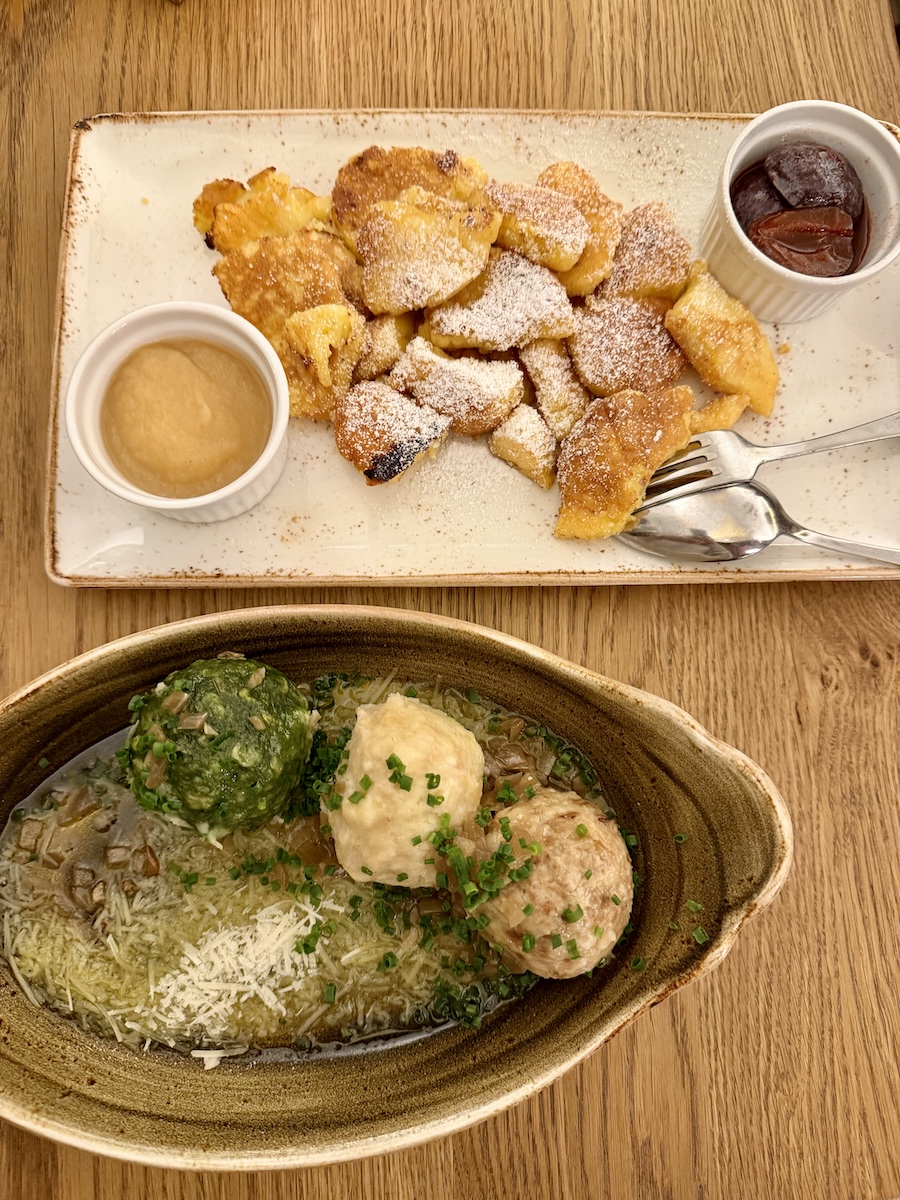
Stiftskeller — A popular restaurant serving traditional Austrian dishes in a rustic setting. Good option if you want something hearty and classic.
Markthalle — A covered market hall with different food stalls and small eateries, so you can mix and match depending on what you’re craving. Great if everyone in your group wants something different.
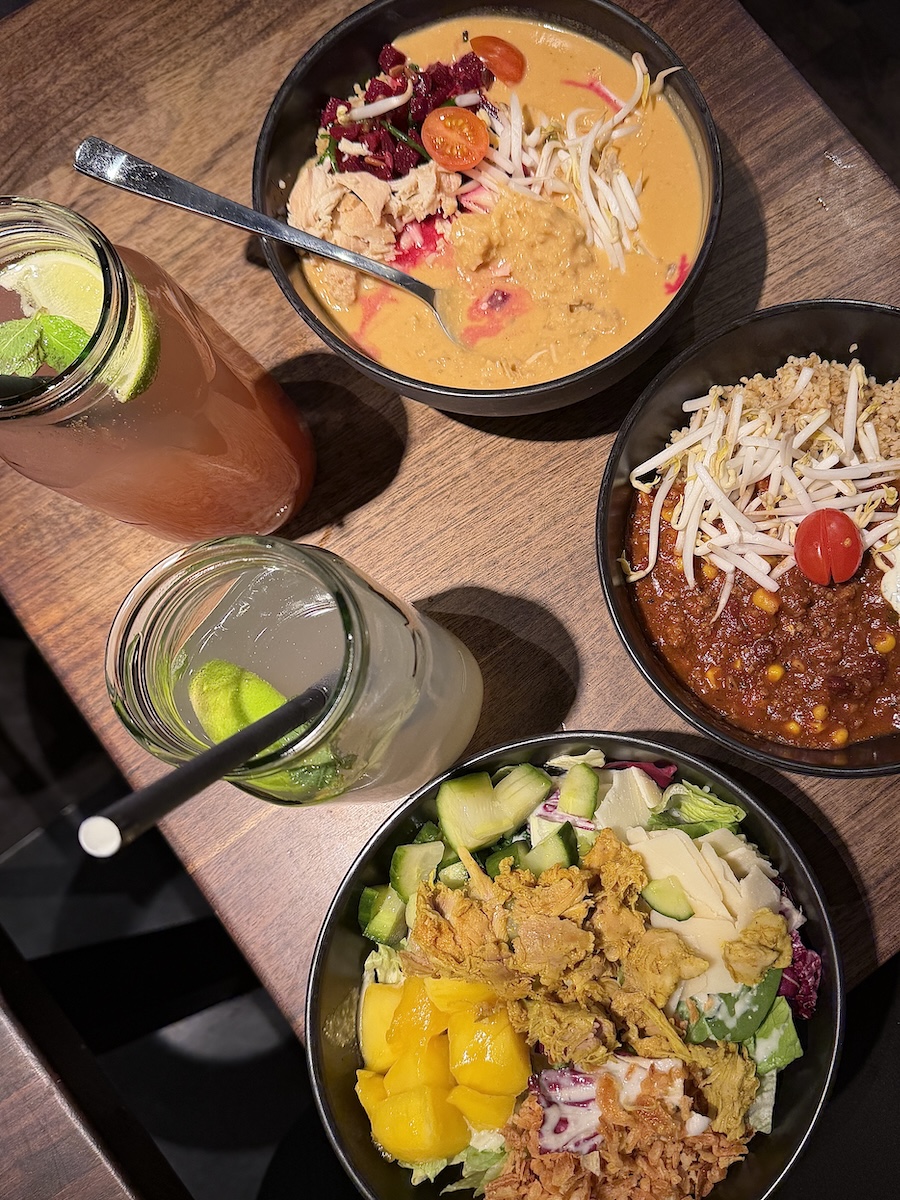
the naked indigo — If you’re in the mood for something healthy, this is a great choice. They focus on healthy dishes, fresh ingredients, and there are vegan-friendly options as well.
Cafe Central — The oldest cafe in Innsbruck and with a gorgeous, elegant interior!
Tyrolean Folk Art Museum
Time needed: About 1 to 1.5 hours | Open 9AM—5PM every day
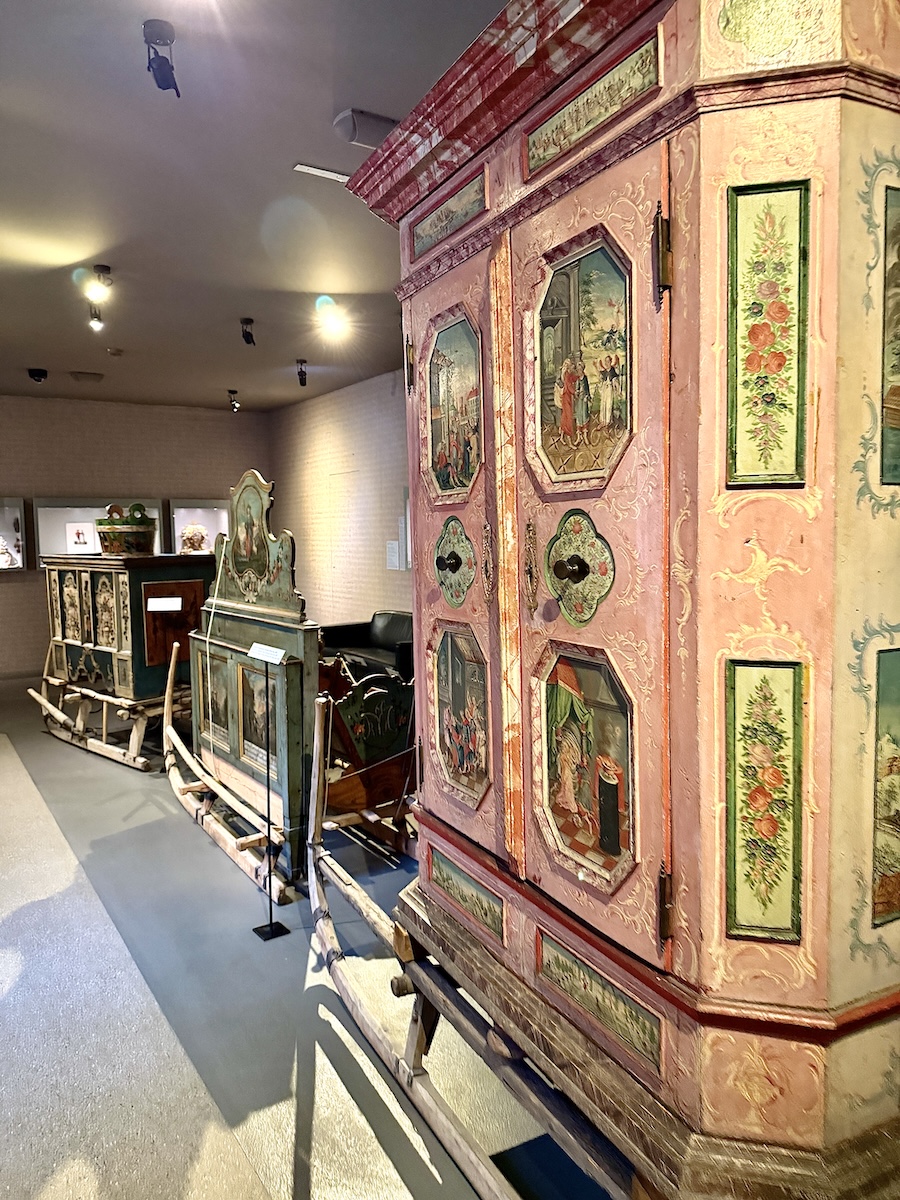
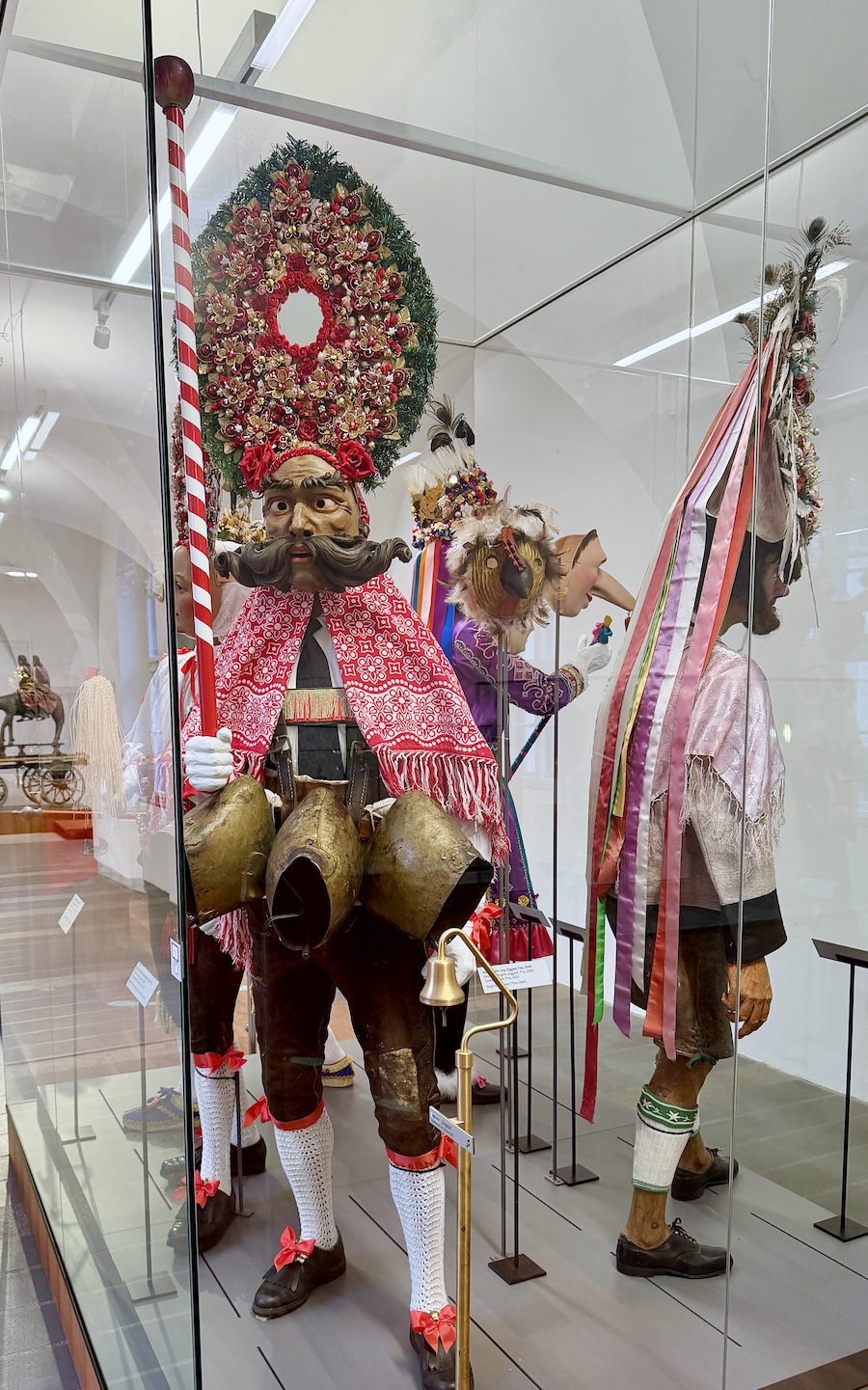
Despite the name, this isn’t just an art museum — the Tyrolean Folk Art Museum (📍 location) focuses on everyday life in the Tyrol region, so you’ll find everything from traditional costumes and furniture to tools, religious objects, and decorative household items that show how people lived here over the centuries!
One of my favorite “exhibits” were the historic wood-paneled rooms. The museum dismantled parts of old farmhouses and noble homes around the region and then carefully reconstructed them inside the museum, so you can walk through real interiors that are hundreds of years old.
Another nice bonus is that you get a view of the Hofkirche (Court Church) from one of the second-floor rooms. If you buy the combo ticket, entry to both the museum and the Hofkirche is included, which is worth it since they’re right next to each other.
We ended up spending almost 2 hours here, but I’m the type of person who likes to read every little information placard, so your mileage may vary. ;)
Hofburg Palace
Time needed: About 1.5 to 2 hours | Open 8AM—6PM every day
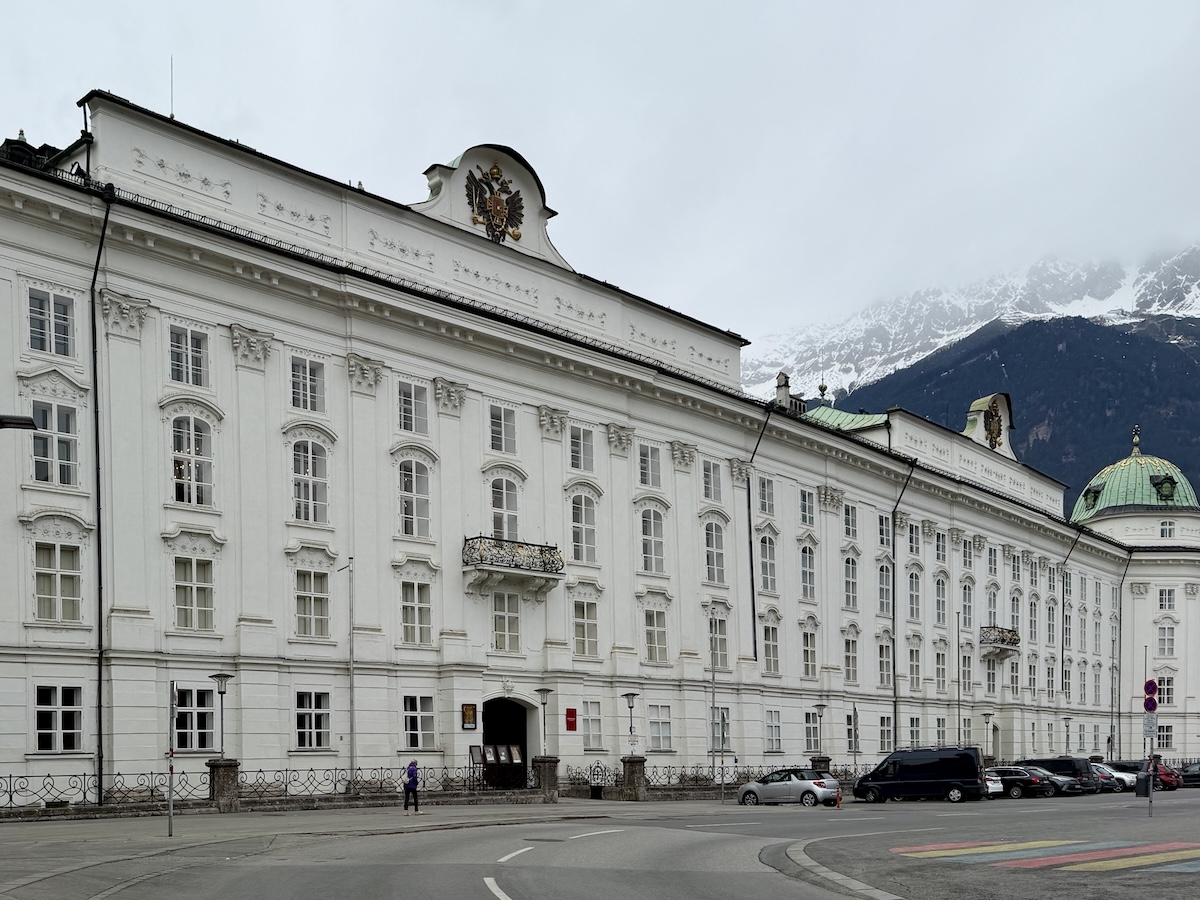
Austria is famously tied to the Habsburgs, one of Europe’s most influential dynasties who ruled the region for more than 600 years. While most of their grand imperial residences are found in the capital, Vienna, you can still get a glimpse into their world here in Innsbruck at the Hofburg Palace!
In fact, the Innsbruck Hofburg (📍 location) is often described as a smaller version of its “big brother,” the Hofburg in Vienna. Innsbruck’s Hofburg was used mostly as a secondary residence when the court traveled through the region, as well as as a stage for political visits and weddings.
Although the original building dates back to around 1460, this former Habsburg palace was expanded and redesigned over the centuries. It got its current look around the mid-1700s, when Empress Maria Theresa (yes, the same Maria Theresa we mentioned at the Triumphal Arch!) felt that the palace looked outdated and ordered a major redesign.
It’s an excellent example of 18th-century Austrian design thanks to the bright interiors, decorative ceilings, and little details. Oh, and lots and lots of chairs. :)
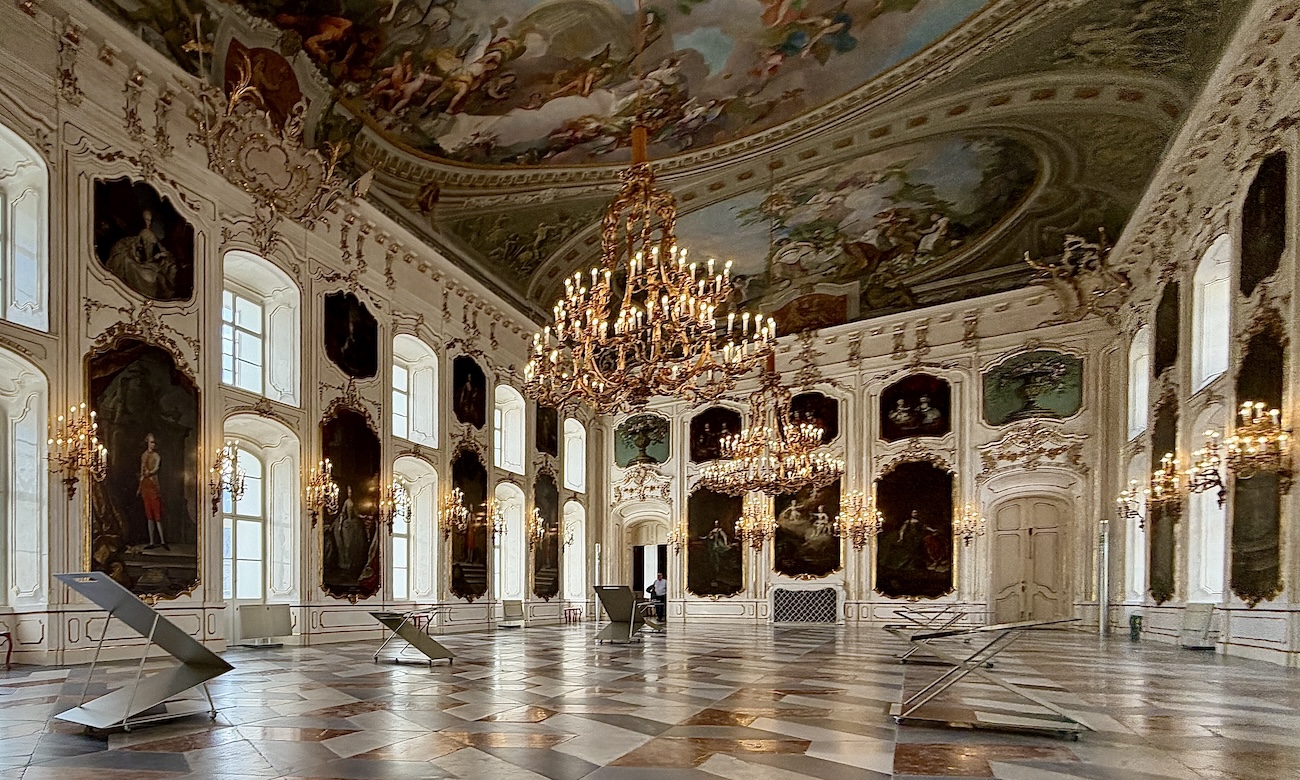
One of the absolute highlights at the Hofburg Palace is the Giants’ Hall (Riesensaal), which is a grand ceremonial ballroom lined with larger-than-life portraits of Maria Theresa, her husband, and their children.
(If you’re wondering how these paintings survived more than 250 years looking this good, they were carefully restored in recent years!)
I also really like how there are large mirrors in the Giants’ Hall, so you can admire the details on the ceiling without having to crane your neck all the time. Speaking of which, the ceiling fresco is a jaw-dropping allegory of the union between the House of Habsburg and the House of Lorraine — or as you might have guessed, the union between Maria Theresa and Emperor Franz I. 🫶
Another interesting area is the Imperial Apartments, which were used by the royal family and offer a closer look into their everyday lives.
A quick tip from experience: it’s best to follow the suggested visitor route and save the basement area for last. It focuses mainly on city planning and urban development, which can be interesting, but if you’re short on time (or energy), it’s perfectly okay to skip.
Even if you’re not usually big on palaces, the Hofburg feels manageable and interesting, and fits perfectly into any Innsbruck Old Town walking route.

Dom St. Jakob (Innsbruck Cathedral)
Time needed: About 10 to 30 minutes | Free entry | Open 8:45AM—6:30PM every day
Before we wrap up Day 1, there’s one more stop just around the corner! Just a 2-minute walk from the Hofburg Palace is Dom St. Jakob, which is Innsbruck’s main cathedral.
Even if you have a few minutes, it’s worth stopping by the cathedral (📍 location) to see the amazing details and beautiful frescoes. Speaking of which, one of the cathedral’s most important features is the famous painting of Maria Hilf (Our Lady of Succour) by Lucas Cranach the Elder, which became an important devotional image in the region.
When we visited, there were surprisingly few tourists inside, which made it feel almost like a hidden gem (especially considering how central it is!)
Entry is free, but if you’d like to take photos, there’s a small 1 EUR fee. You can pay using the automated machines near the entrances.
Innsbruck Court Gardens (Innsbrucker Hofgarten)
If you still have a bit of energy left, the Innsbruck Court Gardens (Hofgarten) are just a short walk away and make for a nice final stop on Day 1.
Originally laid out as a Renaissance garden in the 15th century, the Hofgarten (📍 location) was later redesigned in Baroque style and eventually transformed into the landscaped park you see today.
It’s especially beautiful in spring and summer when everything is green and blooming, and it stays open until around 10 PM in the warmer months! A quick stop here to sit down and enjoy nature is all you need before heading off to dinner.
This completes a full Innsbruck in 1 day itinerary covering the city’s most important attractions, viewpoints, and historic landmarks.
If you’re staying overnight, continue below for ideas on things to do in Innsbruck in 2 days and expand your itinerary beyond the city center.

DAY 2: Innsbruck Your Way
(Choose Your Own Adventure)
After spending Day 1 exploring Innsbruck’s Old Town, Day 2 is more flexible!
Depending on your interests, you can ride a cable car to the top of Innsbruck, visit a 16th-century Renaissance castle, be dazzled by millions of crystals, or learn more about the history of Innsbruck.
This flexible Innsbruck attractions itinerary allows you to choose between mountains, castles, or museums depending on your interests.
I’ll explain each attraction in detail below so that you know what to expect and can decide what sounds most interesting. Since some places appear in more than one option, I won’t repeat the descriptions twice — just use the table below to build your perfect Day 2 based on Option 1, 2, or 3. :)
Here’s a quick overview of your options for this day:
| Option 1: Mountains & Crystals | Option 2: Castles & Sparkles | Option 3: History |
|---|---|---|
Nordkette (Included in City Card, otherwise book ticket here) Swarovski Crystal Worlds (Book ticket here) | Ambras Castle (Included in City Card, otherwise book ticket here) Swarovski Crystal Worlds (Book ticket here) | Ambras Castle (Included in City Card, otherwise book ticket here) Innsbruck Panorama Museum |

Image © Innsbruck Tourismus / Christof Lackner
Nordkette
Time needed: About 2.5 to 4 hours | Opening hours: Cable cars usually start around 7:15–8:00 AM depending on season | Buy tickets →
If you want to see Innsbruck from above instead of just walking through it, Nordkette is the obvious choice. :)
Best of all, you don’t need to leave the city or figure out complicated transport. The cable car starts right near the Old Town (📍 location), so you can go from city streets up to the mountains in a surprisingly short amount of time.
The trip up to Nordkette happens in stages: first you take the Hungerburg funicular, then switch to the cable cars that take you higher into the mountains. If you have some extra time, you can get off at different levels if you want, grab a drink, walk around a bit, or just enjoy the view.
As you might expect, the views are ahh-mazing when the weather cooperates. You’ll see the whole city below, the valley, the river, and mountains everywhere! It’s one of those things that makes you realize how small Innsbruck actually is compared to the surrounding Alps.
However, this option relies heavily on one big tip, and that is to check the weather! If it’s cloudy or foggy (which can happen in the winter months), I’d personally skip it and save it for another day. After all, the scenery is the main reason to go.
Swarovski Crystal Worlds (Swarovski Kristallwelten)
Time needed: About 1 hour for the museum + 30 mins. for gardens | Open 9AM—7PM every day
Buy tickets →
If you’re in the mood for something completely different from Innsbruck’s traditional history and palaces, may I humbly recommend a visit to something a little more modern — the Swarovski Crystal Worlds — instead? 😉
Located in the nearby town of Wattens (about 45 mins by train or 30 mins by car), Swarovski Crystal Worlds (📍 location) is a creative and slightly unusual complex that includes an indoor exhibition space (the “museum”) and a large outdoor garden.
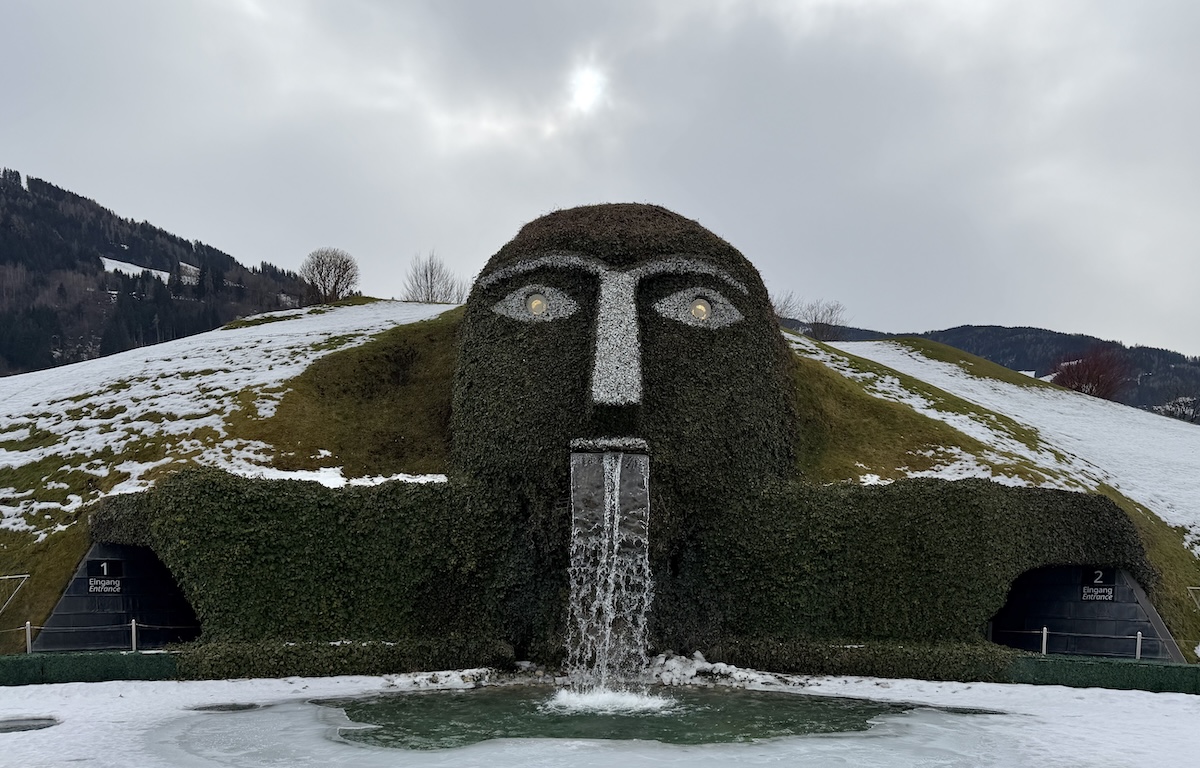
Your visit starts by walking inside the famous grass-covered Giant, whose crystal eyes sparkle while a waterfall flows from his mouth. Yes, he’s the iconic model that graces those Swarovski Crystal Worlds brochures!
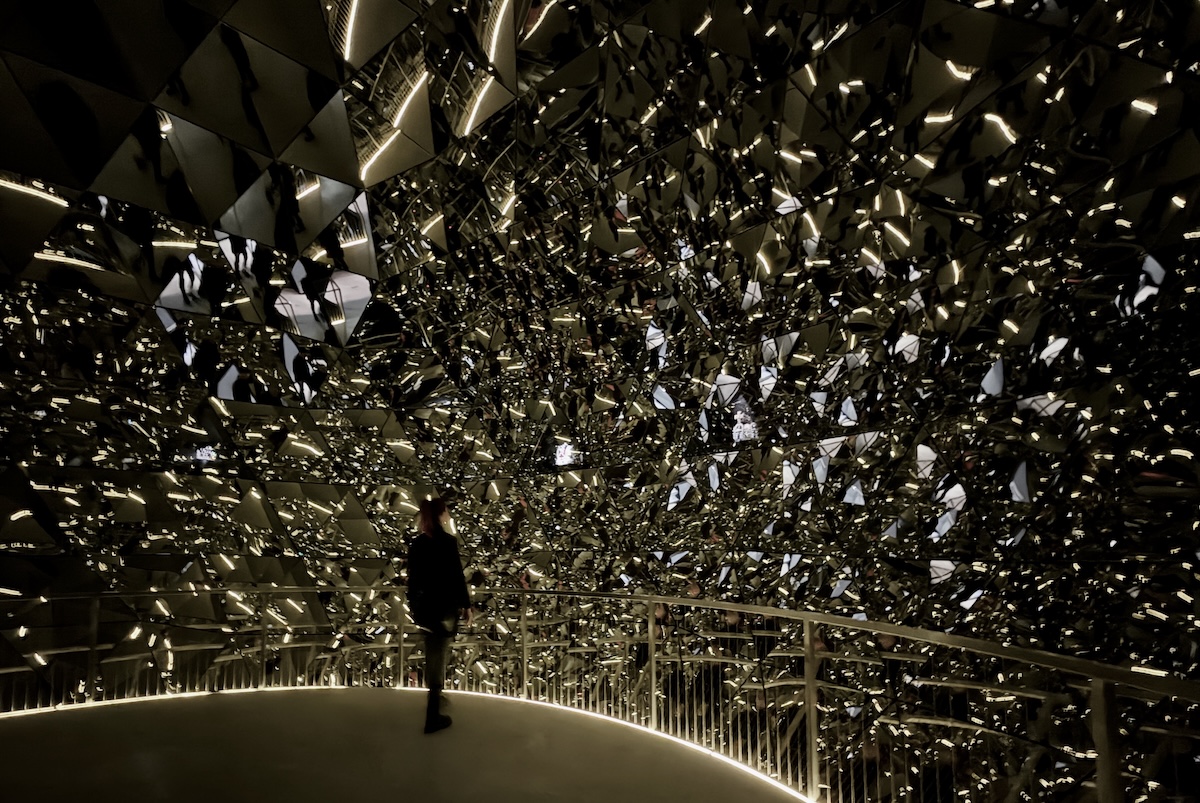
Inside are the “Chambers of Wonder,” which are a series of individual rooms with immersive installations created by different artists. You’ll see Silent Light (a winter wonderland with crystals and real snow!), the Crystal Dome (which consists of 595 mirrors that create a cool visual effect), Crystallizing Identity (a beautiful reimagining of a Japanese legend), and many more.
In total, there are 16 of these rooms. Some feel dreamy and magical, others futuristic and interactive. My personal favorites were Pulse Voronoi (which reminded me of teamLab’s crystal universe room) and Ready to Love (a super colorful and fun room).
Once you’ve finished the indoor part, don’t rush off yet — the outdoor gardens are just as fun to explore!
Of particular interest is the black-and-white carousel, which is a modern take on the classic fair amusement ride (PSA: speaking from personal experience, you don’t have to be a child to ride it!) and the cool hand-shaped labyrinth.
If you’re traveling with kids, this is a great option — they’ll love the fun family-friendly rooms, and there’s also the Playtower, which is an interactive play space with climbing structures and slides.
Hungry after all that exploring? No worries, there’s an on-site restaurant called Daniels Kristallwelten (named after the founder), which has lovely views over the gardens and has a nice menu of local dishes. Definitely try the knödel soup, it was amazing!
You can book the entry ticket to Swarovski Crystal Worlds here (from the official supplier) →
Prefer something more convenient? You can also buy the entry ticket and round-trip transfer from Innsbruck here (yay, no need to stress over timetables!) →
I honestly didn’t expect to like this as much as I did, but it ended up being one of the most memorable parts of our itinerary! It was also a fun stop for us personally — my mom loves collecting Swarovski, and we even found a really nice gift for her there, which made the visit feel extra special. :)
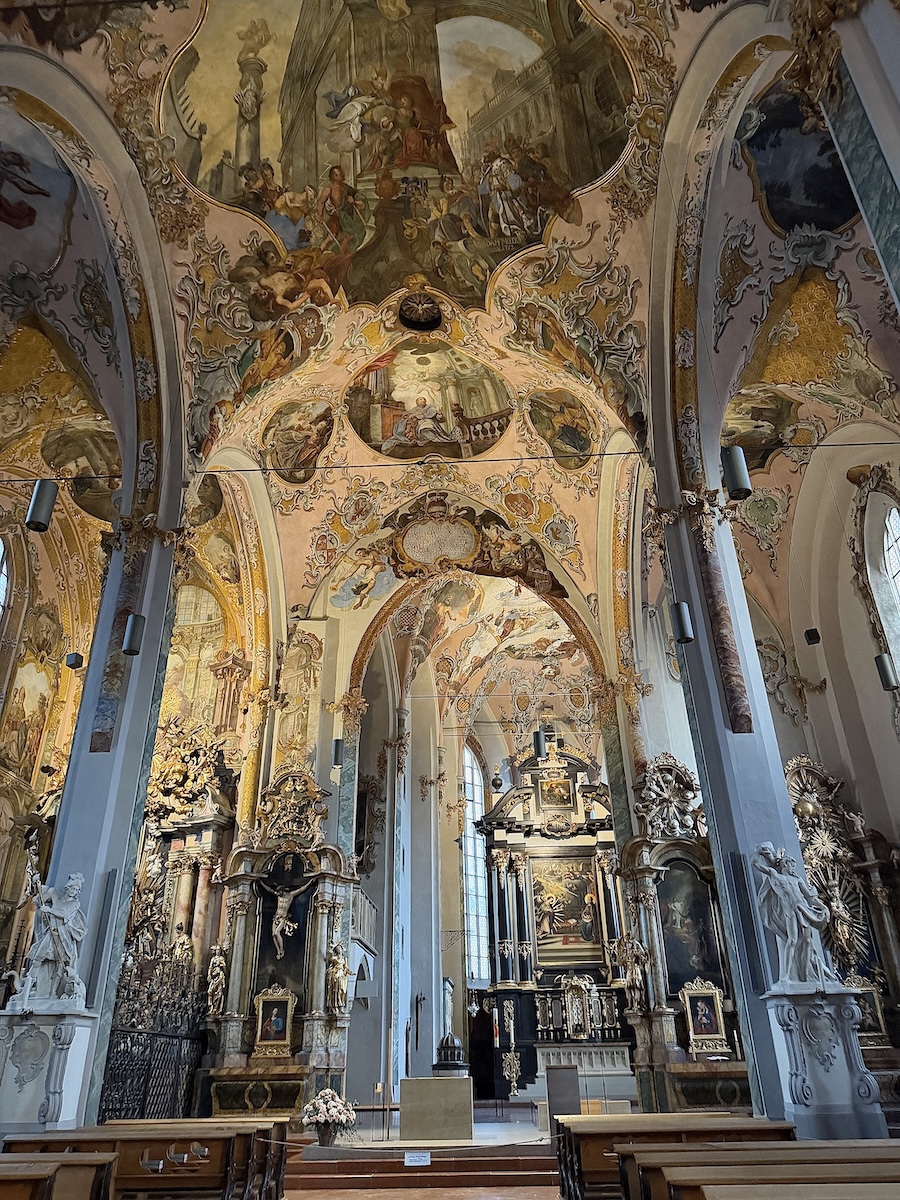
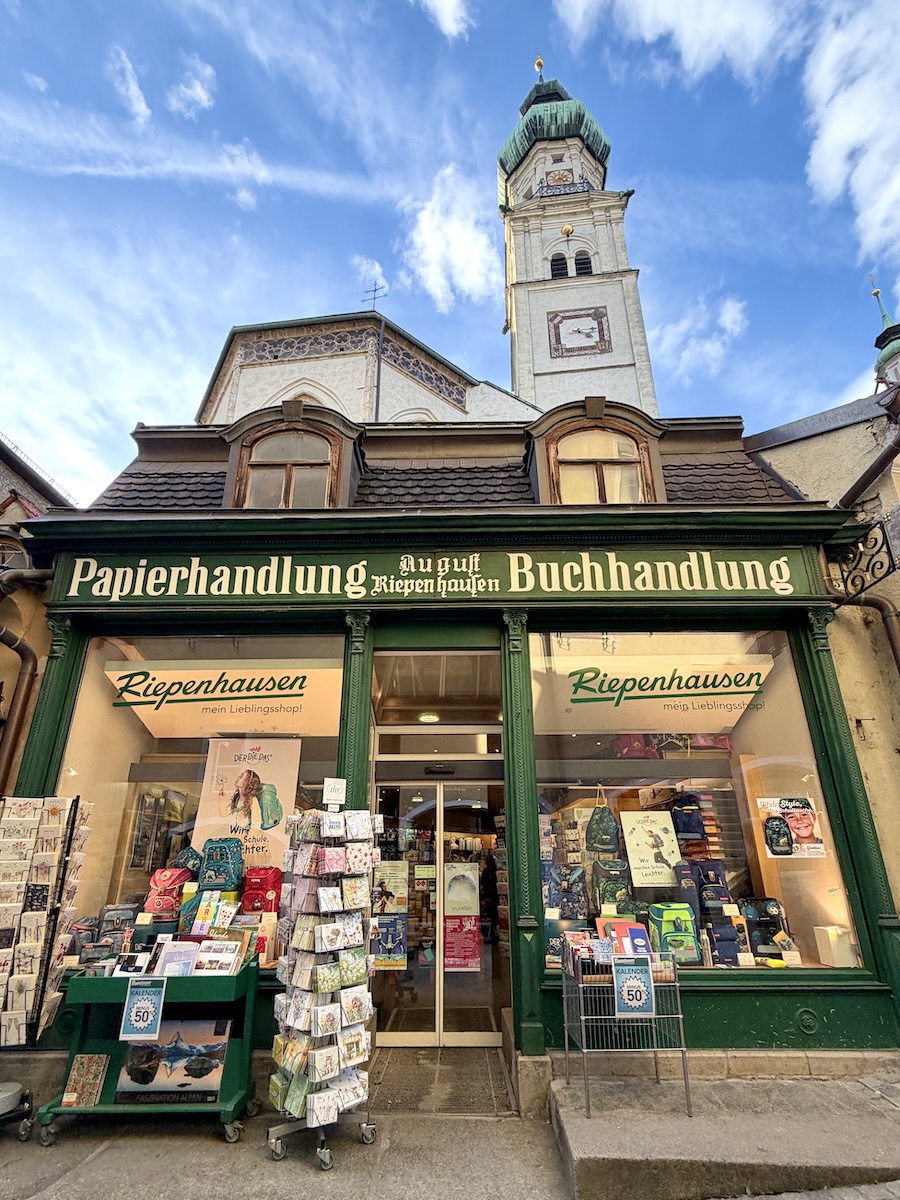
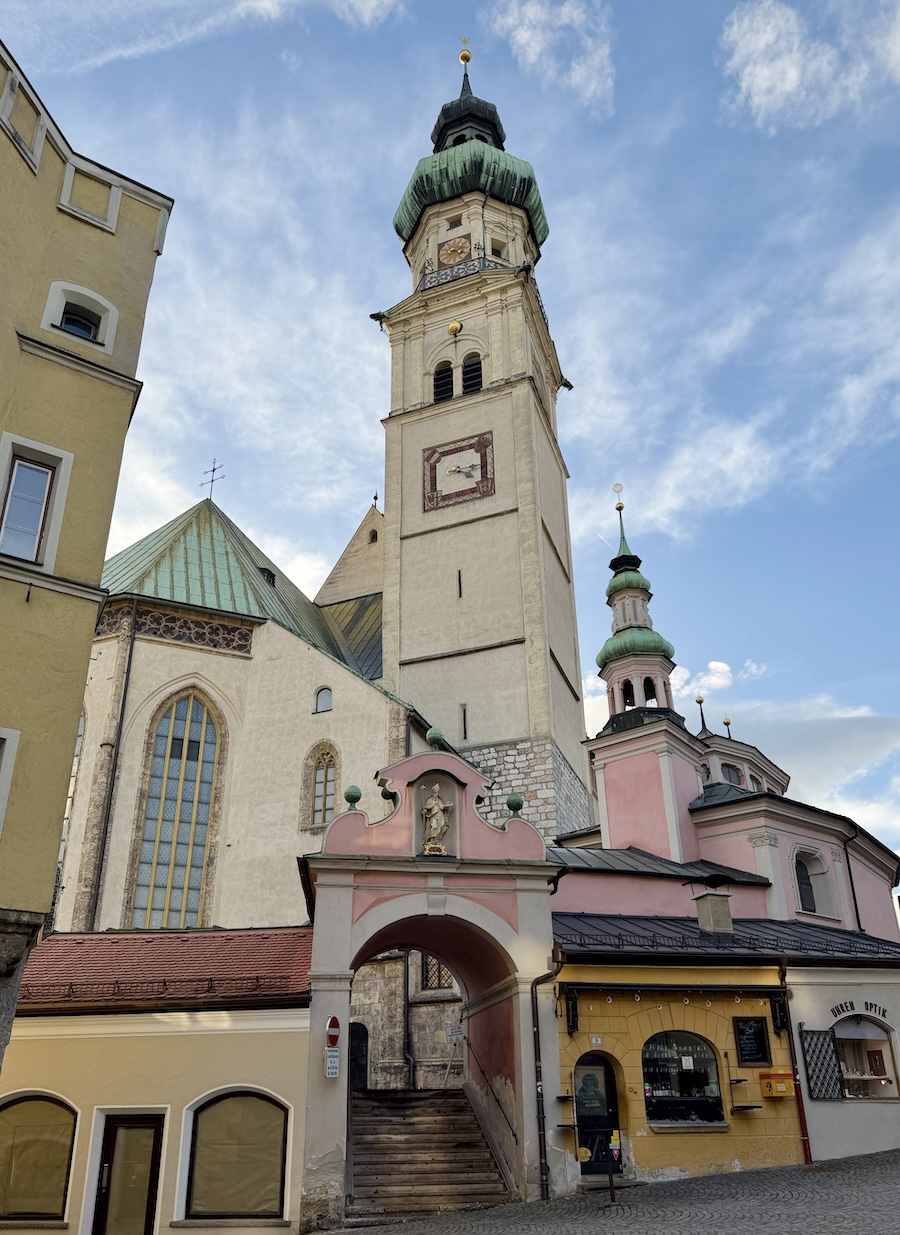
Optional (But Highly Recommended!) Stop: Hall in Tirol
If you’re not in a rush to head straight back to Innsbruck, consider making a quick stop in Hall in Tirol for a bit!
Located on the way back to Innsbruck, Hall in Tirol is a small medieval town that often gets overlooked by tourists — which makes it even better! It’s quieter, more local, and feels like a relaxed version of Innsbruck’s Old Town. Best of all, it’s an easy addition to your Innsbruck travel plan — just show up, walk around, and enjoy the atmosphere!
We stopped here after visiting Swarovski and it turned out to be one of those “low-effort, high rewards” little side trips that ended up being memorable. We had a relaxed lunch, strolled around the town center, and caught the bus back to Innsbruck.
P.S. — Don’t miss out on the flammkuchen at Cafe im Zeindlhaus (📍 location). Trust me. ;)
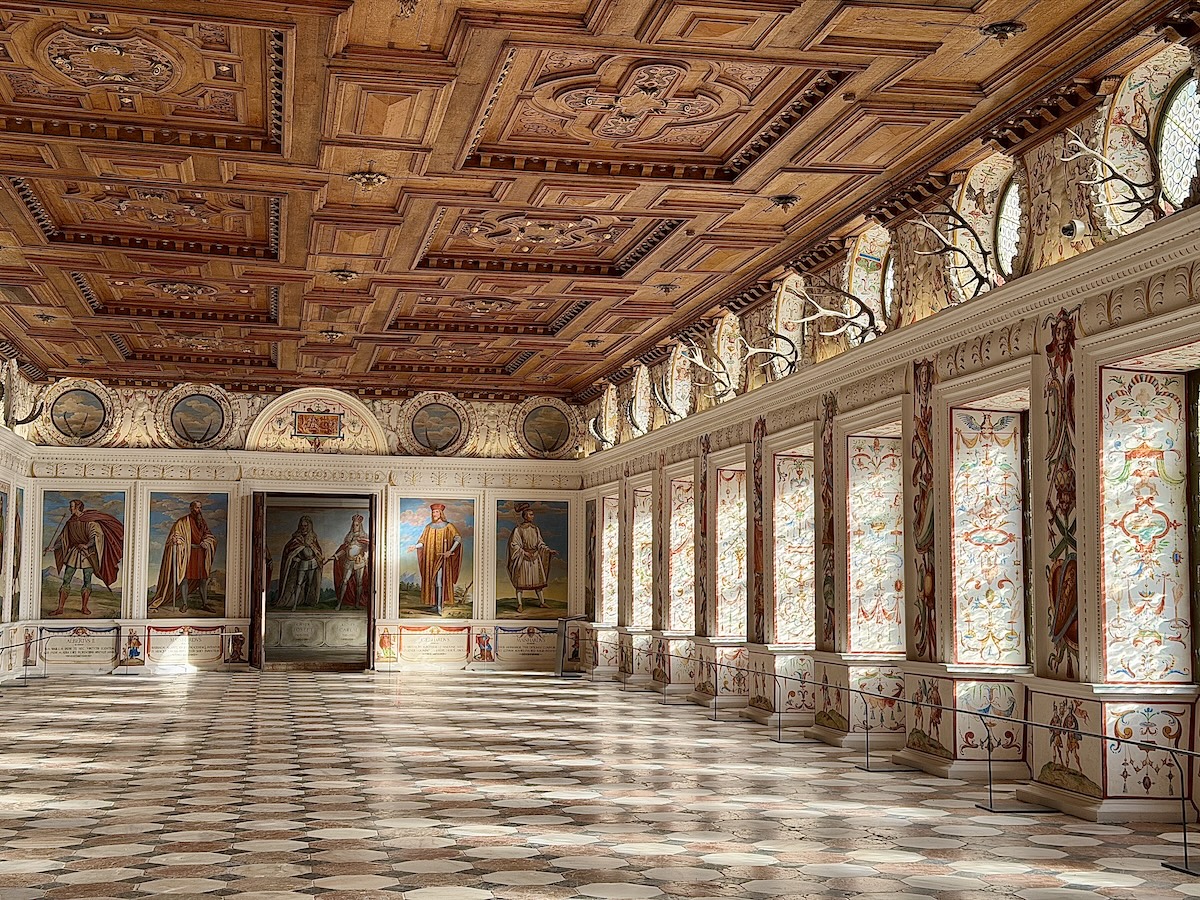
Ambras Castle
Time needed: About 2 to 3 hours | Open 10AM—5PM every day (closed in November) | Buy tickets →
If you’re spending 2 days in Innsbruck and want to see something beyond the Old Town, Ambras Castle is one of the best additions to your itinerary!
Located on a hill just outside the city center (about 10 minutes by car or 15 minutes by tram), this 16th-century Renaissance castle is much more spacious and peaceful than the Hofburg Palace. It’s surrounded by gardens and wooded paths, and when we visited there were even peacocks roaming around the grounds!
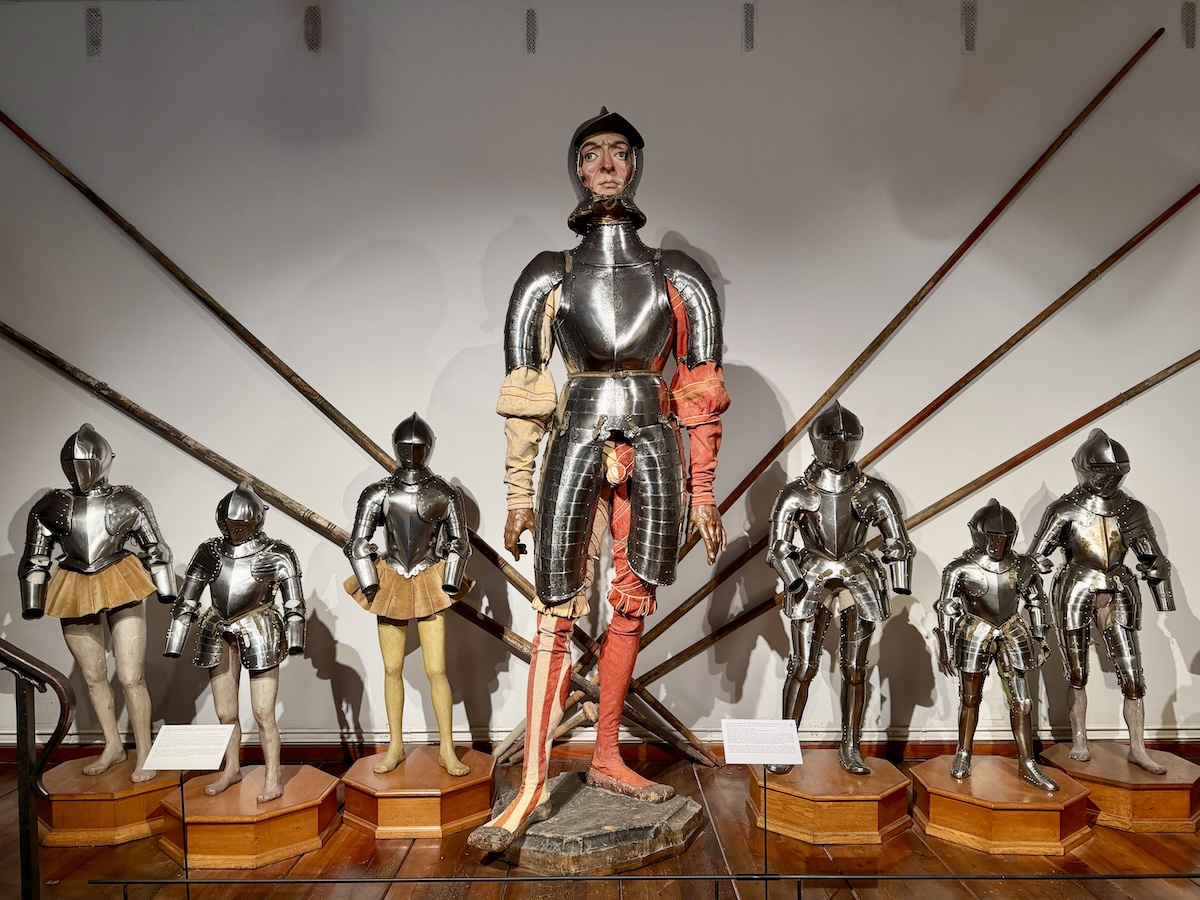
What makes Ambras Castle particularly special is its claim as the world’s first museum. In the 1500s, Archduke Ferdinand II gathered his already famous collection of armor, weapons, portraits, and rare objects. Instead of simply storing them away, he had a separate building constructed specifically to display them. Hence, the world’s first museum. ;)
You can easily spend 2 hours walking around Ambras Castle, looking at all of the cool stuff, and learning more about its history.
I especially loved the “Cabinet of Curiosities” because it gave me flashbacks to when I visited Ripley’s Believe It Or Not in my childhood. 😄 Much like the name implies, this room is full of exotic and unusual artifacts, including a portrait of Dracula (which gave me flashbacks to my trip to Brasov in Romania!), pieces of coral, samurai armor, crystal goblets, and all sorts of other cool objects.
Of course, there are also more traditional highlights. The Spanish Hall is grand and dramatic thanks to its painted ceiling and portraits lining the walls (it feels like a cousin of Hofburg’s Giants Hall). If you’re traveling with someone who loves medieval history, the Armory is impressive — my husband was impressed by the armor and antique weapons.
Travel tip: If this is your first stop of the day, you can have breakfast at the on-site restaurant, Ferdinand. Although the menu is small, it’s tasty and well-priced (we had lunch here and recommend it!)
Book Your Ambras Castle Ticket Here →

Image © Innsbruck Tourismus / Christof Lackner
Innsbruck Panorama Museum (Tirol Panorama and Kaiserjäger Museum)
Time needed: About 1 hour | Open 9AM—5PM except Tuesdays
If you’re into history but don’t necessarily want to venture too far out, the Innsbruck Panorama Museum is a solid option for your second day in Innsbruck.
The main highlight here is the massive 360-degree panoramic painting showing the Tyrolean Rebellion of 1809. And when I say massive, I mean it — the painting is 1,000 sq. meters (10,765 sq ft) and when you stand in the center, the scene wraps all the way around you. It almost feels more like stepping inside history than just looking at a painting.
It’s also located near Bergisel, so you can easily combine it with a visit to the Bergisel Ski Jump if you’d like to add a panoramic viewpoint to your day!