
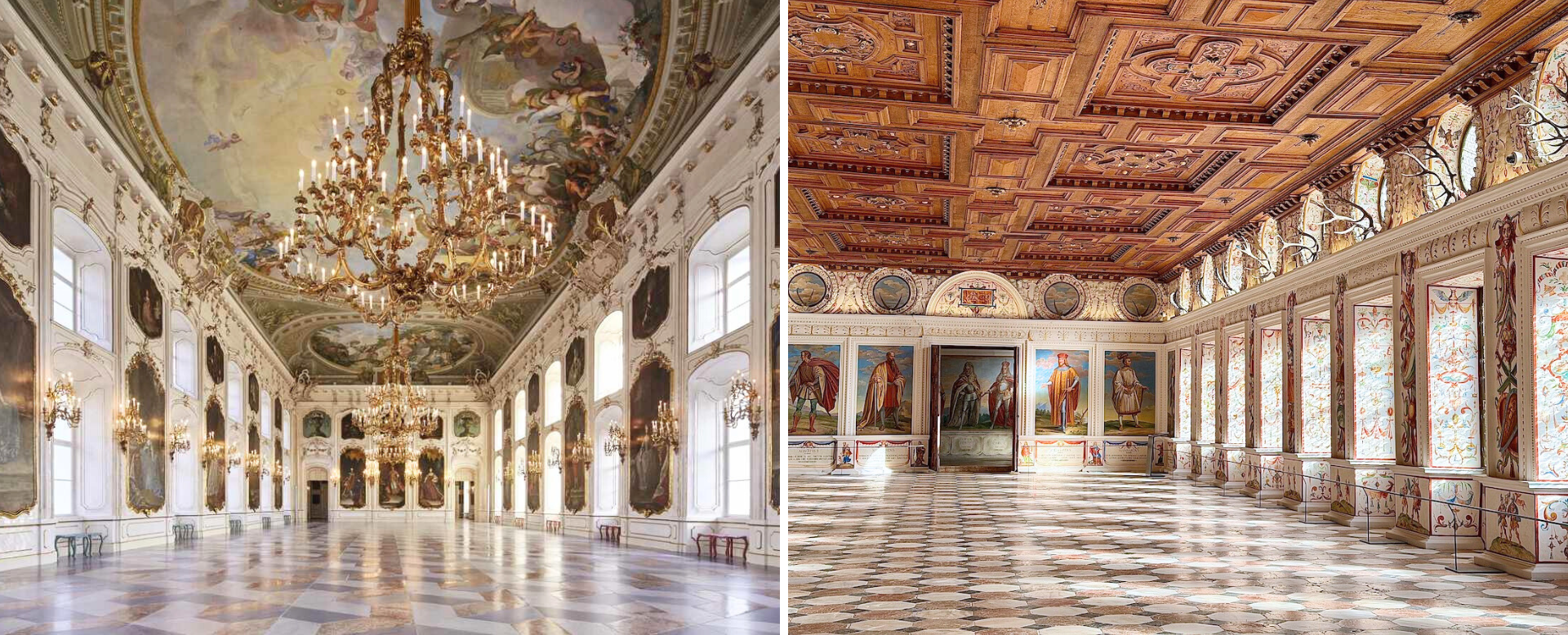
Ambras Castle vs Imperial Palace (Hofburg Innsbruck): Which One Should You Visit?
Innsbruck might be famous for its mountains, Golden Roof, and skiing, but it’s also home to two impressive Habsburg residences: Ambras Castle and the Hofburg Palace!
At first glance, they seem similar: both have connections to the iconic Habsburg dynasty, both are rich in history, and both are listed among the top things to do in Innsbruck.
However, despite their shared imperial background, they offer very different experiences.
The Imperial Palace (also known as Hofburg Innsbruck) is convenient, central, and focused on the living quarters of the imperial family. Ambras (Schloss Ambras Innsbruck), on the other hand, feels more varied thanks to its collection of highlights, from a grand hall and formal portraits to medieval armor and unusual curiosities.
If you only have one or two days in Innsbruck, you may not have time for both, so choosing the right one can make a big difference in your trip.
So, for research purposes (and definitely not because I’m an indecisive Libra *ahem*), I visited both and wrote a blog post about it! ;)
I visited the Imperial Palace first (because it was right in the Old Town), and then made my way to Ambras a few days later with my family. Experiencing them separately actually made the contrast even clearer — and saved me from experiencing “palace fatigue” (you know the one) on the same day.
If you’re trying to decide between Ambras vs Hofburg for your Innsbruck trip, here’s what you should know.
Ambras Castle or Hofburg Palace? Quick Comparison Table:
| Visit the Imperial Palace (Hofburg Palace) if… | Visit Ambras Castle if… | Visit Both! |
|---|---|---|
| You want something in the city center You enjoy imperial apartments and royal interiors You prefer easier access | You prefer castles over city palaces You like scenic locations and views You enjoy armories, quirky art collections, and Renaissance architecture Book Ambras tickets here → | If you have 2+ days in Innsbruck You enjoy history and architecture Can’t decide? If you have the Innsbruck Card, you don’t have to — both are included (along with 20+ other attractions!) If you’re curious whether it’s worth it, check prices and see what’s included here → |
Imperial Palace (Hofburg) or Ambras? What to Expect at Each
Before choosing between Hofburg and Ambras, it helps to go back in time and learn more about their former owners: the House of Habsburg.
The Habsburgs ruled parts of Europe for nearly 700 years, from 1282 until the collapse of the Austro-Hungarian Empire in 1918. At their height, they controlled territories stretching from Spain to Italy and even parts of Poland, accumulating well over 200 residences along the way.
Many of their palaces and castles were centered in central Europe (hehe), especially Hungary, Czechia, and — you guessed it — Austria!
The Habsburgs’ primary residences were in Vienna: the Hofburg Palace for the winter and Schönbrunn Palace as the grand summer palace.
Although Vienna was certainly the star of the empire, Innsbruck was also an important Habsburg base thanks to its strategic Alpine location, which is exactly where our two contenders come in. :)
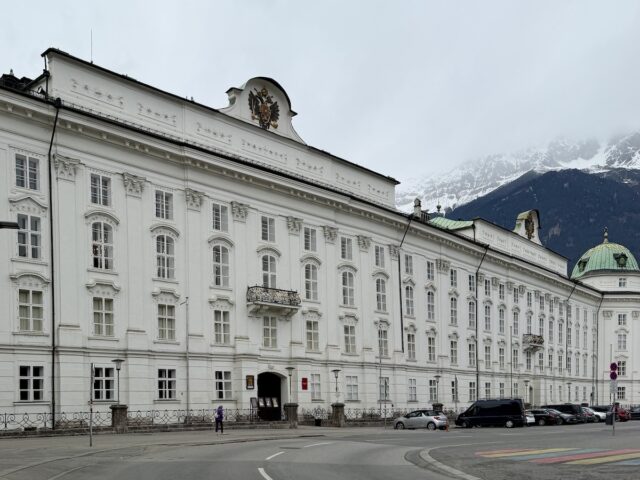
The Hofburg Innsbruck (not to be confused with its Viennese namesake) served as a Tyrolean court residence and later imperial apartment complex. Ambras Castle, on the other hand, was a Renaissance castle built as a private residence and early museum.
So which one deserves a spot on your Innsbruck itinerary? Let’s take a closer look!
Hofburg Palace: Overview
Location: Innsbruck Old Town — very convenient to visit if you’re already in the city center
History: Originally built in the 14th century, expanded in the 1400s by Archduke Sigismund “the Rich in Coin,” and completely redesigned in the 18th century by Empress Maria Theresa in the Late Baroque style.
What’s Inside?
The main highlight of Innsbruck’s Hofburg Palace is the Imperial Apartments. The public museum route leads through 27 rooms that were once the imperial family’s living quarters and ceremonial spaces. The layout is easy to follow and well-structured, so you won’t feel overwhelmed despite the palace’s size.
Highlights within the Imperial Apartments include:
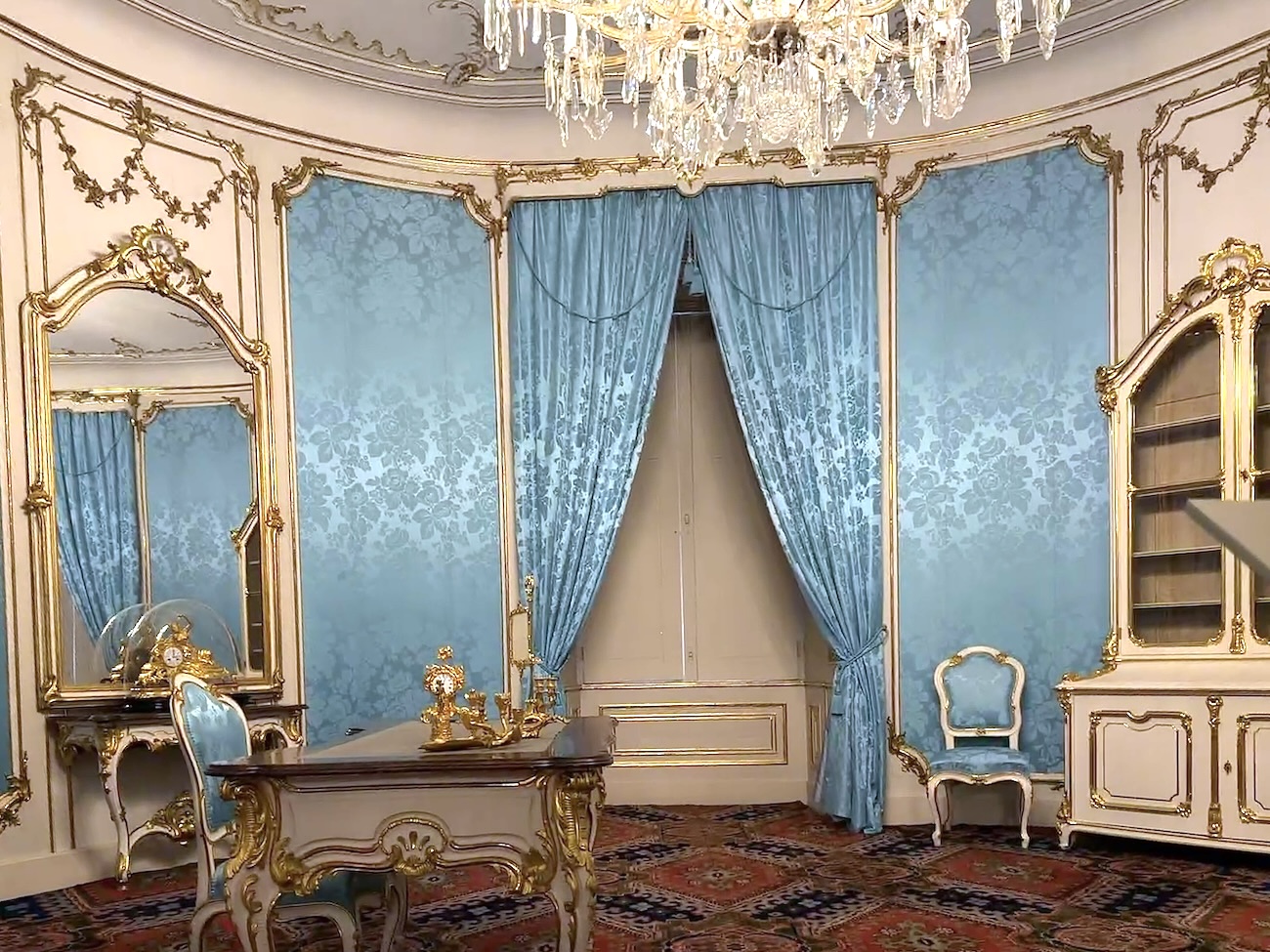
- State Rooms of Maria Theresa: These richly decorated rooms reflect Maria Theresa’s 18th-century redesign and showcase the refined Late Baroque style. They were used for official receptions and courtly events.
- Apartments of Empress Elisabeth (Sisi): Although Sisi only stayed in the Innsbruck Hofburg a handful of times, her apartments reflect her personal taste and trends at the time.
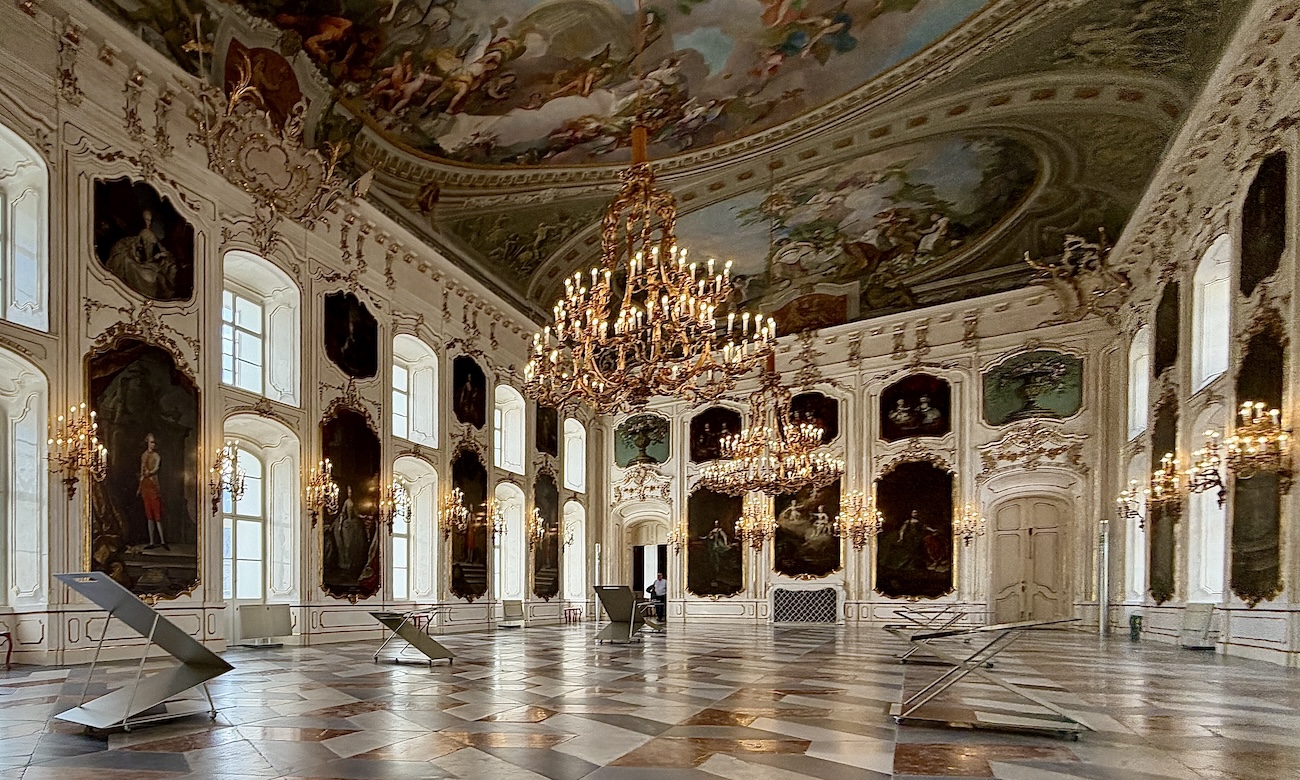
- Giant’s Hall (Riesensaal): One of the palace’s most impressive spaces, this enormous hall features huge portraits of Maria Theresa and her children. The scale and painted ceilings create that unmistakable imperial atmosphere that reminded me of something akin to Versailles’ Hall of Mirrors!
- Imperial Chapel (Hofburgkapelle): The chapel was created in 1765 after Emperor Francis I died suddenly during wedding celebrations in Innsbruck. Maria Theresa had the room transformed into a sacred space in his memory and now it holds various religious and imperial artifacts.
Besides the Imperial Apartments, there is also a Baroque Cellar on the lower level that hosts temporary exhibitions that often focus on Tyrolean or Habsburg history.
Outside of the Imperial Palace are the lovely Hofgarten (royal palace gardens), which cover 10 hectares and are free to visit.
Ambras Castle: Overview
Location: On a hill above Innsbruck, about a 10-minute car ride or 25 minutes by public transport
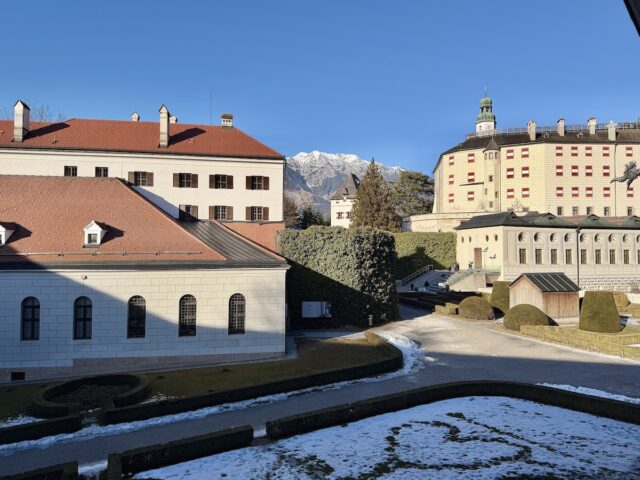
History: The site originally began as a medieval fortification, but the present-day Renaissance complex was built in the 1560s by Archduke Ferdinand II.
What’s Inside?
Ambras Castle is divided into the Upper Castle and the Lower Castle, each with a distinct purpose:
The Upper Castle was the personal residence of Ferdinand II and his wife, Philippine Welser. Their marriage was considered socially unequal because she was not of royal rank, and for a time it was kept secret from parts of the Habsburg court.
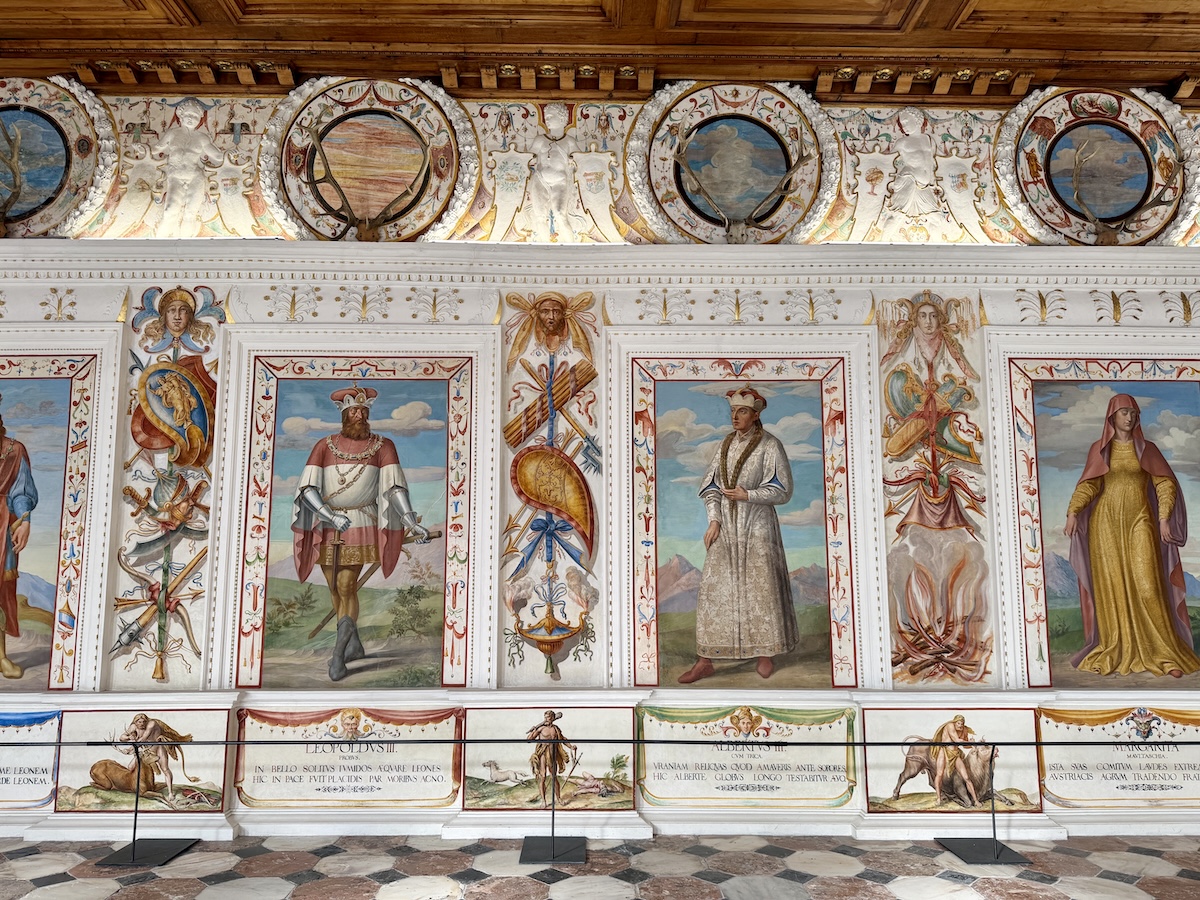
Today, the Upper Castle houses the famous Spanish Hall and the Habsburg Portrait Gallery. It also has the Philippine Welser Bath (her personal bathtub), Chapel of St. Nicholas, the Strasser Glass Collection, and a collection of Postmaster portraits (yes, a gallery of famous mailmen!). There is also a small Herb Garden outside.
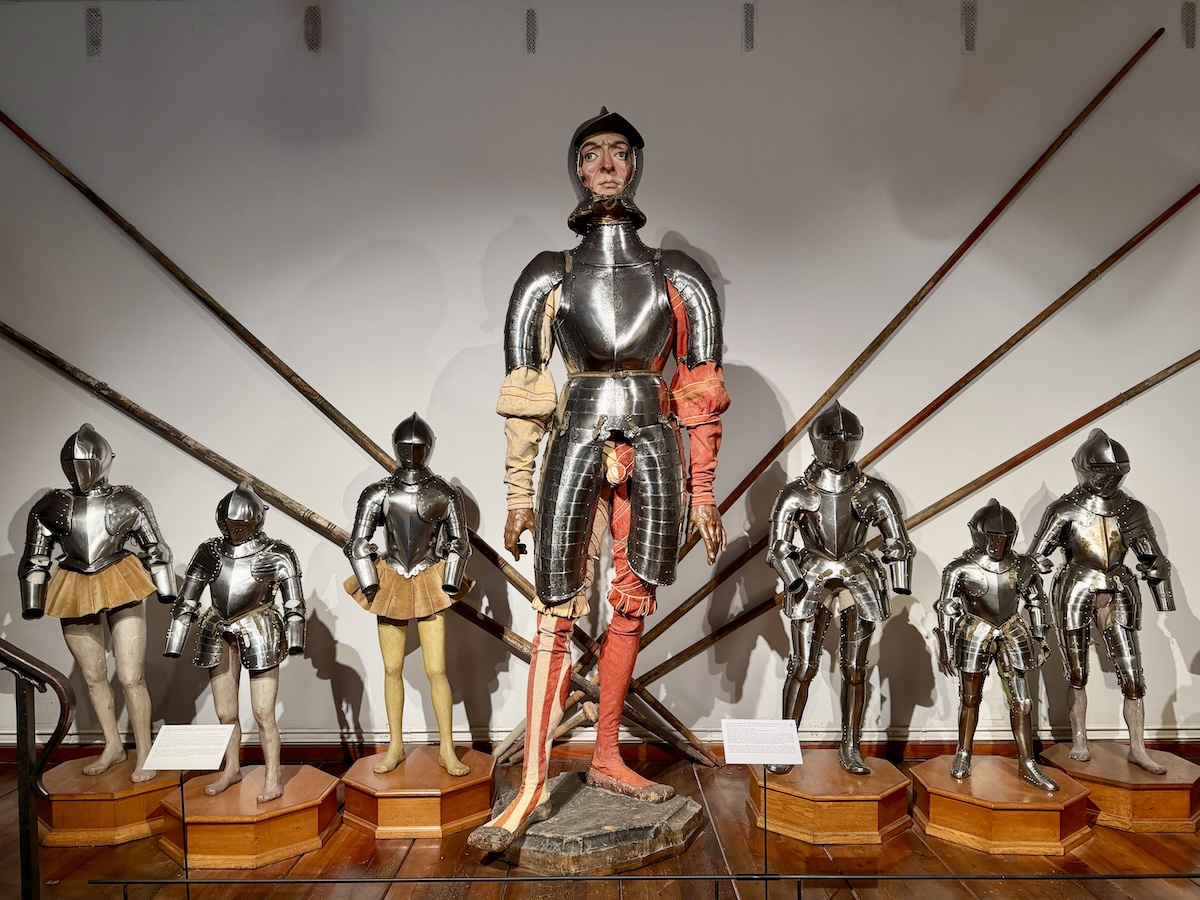
Meanwhile, the Lower Castle was built by Ferdinand II specifically to house his collections of cool stuff. It contains the impressive Armory (filled with tournament armor and weapons), as well as the Chamber of Art and Wonders (Kunst- und Wunderkammer), one of the earliest museums in Europe.
Just outside the walls of Ambras Castle is a beautiful garden with a lake. It’s free to visit (aka no need to buy a ticket) and especially beautiful during the warmer months. You’ll pass through the garden when walking from the tram station to the ticket desk. :)
Ambras Castle vs Hofburg Innsbruck: Key Differences
Now that I’ve talked a bit about each place individually, let’s compare Ambras and Hofburg Palace side by side and see what sets them apart!
Location and Accessibility
Hofburg Palace is located right in the heart of Innsbruck’s Old Town, which makes it the easiest and most convenient option for most people (especially if you’re staying in the center). It’s a 2-minute walk from the famous Golden Roof, so you can easily combine it with other Old Town attractions.
Ambras Castle, on the other hand, sits on a hill just outside the city center. Although you could technically walk up to the castle, I wouldn’t really recommend it (there’s not much on the way there anyway!).
The easiest way to get to Ambras from Innsbruck city center is to take the M bus (for example, from the Maria-Theresien-Straße stop), ride about 15 minutes, and get off at the Innsbruck Schloss Ambras. From there it’s about a 7-minute walk to the castle.
Key Takeaway: If you’re short on time or exploring Innsbruck on foot, Hofburg is the more convenient option. Meanwhile, Ambras is less crowded because it’s further from the bustle of Innsbruck’s Old Town.


Visit Structure & Tour Layout
The Hofburg follows a clearly structured museum route. Your ticket grants access to the Imperial Apartments on the second floor, and you can optionally add the Baroque Cellar exhibition for an additional fee.
Inside the Imperial Apartments, there’s a recommended “set route” from room to room. The layout is designed to guide visitors somewhat chronologically through the palace’s spaces and make it easy for the information to progress in a logical order.
If you get lost, don’t worry — there are employees who make sure that visitors follow the recommended path. We accidentally started our visit of the Hofburg at the “end” of the route and a nice employee gently guided us back to the correct starting point.
On the other hand, Ambras Castle is more flexible or “freestyle” (for lack of a better term 🙂). Although it’s divided into the Upper Castle and the Lower Castle, you have more freedom to explore them in whichever order you prefer.
Personally, I would recommend starting with the Lower Castle (where the Armory and the Chamber of Art and Wonders are located) since there’s more to see. From there, you can continue onto the Upper Castle. This order also gives you the chance to stop at the on-site restaurant and take a break in between exploring.
Key Takeaway: Hofburg offers a structured, museum-style experience with a clear narrative flow. Ambras feels more exploratory with separate buildings and outdoor spaces that give you more freedom in how you plan your visit.
Architecture and Atmosphere
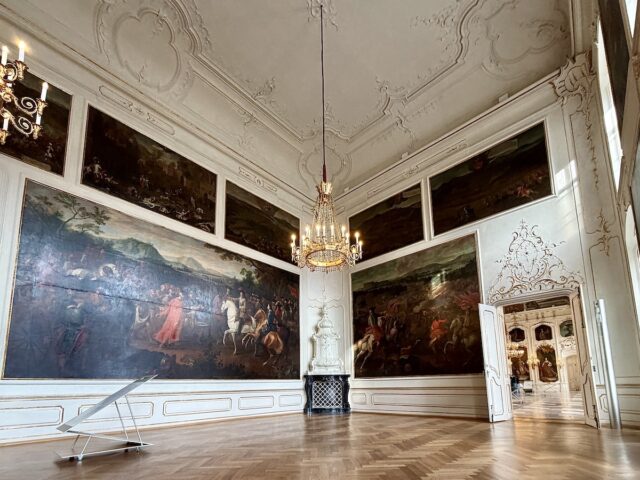
If I had to sum it up in one sentence, it would be that Hofburg is a Baroque palace in the middle of the city, while Ambras is a Renaissance hilltop castle.
The Hofburg Innsbruck is very polished and formal, which makes sense because it was an urban imperial residence that was used by the Habsburgs whenever they passed through Innsbruck.
The architecture is very “pomp and circumstance,” with gilded ceilings, grandiose chandeliers, royal portraits, and ceremonial rooms designed for hosting diplomats and court events.
Ambras Castle feels slightly more casual. Since its original purpose was a residence for Archduke Ferdinand II and his wife, Philippine Welser, it has a more “lived in” atmosphere — especially in spaces like Philippine’s bath, the lovely gardens outside (with peacocks who aren’t afraid of visitors!), and the overall design.
The architecture at Ambras is Renaissance and has more warmth, more character, and less rigid Baroque formality.
Key Takeaway: Hofburg feels formal and ceremonial, while Ambras feels scenic and personal.
What’s Inside
The atmosphere of each place also translates to what’s inside.
Inside the Hofburg Innsbruck, the focus is on imperial court life and Habsburg history. The main route takes you through the Imperial Apartments, where you’ll see rooms once used by Maria Theresa, Empress Elisabeth (Sisi), and other members of the dynasty.
Each of these spaces is richly decorated with original furnishings, period decor, and artworks that reflect how the Habsburgs lived and entertained.
The start of the Hofburg Palace is the Giant’s Hall, which is a giant (get it 😁) ceremonial room with beautiful ceiling murals, portraits of the imperial family, and a grandiose feeling.
Meanwhile, Ambras offers more variety and thematic content under one roof.
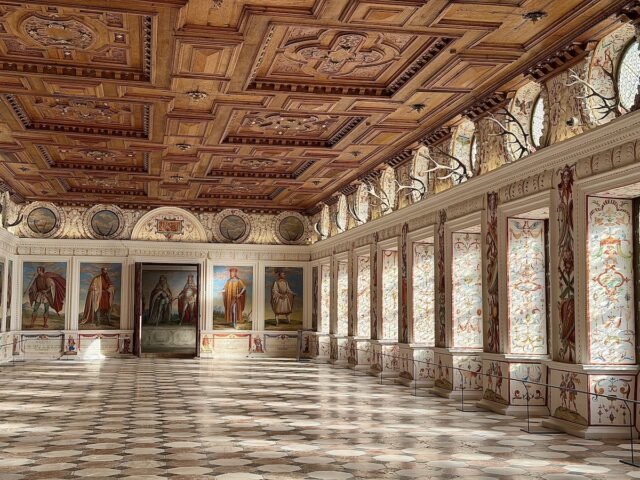
In the Upper Castle you’ll find the impressive Spanish Hall, one of the most beautiful Renaissance halls in Europe. This is also where the Habsburg Portrait Gallery is located, which features works by major European artists.
The Lower Castle is where Ambras stands out. Archduke Ferdinand II built it specifically to display his collections, making it one of Europe’s earliest purpose-built museum spaces. The Armory rooms are especially noteworthy and include thousands of armor, weapons, shields, and other pieces from various centuries.
Then there’s the Kunst- und Wunderkammer, one of the only Renaissance cabinets of curiosities still displayed in its original location!
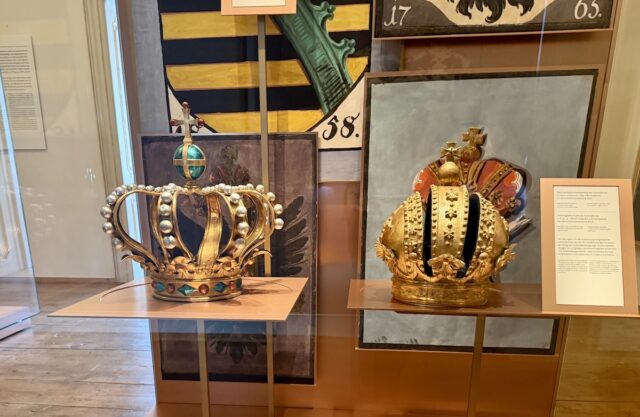
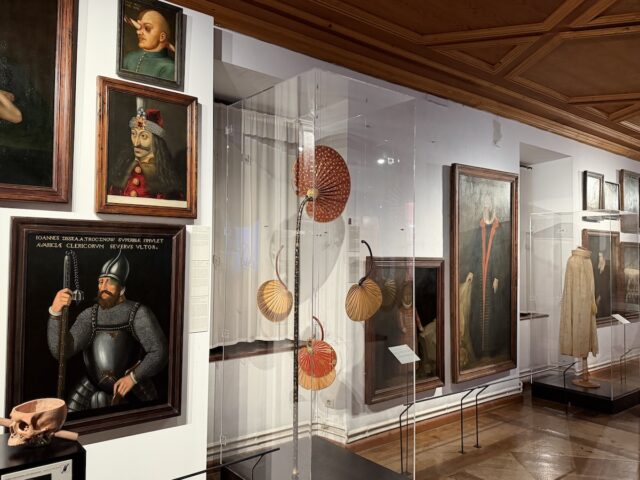
Inside the Wunderkammer you’ll see things like a 16th-century mechanical writing desk, intricate automata, sculptures, and rare artworks. There are also scientific instruments, exotic objects collected from other countries, and preserved natural specimens that were considered marvels at the time (could you imagine seeing a taxidermied shark in the 17th century? 😅).
Key Takeaway: Hofburg is a collection of furnished palace rooms and royal artifacts, while Ambras has more variety with exhibits on armor, scientific objects, rare artworks, and themed collections.

Approximate Time Required to Visit
Hofburg: 1 — 2 hours
Ambras: 2 — 3 hours
When we visited the Hofburg Innsbruck, it took us around 1.5 hours. That said, I’m someone who likes to read every single informational placard, so if you tend to move quickly through museums, you could probably finish in closer to an hour.
Meanwhile, Ambras Castle took us about 2.5 hours (not counting our lunch break at Ferdinand, the on-site restaurant) because there’s more variety and cool things. Between the Spanish Hall, the portrait galleries, three separate armory rooms, and the Chamber of Art and Wonders, it’s easier to lose track of time here.
Speaking of which, I used to love visiting unusual museums and going to my local Ripley’s Believe It or Not (in San Francisco), so you can probably guess that I got stuck in the Chamber of Art and Wonders’ “cabinet of curiosities.” :)
Well, not only me! As mentioned above, my husband spent extra time in the Armory, and my mom (who’s a big fan of Turkish series and especially Magnificent Century) took her time examining the Ottoman weapons section.
Key Takeaway: Hofburg is compact, focused, and can be done in 1 hour. Ambras feels more expansive due to its multiple buildings and gardens and takes at least 2 hours to see everything.
Opening Times
The Hofburg Innsbruck is open from 9:00 am to 5:00 pm, though it does close on certain holidays and occasionally for special events. It’s always a good idea to double-check the official website before your visit, especially if you’re traveling in the off-season.
Ambras Castle is open daily from 10:00 am to 5:00 pm. However, the castle is closed for the entire month of November for seasonal maintenance and exhibition changes, which is fairly common for historic sites in Austria during their quieter tourism period.
Key Takeaway: Hofburg opens earlier and is open year-round, while Ambras has a later start time and a full closure in November (something to keep in mind if you’re traveling to Innsbruck during autumn!)
Ticket Prices
At the Imperial Palace (Hofburg), tickets for the Imperial Apartments cost €10.50 for adults, and children under 19 enter for free. If you’d like to add the temporary exhibition in the Baroque Cellar, the combo ticket is €16.
Ambras Castle is slightly more expensive at €14 for adults, and also has free admission for children under 19. Considering the multiple buildings, gardens, and collections included, I think that it offers strong value for a longer visit.
Travel tip: Both attractions are included in the Innsbruck Card, which also covers public transport and 20+ other sights around the city! If you’re planning to visit a few major attractions in Innsbruck, the card quickly pays for itself. You can check what’s included and current prices here →
Key Takeaway: If you’re visiting just one palace, prices are fairly similar. But if you’re doing some serious sightseeing, having the Innsbruck Card makes seeing both an easy decision.


Amenities, Accessibility, and Practical Information
On-Site Restaurant / Cafe
There is currently no cafe nor restaurant inside the Imperial Palace (Hofburg). There used to be a Cafe Sacher in the palace, but it closed a few years ago and hasn’t reopened since, so you’ll need to plan your coffee or lunch elsewhere in the Old Town (which, to be fair, isn’t hard — there are plenty of great options!)
Ambras Castle has an on-site restaurant called Ferdinand. While the menu isn’t super big — it has a few soups, salads, main dishes (like sausages), desserts, and drinks — the food was pretty good when we ate lunch here.
Wheelchair Accessibility
The Imperial Palace (Hofburg) is fully accessible — it even received the Golden Wheelchair Award in 2000 for its accessibility efforts! Elevators and the wide layout make it a comfortable visit for most mobility needs.
Ambras Castle is approximately 90% accessible. The majority of the museum spaces can be reached without difficulty, but the Gothic sculpture collection and the herb garden (which has steep stairs) are not wheelchair accessible. The castle also offers a loaner wheelchair upon request — just ask the staff.
Photography Allowed?
Photography is not allowed inside the Imperial Palace (Hofburg) and the staff will remind visitors of this (they tend to walk between rooms and check).
Meanwhile, photography is permitted in Ambras Castle in most areas (without flash), which makes it a better option if you enjoy documenting your visit.
Gift Shop
Both sites have museum shops, but I found Ambras Castle’s gift shop noticeably larger and more varied. It includes books, decorative items, and even replica medieval armor pieces (that my husband was eyeing despite our small carry-on suitcase 😄).
Restrooms
Yes, both Ambras and the Imperial Palace (Hofburg) have restrooms on site.
Lockers and Garderobe
Both have lockers and garderobe (cloakroom) facilities where you can store coats and larger bags during your visit.

So… Which Innsbruck Palace Should You Visit?
At a glance:
- Best for castle lovers: Ambras Castle
- Best for short visits: Hofburg (Imperial Palace)
- Best for scenery: Ambras Castle
- Best for convenience: Hofburg (Imperial Palace)
- Best for history lovers: Both!
My Personal Recommendation
If I had to pick just one palace to visit in Innsbruck, I would choose Ambras Palace.
Yes, yes, even though I absolutely adore Empress Sisi (and her dazzling, beautiful, iconic diamond stars 🥹), I think that Ambras offers a stronger “overall experience.”
You’re getting a mix of different highlights in one place, from Renaissance architecture to classic portrait galleries, three rooms chock full of armor, and the fascinating Chamber of Art and Wonders (which feels like its own mini museum!)
It also wins in terms of practicality. You can take photos inside (which you can’t at the Hofburg), and book tickets online, which makes planning easier during busy seasons.
That said, the Imperial Palace (Hofburg) is still an excellent option, especially if you’re short on time or don’t want to venture too far outside the city center. The Imperial Palace is very convenient and does a great job of presenting Habsburg court life in a structured and easy-to-follow way. Since we had already visited Vienna on a previous trip, seeing a more “compact” imperial residence in Innsbruck felt like a nice complement rather than a repeat.
Whichever option you choose, I’m certain that you’ll learn more about Austria’s imperial history and have a deeper understanding of Innsbruck!
If you’re thinking of visiting Ambras Castle, you can book tickets online and skip the lines →
Interested in visiting both the Imperial Palace and Ambras? Consider buying an Innsbruck City Card , which can save you time and money at the biggest tourist attractions! →
Frequently Asked Questions
Is Ambras Castle in Innsbruck worth visiting?
Yes, especially if you enjoy museums with variety. Ambras Castle combines Renaissance architecture, scenic gardens, an impressive Armory, and one of Europe’s oldest “cabinet of curiosities” collections in the Chamber of Art and Wonders.
Is Hofburg Palace in Innsbruck worth it?
Yes, particularly if you’re short on time or staying in the Old Town. The Imperial Palace (Hofburg Innsbruck) focuses on the imperial apartments and Habsburg court life. It’s compact, elegant, and also easy to combine with other central attractions.
Is Ambras or Hofburg better in winter?
In winter, Hofburg is slightly more convenient because it’s located in the city center and fully indoors. Ambras Castle remains open during the colder months (except typically in November), but its outdoor garden isn’t as pretty as it is during the summer. That said, if you’re interested primarily in the museum collections, Ambras is still worth visiting year-round!
How far is Ambras Castle from Innsbruck city center?
Ambras Castle is about 4 kilometers from Innsbruck’s Old Town. By car, the journey takes around 10 minutes. By public transport (bus line M), it takes roughly 15 minutes plus a short walk from the stop to the castle entrance.
Which palace should I visit in Innsbruck?
If you only have time for one palace in Innsbruck, the choice depends on your priorities.
Choose the Hofburg if you want something central, structured, and focused on imperial interiors.
Choose Ambras Castle if you prefer a scenic setting, more variety, and unique collections like armor and Renaissance curiosities.
If you have two days in Innsbruck and enjoy history, then consider visiting both — they’re fantastic in their own way. :)
Can you visit Ambras Castle and Hofburg in one day?
Yes, it’s possible to visit both in one day if you start early. Hofburg typically takes 1–2 hours, while Ambras requires 2 to 3 hours including travel time. However, spreading them across two days helps avoid “palace fatigue” and allows more time to enjoy the little details.
Are Ambras Castle and Hofburg included in the Innsbruck Card?
Yes, both Ambras and the Imperial Palace are included in the Innsbruck Card, along with public transport and 20+ other attractions. If you plan to visit multiple museums or use public transportation frequently, buying the card is an excellent choice.